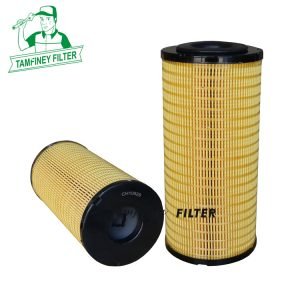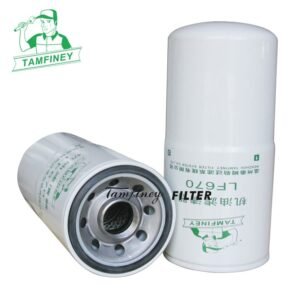


| Oil Filter 1R0659 1R-0659 9Y-4520 5S-0484 7M-3800 Parameter: | |
| Part Number | 1R0659 1R-0659 9Y-4520 5S-0484 7M-3800 |
| Brand | Tamfiney |
| Weight | 895 g |
| Height | 234 mm |
| Outer Diameter | 100 mm |
| Inner Diameter | 44 mm |
| Material | Metal & Paper |
| Filter Media | High-efficiency pleated cellulose / synthetic fiber blend |
| Typical Working Pressure | Up to approx. 6–10 bar |
| Filtration | Approx. 5–10 micron |
| Temperature Rating | Up to approx. 100–120°C |
| Minimum Order | 100 PCS |
| Place of Region: | Zhejiang, China |
| Payment Terms: | T/T |
| Price Terms: | FOB |
| Lead Time: | 30 to 50 days based on order quantities |
| Market Type: | After Market |
| Current Export Market: | Southeast Asian,North America, South America, Western Europe, Eastern Europe, Africa, Oceania |
Applications:
CATERPILLAR 12 F930941941 B951 C951 C955 K955 K955 L977 K/L980 379D 398D 399D 439D 4 DD 8 H
DEUTZ BF 12 M 716BF 16 M 716BF 6 M 716BF 8 M 716
DOOSAN DAEWOO D 60 S-5
MWM D 232 V6D 232 V8D 233 V8TD 232 V6TD 232 V8
Professional 5 Micron Oil Filter 1R0659 1R-0659 9Y-4520 5S-0484 7M-3800
Q: How do cartridge oil filters work?
Core principle: Impurities in engine oil pass through porous cartridge from the outside of the filter element and enter the central tube under pressure drive. Impurities are intercepted on the surface of the filter paper, and clean engine oil flows into the main oil passage of the engine through the oil outlet;
When the filter element is clogged or the viscosity of the cold start oil is too high, the bypass valve automatically opens, and the oil bypasses the filter paper and is directly supplied to the engine to prevent lubrication interruption.
Workflow
- Oil intake: The oil pump presses the oil into the inlet of the filter, passes through the check valve , and reaches the outer surface of the filter element.
- Filtration: The engine oil passes through the micropores of cartidge filter under the action of pressure difference, and impurities are trapped. The clean oil flows into the central pipe.
- Oil outlet: Clean engine oil enters the main oil passage of the engine from the top oil outlet, lubricating components.
- Emergency protection: If the filter paper is blocked and the internal and external pressure difference exceeds the set value, the bypass valve will open, and the oil will circulate directly without filtration, prioritizing the safety of oil supply.
Key structural support functions
- Folding filter paper: resin impregnated microporous paper , folded to increase filtration area, balancing flow and accuracy.
- Skeleton support: Tin plated iron sheet or polyester fiber mesh to prevent the filter paper from being crushed by high pressure.
- Bypass valve+check valve: The former prevents oil breakage, while the latter prevents dry start, synergistically improving reliability.
Note: The cartridge filter is a disposable consumable and cannot be cleaned or reused; It is recommended to regularly replace the random oil due to the long-term opening of the bypass valve.
Q: How many microns should an oil filter be?
There is no unified fixed value; it must be matched according to the filter type and engine requirements
- Full-flow: Typically 10–25 μm, industry-standard nominal range 20–40 μm; high-performance/turbocharged models recommend ≤20 μm.
- Diverter type: Higher precision, typically 5–10 μm, used for deep purification of small amounts of circulating engine oil.
Key Principle: Not necessarily the smaller the better—excessively fine can lead to excessive pressure differential, premature bypass valve activation, or shortened oil change intervals; must simultaneously meet filtration efficiency, dust-holding capacity, and flow rate requirements.