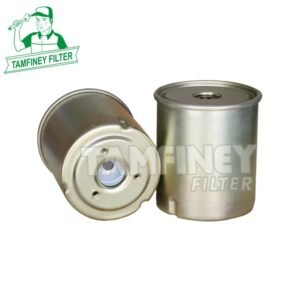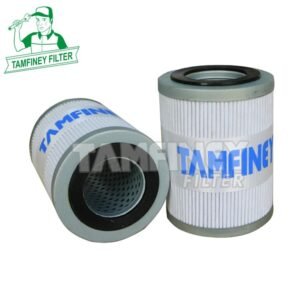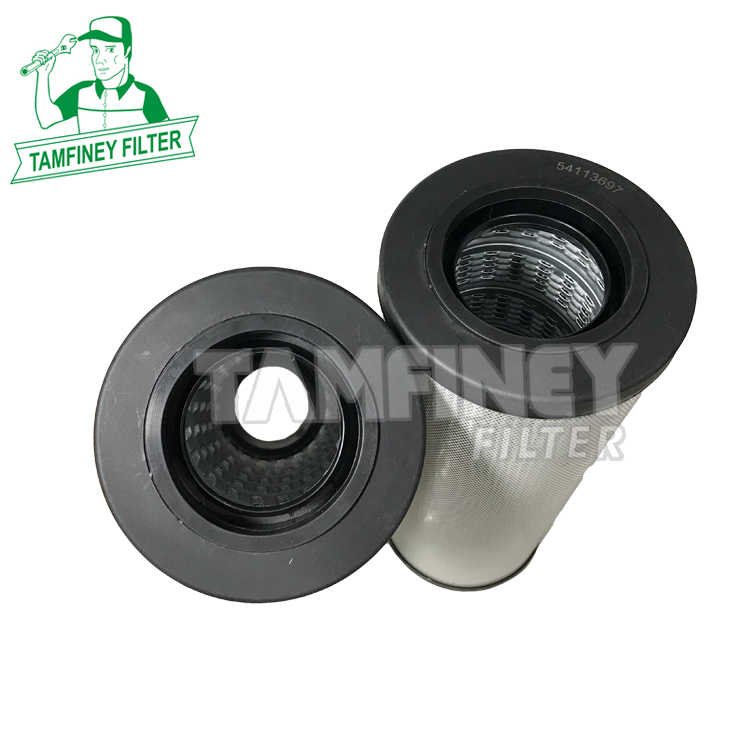



| Hydraulic Filter V2.1234-28 54113697 8231045410 V2.1234-26K2 Parameter: | |
| Part Number | V2.1234-28 54113697 8231045410 V2.1234-26K2 |
| Brand | Tamfiney |
| Weight | 1180 g |
| Height | 330 mm |
| Outer Diameter | 118 mm |
| Inner Diameter | 70/70 mm |
| Material | Plastic & Glass Fiber |
| Filter Media | High-efficiency pleated glassfiber with stainless steel wire cloth blend |
| Typical Working Pressure | Up to approx. 6–10 bar |
| Filtration | Approx. 5–10 micron |
| Temperature Rating | Up to approx. 100–120°C |
| Minimum Order | 30 PCS |
| Place of Region: | Zhejiang, China |
| Payment Terms: | T/T |
| Price Terms: | FOB |
| Lead Time: | 30 to 50 days based on order quantities |
| Market Type: | After Market |
| Current Export Market: | Southeast Asian,North America, South America, Western Europe, Eastern Europe, Africa, Oceania |
Applications:
- Atlas Copco: T1 Boomer / Boomer T1 drilling rigs
- Epiroc: Boomer T1 rigs
Professional V2.1234-28 54113697 Retruen Line Filter 8231045410 V2.1234-26K2
Q: What is the difference between a high-pressure filter and a return line filter?
The core difference between high-pressure filters and return pipe filters lies in their installation positions, resulting in different precision, pressure resistance, and protection objects: high-pressure filters are installed at the pump outlet, with high precision and protection of precision valve components; The oil return pipe filter is installed in the oil return line, with slightly lower accuracy, responsible for intercepting worn impurities and preventing dirty oil from flowing back into the oil tank.
📍 Installation location and function
- High pressure filter: installed on the outlet pipeline of the hydraulic pump, located in the high-pressure area of the system, mainly protecting precision components such as proportional valves and servo valves that are sensitive to pollutants, and preventing small particles from causing jamming or wear.
- Oil return filter: installed on the top of the system's oil return pipe or tank, with low working pressure, mainly capturing metal debris generated by component wear during system operation, preventing dirty oil from flowing back into the tank and entering the circulation again.
🔧 Filtering accuracy and filter material
High pressure filter: with higher precision, usually between 1-10 μ m (mainstream 5/10 μ m), the filter material is mostly fiberglass composite filter material or PTFE film.
Oil return filter: The accuracy is relatively low, usually between 10-20 μ m (mainstream 10/20 μ m), and the filter material is mostly fiberglass filter paper, wood pulp filter paper, or synthetic fiber material.
⚙️ Pressure resistance and structural characteristics
- High pressure filter: To withstand system high pressure pulsation and pressure impact, the strength of the filter element needs to meet the ISO 2941 test requirements. For example, the pressure difference of a certain high-pressure oil filter element can reach 21MPa.
- Return filter: The working pressure is low, usually not exceeding 1.6MPa, but the flow fluctuation range is wide. It is usually equipped with a bypass valve and a differential pressure transmitter. When the filter element is clogged to a pressure difference of about 0.35MPa, it will send a signal or automatically open the bypass valve to protect the system.
⚠️ Selection and replacement reminder
When selecting, in addition to size and accuracy, it is necessary to check the pressure resistance level, bypass valve opening pressure, and filter material type. Two types of filter elements cannot be mixed across positions.
Before replacing the filter element, release the system pressure to prevent impurities from entering; If the return oil filter element is severely clogged and cannot be stopped in time, the bypass valve will automatically open, and the system filtration will fail. Replacement should be arranged as soon as possible.
Q: Why does a hydraulic return filter have a bypass valve?
The hydraulic return oil filter is equipped with a bypass valve, and its core function is singular: to prevent the system from malfunctioning when the filter element becomes clogged, thereby avoiding the buildup of return oil pressure.
Under normal conditions, the oil flows through the filter element, and the bypass valve remains closed. Once the filter element becomes clogged with contaminants and the return oil resistance exceeds the set value, the bypass valve automatically opens, allowing the oil to bypass the filter element and flow directly back to the tank. This ensures smooth oil return and prevents system stalling, shutdown, or damage to components such as the oil pump.
Here are a few points worth noting:
- Cold starts are also beneficial: in winter when temperatures are low, hydraulic oil becomes thick and viscous, making it difficult to force through the filter element, which creates significant resistance. The bypass valve can open at this time to allow the oil to "take a shortcut," and it will automatically close once the oil temperature rises.
- This falls under protective compromise: when the bypass valve opens, the oil bypasses the filter, leading to a decline in cleanliness. However, this is a lesser evil—prioritizing machine operation while simultaneously alerting you to replace the filter element.
- The triggering pressure is preset: the set values vary for different products. For example, some sources mention that the bypass valve opens at 0.4MPa during cold start, while others indicate it activates when the filter clogging differential pressure reaches 0.35MPa. The specific value is subject to the actual product calibration.