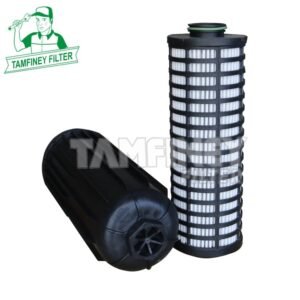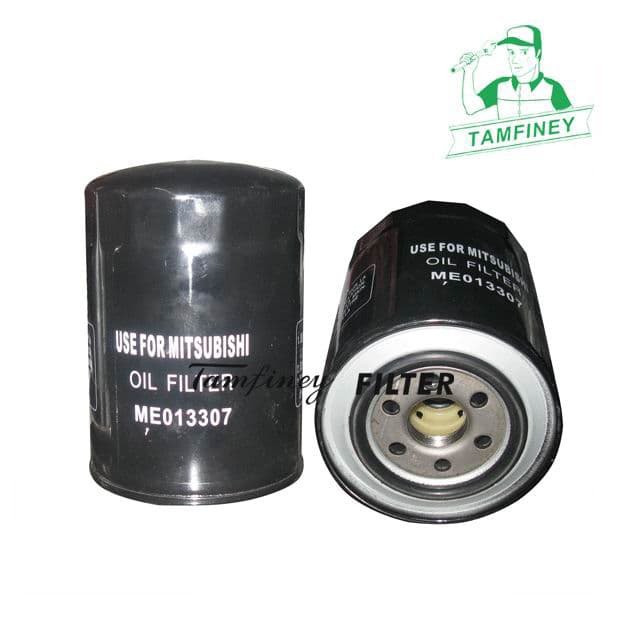



| Oil Filter ME013307 Oil Filter ME202472 P550406 PH8936 Parameter: | |
| Part Number | ME013307 Oil Filter ME202472 P550406 PH8936 |
| Brand | Tamfiney |
| Height | 150 mm |
| Outer Diameter | 107 mm |
| Inner Diameter/Thread Size | M26x1.5 |
| Minimum Order | 100 pcs |
| Place of Region: | Zhejiang, China |
| Payment Terms: | T/T |
| Price Terms: | FOB |
| Lead Time: | 30 to 50 days based on order quantities |
| Market Type: | After Market |
| Current Export Market: | North America, South America, Western Europe, Eastern Europe, Africa, Oceania |
Application:
• MITSUBISHI CANTER 5S13CANTER 5S13DCANTER 6C14CANTER 6C14DCANTER 6C15CANTER 6C15DCANTER 6C18CANTER 6C18DCANTER 7C14CANTER 7C14DCANTER 7C15
Premium ME013307 Oil Filter ME202472 P550406 PH8936
Q: Are OEM Mitsubishi oil filters better?
Characteristics and advantages of OEM Mitsubishi filters
• Strong adaptability to specific vehicles: OEM (Original Equipment Manufacturer) Mitsubishi oil filters are specially designed for Mitsubishi brand vehicles (such as Outlander, Evo, and Eclipse), with interfaces, dimensions, and sealing rings fully matching the original engine requirements. After installation, there is no risk of leakage and high stability.
• Reliable filtration performance: Some car owners have reported that after using the OEM Mitsubishi filter element, the engine noise has decreased, the idle speed is quieter, and the engine oil maintains good cleanliness, indicating that it performs well in terms of filtration accuracy and structural reliability.
• Solid material and craftsmanship: Some OEM Mitsubishi filters utilize high-density fiberglass composite filter material, with end caps integrally spun and formed, offering high temperature resistance and deformation resistance. They effectively intercept metal debris and oxidized colloids larger than 5 microns.
Q: How often should I change my Mitsubishi oil filter?
The replacement cycle of Mitsubishi Motors' oil filters should match with the type of oil used and the vehicle usage conditions. Generally, the following recommendations are made:
Recommended replacement intervals based on engine oil type
• Mineral oil: Replace every 3000–4000 kilometers or 6 months
• Semi-synthetic engine oil: change every 5000–6000 kilometers or 6 months
• Fully synthetic engine oil: Replace every 8000–10000 kilometers or 8–12 months
Note: The above is subject to whichever comes first (i.e., mileage or time).
In special circumstances, you need to replace in advance
You can shorten the replacement cycle in the following situations, even if the aforementioned mileage or time has not reached:
• Frequent short-distance driving (especially after a cold start without sufficient warm-up)
• Driving in harsh environments such as dusty, high-temperature, and congested conditions for extended periods
• Frequent use of vehicles under heavy loads or at high speeds
• The use of long-lasting fully synthetic engine oil (such as those supporting a mileage of over 10,000 kilometers) must be paired with a long-lasting engine filter of the same specification, otherwise the ordinary engine filter may become clogged prematurely
Important principles
• The oil filter must be replaced simultaneously every time the engine oil is changed. If the filter element is not replaced, the new engine oil will be contaminated by impurities in the old filter element within a short period of time, thus losing its protective effect.
• The first maintenance (such as for the Mitsubishi Outlander, usually within 5,000 kilometers or 3 months) includes a free replacement of the oil filter.
If the vehicle is used infrequently (such as having a low annual mileage), it is also recommended to replace it at least once every 12 months, as engine oil oxidizes over time and the efficiency of the filter decreases.
Q: What is the difference between the "short" and "tall" Mitsubishi filter?
"Short" and "tall" of oil filter
The core difference lies in the length (height) of the filter element:
o High-type (tall filter element): The internal filter paper has a larger surface area, providing stronger filtering capabilities. It can more effectively remove impurities such as metal debris and carbon deposits from engine oil, making it suitable for use under high loads or harsh working conditions.
o Short type (short filter element): It has a smaller filtering area and lower cost. However, if it is too short, it may push against the bypass valve spring, causing engine oil to enter the lubrication system unfiltered, posing a risk.
• Installation adaptability:
When designing the engine, a specific installation space is reserved. It is necessary to choose a filter element of the height specified by the original manufacturer, otherwise it may not be able to be installed or damage the oil pan.
For certain high-performance or modified vehicle models, it is recommended to use high-type filter elements to enhance lubrication protection.