Get a Free Quote
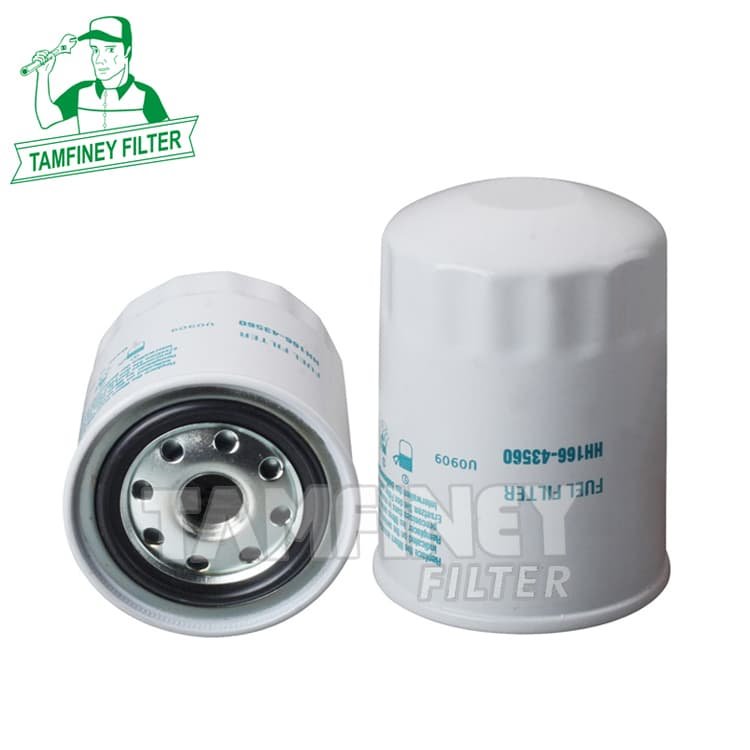
Professional Kubota Fuel Filters BF7967 FF5172 WK7041 16403-Z7000 17270913 16430-J2001
Your Best Kubota Fuel Filters BF7967 FF5172 WK7041 16403-Z7000 17270913 16430-J2001 Fuel filter manufacturer in China.
DONALDSON-J8620701 P551179 ,P551340 P168228, P502163, P502177, P550057, P550225, P553240, P779448; TOYOTA-16405T9005 Hyster 3000536, 324347-12 Ingersoll Rand 54381306, 85448454, 92808666, Iseki 689414347900, 689414E11 Fiat PM04166014



| Fuel Filter BF7967 FF5172 WK7041 16403-Z7000 17270913 16430-J2001 Parameter: | |
| Part Number | BF7967 FF5172 WK7041 16403-Z7000 17270913 16430-J2001 |
| Brand | Tamfiney |
| Weight | 433 g |
| Height | 112 mm |
| Outer Diameter | 78 mm |
| Inner Diameter/ Thread Size |
3/4-16 |
| Minimum Order | 100 PCS |
| Place of Region: | Zhejiang, China |
| Payment Terms: | T/T |
| Price Terms: | FOB |
| Lead Time: | 30 to 50 days based on order quantities |
| Market Type: | After Market |
| Current Export Market: | Southeast Asian,North America, South America, Western Europe, Eastern Europe, Africa, Oceania |
Applications:
• KAESER M 115.C
• KUBOTA KX 183KX 185M 8200M 8200 CM 8200 CCSM 8200 DTM 8200 DTCM 8200 DTHM 8200 DTNM 8200 DTNQM 8200 HDM 8200 HDCM 8200 SDNBM 8200 SDNBCM 8200 SDTNM 8540 DTHM 8540 DTHQM 8540 DTNM 8540 DTNQM 8540 DTQM 8560 DTHM 8560 DTHQ
• KÄRCHER MC 130MC 130 PLUS
• LGMG SR 1018 DSR 1218 D
• LINCOLN CLASSIC 300 DCLASSIC 300 DVANTAGE 400VANTAGE 500
Professional Kubota Fuel Filters BF7967 FF5172 WK7041 16403-Z7000 17270913 16430-J2001
Optimal Protection with Kubota Fuel Filters
Every Kubota engine deserves continuous, reliable power. Because dirty fuel can cause failures, Kubota Fuel Filters are a smart investment. Not only do these filters remove harmful particles, but they also ensure steady fuel delivery. Therefore, Kubota owners trust fuel filters for consistent performance in every environment.
Diverse Choices for Every Maintenance Need
Although Kubota Fuel Filters are well-known, several compatible options exist. Whenever specific applications demand unique parts, BF7967, FF5172, WK7041, 16403-Z7000, 17270913, and 16430-J2001 become essential. As a result, operators benefit from flexible solutions, no matter the model or engine. Not only do these filters meet quality standards, but each also matches Kubota’s rigorous demands.
The Significance of Timely Filter Replacement
While fuel contamination seems rare, it happens more often than expected. Because even minor debris can severely damage injectors, using Kubota Fuel Filters is needed for prevention. Not only do regular filter changes extend engine life, but they also boost efficiency. Whenever fuel systems stay clean, breakdowns and clogged components become extremely rare.
Enhanced Compatibility: Multiple References, One Goal
Although Kubota engines use various filters, compatibility should never be a challenge. Whenever BF7967 or FF5172 is required, TAMFINEY provides the perfect replacement. In addition, WK7041 and 16403-Z7000 fit popular Kubota models with precision. Not only do these part numbers guarantee the right fit and seal, but maintenance intervals also become easier to manage.
Straightforward Installation for Fast Maintenance
While some brands complicate filter changes, Kubota Fuel Filters are user-friendly. Whenever 17270913 or 16430-J2001 is installed, the process is seamless. Because parts are engineered to Kubota specifications, technicians save valuable time. Not only is installation stress-free, but downtime is also kept to a minimum.
Saving Costs and Securing Your Investment
Although skipping filter changes may appear thrifty, it always results in higher costs later. Because contaminated fuel causes expensive damage, investing in Kubota Fuel Filters pays off fast. Not only does a clean system minimize mechanical wear, but it also reduces major repair risk. Whenever BF7967 or FF5172 is used, your equipment operates longer between services.
Convenient Supply and Expert Support from TAMFINEY
Whenever immediate maintenance is necessary, TAMFINEY stands ready to deliver. Because we stock all major Kubota Fuel Filter references, including WK7041 and 17270913, you never face unnecessary delays. Not only is our distribution efficient, but our support team assists with product selection and application. Moreover, fleet managers planning routine maintenance find bulk ordering both cost-effective and convenient.
Bulk Orders Streamline Fleet Management
Although single purchases work for small needs, larger operations require scale. Whenever many filters are needed at once, TAMFINEY processes large orders without delay. Not only does this ensure fleet availability, but it also streamlines inventory control. Therefore, 16403-Z7000 and 16430-J2001 remain in stock, supporting consistent servicing and zero downtime.
TAMFINEY: Quality Parts, Trustworthy Service
Unlike generic providers, TAMFINEY delivers both certified Kubota Fuel Filters and technical assistance. While choosing from BF7967, FF5172, WK7041, or other references, you enjoy ongoing support and timely solutions. Not only do we stand behind every product, but our knowledgeable team resolves concerns quickly. Because customer satisfaction is our mission, expectations are always met.
Conclusion: Depend on Kubota Fuel Filters and TAMFINEY
Ultimately, fuel system cleanliness preserves power and extends the value of every Kubota engine. Because Kubota Fuel Filters catch debris and water, breakdowns and lost productivity are avoided. Whether ordering BF7967, FF5172, WK7041, or another reference, TAMFINEY ensures top-quality products and reliable service. In conclusion, for strong, smooth-running Kubota equipment, rely on TAMFINEY and the right fuel filter solution every time.
Q: How often should I change the fuel filter on my Kubota?
The replacement cycle of Kubota fuel filters is not fixed and depends mainly on factors such as the specific engine series you are using, actual operating conditions, and fuel quality. The following is reference information provided based on different Kubota engine series:
• For common gasoline engines (such as the Z482 series), it is usually recommended to check and clean the fuel filter every 100-150 hours of operation or 3-4 months.
• For other series (such as D722, V1505, V2403, etc.): The replacement cycle may vary, for example, every 250-350 hours or 350-450 hours.
Key factors affecting the cycle and adjustment suggestions:
• Operating environment: If your engine frequently operates in dusty and harsh conditions, maintenance intervals should be shortened accordingly.
• Fuel quality: Long term use of low-quality fuel can accelerate filter clogging and require more frequent inspection and replacement.
• Vehicle User Manual: The most authoritative reference is your Kubota Equipment User Manual, which provides the most accurate maintenance recommendations based on your specific model. Please be sure to follow the manual.
Q: Where are the fuel filters on a Kubota?
The position of the fuel filter for Kubota engines may vary depending on the specific model and configuration, but there are usually several common installation positions:
• Inside the fuel tank: Some models of fuel filters are built into the tank and are usually connected to the gasoline pump. You can search upstream through the fuel supply pipeline. If you don't see the filter on the pipeline, it is likely located inside the fuel tank.
• Under the chassis of the vehicle: External fuel filters are commonly found at the connection of the chassis oil pipes, and can generally be found along the fuel supply pipeline. For diesel models, it may be located directly in front of the fuel tank.
• In the engine compartment: Some models may install fuel filters in the engine compartment for easy maintenance.
Due to the fact that Kubota engines cover multiple types (such as gasoline or diesel power), it is recommended that you consult the vehicle's user manual or maintenance manual for accurate location information specific to your model. If self checking, make sure the engine is turned off and cooled down to avoid the risk of fuel leakage.
Q: How to tell if a tractor fuel filter is bad?
To determine whether the tractor fuel filter is damaged, a comprehensive assessment can be conducted by observing the vehicle's operational symptoms, inspecting related components, and using professional tools. Below are common methods and steps for evaluation:
🔍 Observe operational symptoms
When the fuel filter is damaged or clogged, the tractor will exhibit a series of noticeable operational abnormalities:
• Power decline: Weak acceleration, especially under heavy loads (such as plowing or climbing hills), where it feels necessary to press the accelerator pedal deeper to achieve normal power.
• Difficult starting: Multiple ignition attempts may be required to start, or even failure to start, due to abnormal combustion pressure caused by insufficient fuel supply.
• Engine vibration: The engine exhibits noticeable shaking at idle, caused by unstable fuel supply leading to incomplete combustion of the air-fuel mixture.
• Increased fuel consumption: Reduced fuel efficiency leads to a significant rise in fuel usage under the same operational conditions.
• Abnormal emissions: May emit black or white smoke, indicating incomplete combustion.
• Fault Light Illumination: Some tractors are equipped with a fuel system fault light. If it lights up (steady or flashing), immediate inspection is required. A flashing light may indicate excessive moisture in the filter, while a steady light may indicate a sensor malfunction.
🔧 Visual and Simple Inspection
• Visual Inspection: After turning off the power, inspect the fuel filter housing for any signs of damage, deformation, rust, or fuel leakage. If there is obvious damage, replace it.
• Fuel Condition Inspection: If conditions permit, remove the filter (requires professional handling) and drain the internal fuel for observation. If the fuel appears dark, cloudy, or contains visible impurities, it indicates that the filter element has failed and should be replaced promptly.
🛠️ Professional Testing Methods
• Pressure test: Use a fuel pressure gauge to measure the pressure difference before and after the filter. Under normal conditions, the pressure difference should be minimal. If it exceeds the specified range, it indicates that the filter element may be clogged.
• Oil-water separator inspection: For diesel tractors, a malfunctioning oil-water separation filter can allow moisture and impurities to enter the fuel system. Check whether the discharged water exceeds the oil content limit, or observe if the safety valve activates abnormally.
📝 Daily Maintenance Recommendations
• Regular Replacement: Fuel filters come in built-in and external types. External filter elements should be replaced every 30,000 kilometers, while built-in elements can last up to 60,000 kilometers. If the fuel quality is good, replacement can be delayed slightly, but as a preventive measure, it is generally recommended to inspect and replace them around 30,000 kilometers.
• Note the usage environment: In areas with high dust levels or poor fuel quality, the replacement interval should be shortened.
If multiple of the above symptoms occur or the warning light illuminates, it is recommended to promptly contact a professional technician for a thorough inspection to prevent severe engine damage caused by fuel-related issues.