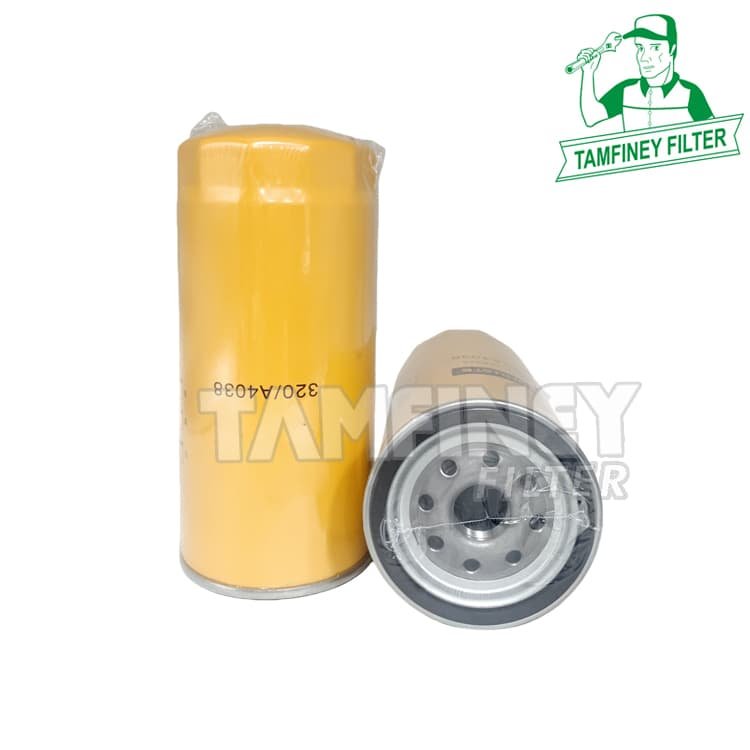



| Oil Filter 320/A4038 320A4038 parameter: | |
| Part Number | 320/A4038 320A4038 |
| Brand | Tamfiney |
| Weight | 630 g |
| Height | 177 mm |
| Outer Diameter | 93 mm |
| Inner Diameter/ Thread Size | 1-16 UN |
| Minimum Order | 100 PCS |
| Place of Region: | Zhejiang, China |
| Payment Terms: | T/T |
| Price Terms: | FOB |
| Lead Time: | 30 to 50 days based on order quantities |
| Market Type: | After Market |
| Current Export Market: | Southeast Asian,North America, South America, Western Europe, Eastern Europe, Africa, Oceania |
Application:
JCB
672 TA2G-187G 165 QSJS 300JS 305JS 330 NLJS 370
Professional JCB 320/A4038 320A4038 Oil Filter
Q: What is an oil bypass valve?
The oil bypass valve is a safety protection device in the engine lubrication system, usually integrated inside the oil filter. Its core function is to forcibly open the passage when the filter element is clogged or the oil viscosity is too high, allowing the oil to bypass the filter element and directly enter the main oil passage of the engine, prioritizing uninterrupted lubrication and preventing engine cylinder pulling or burning due to lack of oil.
• Normal state: The valve remains closed under the action of the spring, and the oil must be filtered through the filter element to ensure that the oil entering the engine is clean.
• Trigger opening: When the filter element is severely blocked by impurities or the oil is too viscous during low-temperature cold start, causing the pressure difference between the inlet and outlet of the filter to reach the set value (usually 0.15-0.25 MPa), the pressure overcomes the spring force and pushes open the valve.
• Emergency oil supply: The engine oil flows directly into the main oil passage through the bypass channel. At this point, although the engine oil has not been filtered, it avoids "dry friction" and follows the protection logic of "choosing the lighter of the two harms".
Key precautions
• Not the smoother the better: A normally open bypass valve means that the filter element has failed or the oil is too dirty. Unfiltered impurities will accelerate engine wear, and the oil and filter need to be replaced immediately.
• Difference from pressure limiting valve: The bypass valve solves the problem of "flow blockage" (bypassing the filter element); The pressure limiting valve solves the problem of "excessive pressure" (pressure relief back to the oil pan), and the two functions are different.
• Modern integrated design: Modern cars often use rotary type machine filters, with bypass valves built into them and no longer existing as independent parts. Choosing genuine machine filters is crucial.
In short, it is the "life-saving channel" of the engine, usually invisible, only stepping forward when the lubrication system faces the risk of oil failure, sacrificing some filtering effect for the engine's survival opportunity.
Q: What is the Difference Between Full-Flow and Bypass Filtration?
The core difference between full flow filtration and bypass filtration lies in the processing flow ratio, filtration accuracy, and system connection method. The former ensures basic lubrication safety, while the latter improves oil cleanliness.
• Scope of traffic processing
Full flow filtration: Connected in series in the main oil circuit, 100% of the fluid (such as engine oil) must pass through the filter element before entering the system, which is a necessary condition for engine operation.
Bypass filtration: parallel to the main oil pipeline, only 5%~15% (usually about 10%) of the total flow is extracted for independent circulation filtration, purified and returned to the oil pan without affecting the main oil supply.
• Filtering accuracy and purpose
Full flow filtration: Side heavy flux and low resistance, mainly intercepting larger particle impurities to prevent blockage of oil passages; Due to the need to ensure cold start oil supply, the filtration accuracy is relatively limited, and a bypass valve is usually equipped to prevent filter blockage and oil interruption.
Bypass filtration: focuses on high-precision fine filtration, using finer filter materials to remove small particles and gum, playing a "polishing" role, significantly extending the life of oil products and improving system cleanliness, but does not directly participate in the main oil supply.
• System dependencies and risks
Full flow filtration: If the filter element is completely clogged and the bypass valve fails, it will cause the oil supply to be interrupted, leading to severe wear and even scrapping of the equipment, which is a safety critical component.
Bypass filtration: It belongs to the auxiliary system, and even if there is a malfunction or stop working, the main oil circuit can still supply oil normally without causing the equipment to shut down immediately. However, long-term non operation will reduce the overall cleaning efficiency.