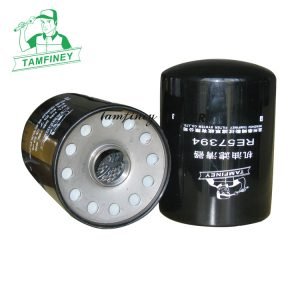

| Oil Filter P559000 DBL7900 2882673 3101868 3406810 Parameter: | |
| Part Number | P559000 DBL7900 2882673 3101868 3406810 |
| Brand | Tamfiney |
| Weight | 1786 g |
| Height | 330 mm |
| Outer Diameter | 118 mm |
| Inner Diameter/ Thread Size | M95*2.5 |
| Minimum Order | 100 PCS |
| Place of Region: | Zhejiang, China |
| Payment Terms: | T/T |
| Price Terms: | FOB |
| Lead Time: | 30 to 50 days based on order quantities |
| Market Type: | After Market |
| Current Export Market: | North America, South America, Western Europe, Eastern Europe, Africa, Oceania |
What does a P559000 fit?
INGERSOLL RAND 10.37010.42510.455DM 45G 500
JOHN DEERE 7800
KAWASAKI 95 ZV-2
MANITOWOC 1015 16000 18000 2250 1000
NEW HOLLAND T 9060
PLAISANCE EQPT GALOTRAX GX 500
SUNWARD SWDM 360
TANA G 320SHARK 440 D
VANDEL QS 450QS 500QS 550
WIRTGEN W 200W 200 FiW 200 IW 200 IW 250 IWR 240 I
XCMG XE 700
Premium Full Flow Oil Filter P559000 DBL7900 2882673 3101868 3406810
Q: What is a full-flow type oil filter?
The full flow oil filter is the most mainstream oil filtration device in modern automotive engines. Its core feature is that it is connected in series between the oil pump and the main oil passage of the engine, ensuring that all lubricating oil output from the oil pump must pass through it and be filtered before entering the key lubrication parts of the engine.
The main advantage of this design is that it can comprehensively and thoroughly filter the engine oil, effectively removing harmful impurities such as metal debris, dust, carbon deposits, etc. from the engine oil, thereby protecting the precision components inside the engine from wear and extending the engine life to the greatest extent possible.
Main Features
Series installation: As a necessary path on the oil circulation path, all oil passes through its filtration.
Efficient filtration: mainly filters large impurities with a particle size of 0.05 millimeters or more in engine oil, which is the "first line of defense" of the engine lubrication system.
Widely used: Currently, over 90% of household sedans and urban SUVs on the market use full flow oil filters.
Bypass valve design: When the filter element is severely clogged or the oil viscosity is too high during cold start, the bypass valve at the bottom of the filter will open, allowing unfiltered oil to flow directly into the main oil passage to ensure that the engine is not damaged due to lack of oil, but this will also temporarily result in zero filtration efficiency.
Q: What happens if the oil filter on a full-flow oil system becomes completely clogged?
If the full-flow oil filter gets completely clogged, oil circulation stops, and the engine loses lubrication protection. This leads to serious consequences:
• The oil pressure warning light turns on: A clogged filter increases resistance, lowering oil pressure. The sensor detects this and lights the dashboard lamp immediately.
• Severe internal engine wear: Without oil, parts like the crankshaft and cylinder walls suffer metal-on-metal friction. This causes rapid wear and can lead to failures like cylinder pulling or shaft seizing.
• Decreased engine power and weak driving: Higher friction makes the engine work harder, reducing power. You'll notice slow acceleration and difficulty climbing hills.
• Increased engine noise: Oil normally dampens sound. When it fails, components like pistons and valves make loud "dada" and "clack" noises.
• Engine overheating: Oil helps cool the engine. Blockage prevents heat removal, raising oil and engine temperatures, which can cause tile burning.
• Easy vehicle stalling: During idling or shifting, oil demand spikes. A clogged filter causes lubrication shortages, leading to unstable operation or shutdowns.
• Abnormal oil temperature rise: Obstruction stops oil from cooling in the radiator. Temperature keeps rising, accelerating oil oxidation and degradation.
• The filter may rupture or the bypass valve may open: Modern filters have safety bypass valves. If the filter clogs, the valve opens, letting unfiltered oil into the engine and increasing wear. If the valve fails, filter housing may rupture.
In summary, a completely clogged oil filter is a critical engine threat. Regular filter replacement is essential maintenance—don't delay.
Q: How does P559000 oil filter work?
Oil filters often use a full flow design. All oil from the oil pump must go through the filter first before reaching the engine's main oil passage. The core workflow has three main steps.
When the engine starts, the oil pump draws oil from the oil pan. It then pressurizes the oil for the next stage.
During filtration, pressurized oil moves through the filter paper inside the filter. The filter paper has tiny pores that catch harmful impurities like metal debris, dust, carbon deposits, gum, and moisture. Clean oil passes through the filter paper, collects in the central pipe, and flows into the engine's lubrication system.
Key components play vital roles. The bypass valve ensures engine safety. If the filter element gets clogged with too many impurities, or if oil viscosity is high during cold start, oil flow resistance rises sharply. Once the pressure difference hits a preset value, the bypass valve opens automatically. Unfiltered oil then bypasses the clogged filter element and enters the engine directly. This prevents engine damage from lack of oil.
Another important part is the check valve, also called a backflow suppression valve. It sits at the filter's bottom. Its job is to stop oil in the filter from flowing back to the oil pan after engine shutdown. This ensures some oil remains in the filter during the next cold start. It helps quickly build oil pressure and provide timely lubrication.
The sealing ring completes the system. It creates a tight seal between the filter and the engine mounting seat. This prevents oil leaks and maintains proper lubrication.