
Get a Free Quote
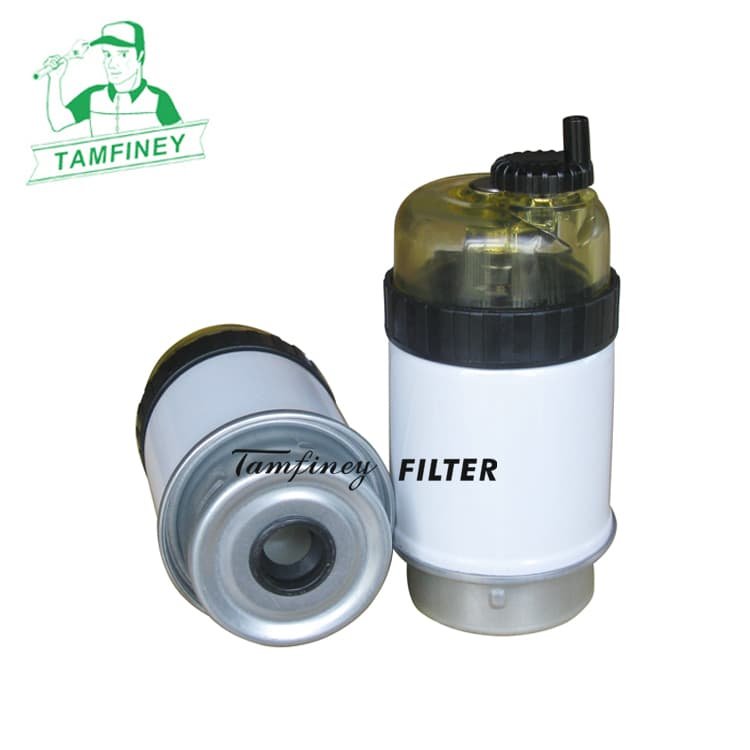
Professional Fuel Manager Filter BF7681-D FS19813 151-2409 206-6910 WK8141
Your Best Fuel Manager Filter BF7681-D FS19813 151-2409 206-6910 WK8141 Fuel filter manufacturer in China.
BF7681-D FS19813 151-2409 206-6910 WK8141 CASE 142000080715 AGCO 4223660M1 836659300 836662561 20359300 PERKINS 26560902 AGCO-3780299M1 ,V836662561 BALDWIN BF7681D BF7681-D BF7699D ;BOBCAT-6671649 ; CATERPILLAR-1006374 ,1383100 ,1634465 ,2066910 ,100051230 ,100051231 ;CLARK-6671649 ; FG WILSON 10000051231 FLEETGUARD-FS19514 ,FS1953 ,FS19530 FS19813 ; FRAM-PS7411 ,PS9127 ; JCB-32/925610


| Fuel Filter BF7681-D FS19813 151-2409 206-6910 WK8141 Parameter: | |
| Part Number | BF7681-D FS19813 151-2409 206-6910 WK8141 |
| Brand | Tamfiney |
| Weight | 200 g |
| Height | 135 mm |
| Outer Diameter | 85 mm |
| Inner Diameter/ Thread Size |
|
| Minimum Order | 100 PCS |
| Place of Region: | Zhejiang, China |
| Payment Terms: | T/T |
| Price Terms: | FOB |
| Lead Time: | 30 to 50 days based on order quantities |
| Market Type: | After Market |
| Current Export Market: | Southeast Asian,North America, South America, Western Europe, Eastern Europe, Africa, Oceania |
Applications:
CASE 62706290
CATERPILLAR SNX1->312 BL315 BL317 F906924 G SERIE IIIC 1.5 SAK1->CB 335 DCB 434 CCB 525 BCB 534 BCP 663 ECS 423 ECS 433 CCS 433 CCS 563 ECS 573 ECS 583 ECS 663 ECS 683 EGEP 100GEP 110 SAGEP 150IT 14 GM 312M 312M 312 BM 315M 315M 316 CM
CHALLENGER MT 425 B AUTO POWERMT 425 B IVMT 535 B AUTOPOWER VI DYNA 6MT 535 B TECHSTAR CVTMT 545MT 545 B AUTOPOWER IVMT 545 B AUTOPOWER VI DYNA 6MT 545 B TECHSTAR CVTMT 565
JOHN DEERE 3029 T
KLEMM KR 805-1KR 806-2
KOMATSU FOREST 6WD860 6WD860 8WD860 8WD890.1 8WD890 6WD890 8WD901.1901 S-2 4WD901 S-2 6WD911.1911 4WD911 6WD921921.1
MAC CORMICK MC 120 POWER 6 T1MC 120 POWER 6 T2MC 135 POWER 6 T1MC 135 POWER 6 T2
MASSEY FERGUSON 5465 DYNA 4 DYNA 66465 DYNA 6 CCLS6465 DYNA 6 TFLS64756475 DYNA 6 CCLS6475 DYNA 6 950-55MF 950-66
NORCAR-LOGSET 506 H5 F PREMIUM6 F
OLYMPIAN GE 50GEP 110GEP 150-1GEP 150-2GEP 165-1LL 3014 BXQE 135
PERKINS 1006.6 TAG1006 TG1006 TG 2AYBYDYD 51586
PONSSE HS 10 COBRAS 15S 15 EH
SULLAIR 175 H
VALTRA 62006250 75A 75A 85X 100 HIX 110 HIX 120 HI
Professional Fuel Manager Filter BF7681-D FS19813 151-2409 206-6910 WK8141
Q: What is a Fuel Manager filter?
The fuel manager filter acts as the "guardian angel" for modern diesel engines. It offers critical protection through modular design and multifunctional integration. Here is a detailed introduction:
- Core functions and protection mechanisms
Separate water and pollutants using gravity settling and filter interception. Remove water, rust, and dirt from fuel efficiently. Prevent nozzle blockage and common rail system corrosion.
Modular design adapts to different application scenarios. Customizable components include water collection bowls, heaters, and oil filling pumps. For example, water collection bowls monitor moisture in real time. They drain water to avoid emulsified fuel. Heaters prevent fuel wax formation in cold temperatures. They ensure smooth cold starts. Charging pumps assist fuel delivery. They reduce fuel pump load.
- Applicable scenarios and advantages
Trucks and heavy equipment benefit from this system. They cope with high load conditions and extend engine life. Ships and agricultural machinery adapt to humid and dusty environments. They ensure fuel purity stays high. Common rail diesel engines meet precision requirements. They avoid injector failures caused by impurities.
- Maintenance and replacement suggestions
Regular inspection is recommended every 10,000 kilometers or 6 months. Focus on observing water accumulation in the collection bowl. Replacement cycles vary based on usage conditions. Harsh environments like high humidity and dust need more frequent changes. Replace the filter element every 20,000 kilometers in such cases. Using high-quality fuel allows longer intervals. Extend replacement up to 30,000 kilometers with clean fuel.
Q: How do I drain water for fuel manager filter?
Step-by-Step Guide of draining water:
- Locate the Drain: Find the fuel manager filter, usually on the firewall or under the vehicle, with a drain valve or sensor at the bottom.
- Prepare: Place a suitable catch pan or container under the drain to collect water and fuel.
- Turn Ignition Off (Usually): For most systems, turn the vehicle's ignition to the "Off" position, though some newer systems may require the "On/Run" position for draining, so consult your manual.
- Open the Drain: Turn the drain valve (often a yellow petcock or black square peg) counter-clockwise about one full turn to open it.
- Drain Water: Allow liquid to drain into the container. Water, being heavier, will come out first, followed by fuel.
- Check for Clean Fuel: Stop draining when you see a steady stream of clear fuel with no water separation.
- Close the Valve: Turn the drain clockwise until you feel resistance, then tighten another half turn to properly compress the seal; avoid over-tightening.
Q: Is replacing a fuel filter a big job?
The difficulty of replacing fuel filters cannot be generalized, as it mainly depends on the type of filter (external or internal) and the operator's experience and technical level.
External fuel filters are usually located in easily accessible areas such as the engine compartment or chassis, and the replacement process is relatively simple. For car owners with basic knowledge and tools of car maintenance, it may be an achievable task. However, even so, it is still necessary to follow safety steps, such as reducing the fuel system pressure first to avoid fuel splashing, and ensuring that the new filter is installed in the correct direction.
The replacement of built-in fuel filters is much more difficult. These filters are usually integrated inside the fuel tank or located in small and complex areas such as under the rear seats, requiring the disassembly of multiple components and even specialized tools. Improper operation can easily lead to fuel leaks and pose safety hazards such as fires. Therefore, for most ordinary car owners, this is a difficult task and it is strongly recommended to entrust it to professional personnel for handling.
Safety is the primary consideration during the replacement process, as fuel is flammable and explosive, and any operational error can lead to serious accidents. If the car owner lacks relevant experience, self replacement may not only damage vehicle components, but also endanger personal safety. Overall, there is a significant difference in the difficulty of replacing the fuel filter: external models can be attempted with sufficient preparation and careful operation, but internal models are often considered difficult tasks due to their complexity and high risk, and it is recommended to seek professional help.


