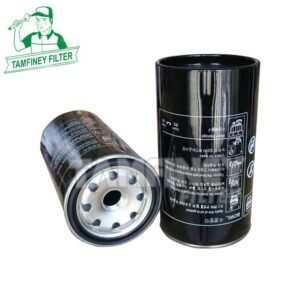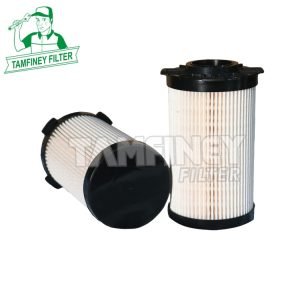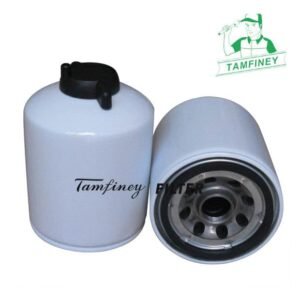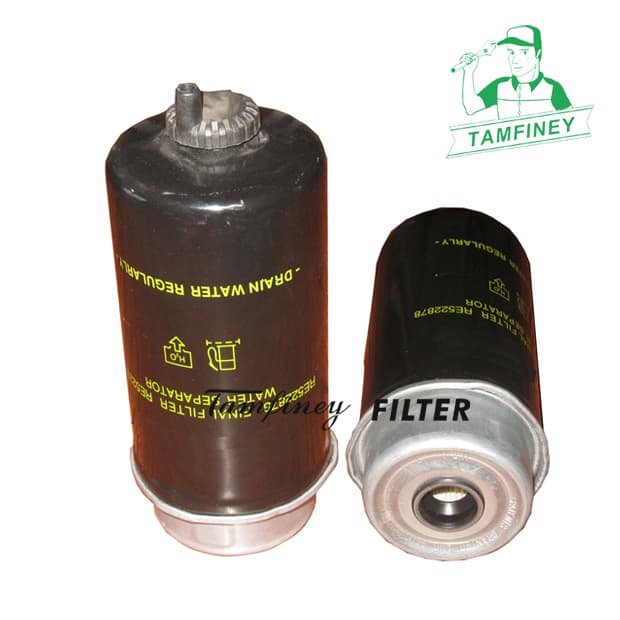



| Fuel Filter RE541925 WK8162 BF7949-D Parameter: | |
| Part Number | RE541925 WK8162 BF7949-D |
| Brand | Tamfiney |
| Weight | 436 g |
| Height | 196 mm |
| Outer Diameter | 85 mm |
| Inner Diameter/ Thread Size | |
| Minimum Order | 100 PCS |
| Place of Region: | Zhejiang, China |
| Payment Terms: | T/T |
| Price Terms: | FOB |
| Lead Time: | 30 to 50 days based on order quantities |
| Market Type: | After Market |
| Current Export Market: | Southeast Asian,North America, South America, Western Europe, Eastern Europe, Africa, Oceania |
Applications:
JOHN DEERE 1070 D ECO III1170 E1210 E1210 E14701510 E2154 D4045 HFG 824045 HFS 874045 HFU
Professional Fuel Filter Separator Diesel RE541925 WK8162 BF7949-D
Q: How does a diesel fuel filter water separator work?
The diesel fuel filter water separator in diesel filters mainly uses the physical separation principle to effectively separate the moisture in diesel by utilizing the density difference between oil and water, in order to protect the engine fuel system. The working process can be summarized into the following key steps:
Working principle and core process
• Gravity settling: After diesel enters the oil-water separator, the flow velocity in the slow flow chamber decreases (usually ≤ 0.005 m/s). Due to the higher density of water (about 1 g/cm ³) than diesel (about 0.82-0.95 g/cm ³), the water naturally sinks to the bottom under the action of gravity, forming a catchment area; Diesel rises to the top and flows out from the outlet.
• Agglomeration effect: Small water droplets (especially emulsified water) collide, adsorb, and coalesce into larger water droplets when passing through a agglomeration filter (often made of oleophilic and hydrophobic materials such as glass fiber and polyester fiber), accelerating the settling process.
• Separation interception: After coalescence, large water droplets continue to sink, while clean diesel flows through a separation filter (such as PTFE hydrophobic material), which allows oil to pass through but blocks residual water droplets, achieving deep dehydration.
• Automatic/manual drainage: The separated water accumulates in the bottom water collection chamber. Some models are equipped with water level sensors or float switches. When the water level exceeds the threshold, the dashboard will prompt "drain water"; Users need to regularly open the drain valve to discharge accumulated water.
Q: Do I need to fill the fuel water separator?
No, you don't need to fill.
This device is used to separate water and impurities from diesel, relying on the density difference between oil and water to achieve separation, and does not require refueling during operation.
Correct operation: Regularly open the water storage cup below to drain the accumulated water.
Attention: Some models may be equipped with an oil mist device (for lubricating pneumatic tools) next to the oil-water separator, but the oil mist device is an independent component and cannot be confused
Q: Why do diesels need water separators?
The use of fuel water separators is a key measure to ensure the long-term stable operation of diesel engines. Its core function is to separate moisture and filter out larger impurities before the fuel enters the high-pressure fuel pump and injection system, thereby protecting precision components from damage. The main reasons are as follows:
• Preventing moisture corrosion and wear: Diesel fuel often contains condensed water or impurity water. If it enters the high-pressure oil pump and fuel injector, it can cause metal parts to rust, get stuck, and even generate corrosive hydrochloric acid in high sulfur diesel, seriously damaging the internal parts of the engine.
• Filtering large particle impurities: The pre filter can intercept metal shavings, dust, gum and other impurities with a diameter greater than 5 microns, avoiding these particles from blocking the fuel injector or accelerating the wear of the fuel injection system.
• Reduce the burden on the main filter: As the first line of defense, the pre filter shares most of the processing tasks for impurities and moisture, extending the service life of the main diesel filter and reducing maintenance costs.
• Improve combustion efficiency and power performance: Clean fuel helps achieve more complete and uniform combustion, thereby increasing engine power output, reducing fuel consumption and emissions.
• Adapt to harsh oil products and environments: Especially in areas with uneven oil quality such as construction sites, mining areas, and rural areas, or in low-temperature winter environments (to prevent diesel wax deposition and water freezing), pre filters can significantly improve system reliability.
Typical structure and maintenance points:
• Most fuel filter water separators are designed with transparent filter cups and bottom drain valves, making it easy to observe accumulated water and manually drain it.
• It is recommended to check the drainage every 20000 to 40000 kilometers, and the filter replacement cycle is generally 10000 to 30000 kilometers, depending on the working conditions and oil quality.
• High end models may be equipped with heating function to prevent diesel solidification in winter.