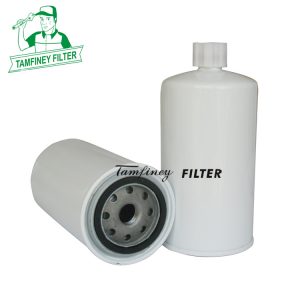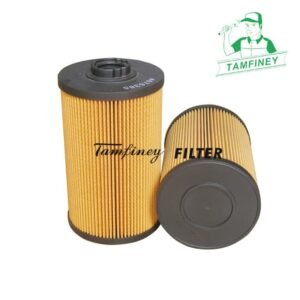

| Fuel And Water Separator P959380 320/A7199 320A7199 Parameter: | |
| Part Number | P959380 320/A7199 320A7199 |
| Brand | Tamfiney |
| Weight | 659 g |
| Height | 130 mm |
| Outer Diameter | 107/134 mm |
| Inner Diameter/ Thread Size | M16X1.5 |
| Minimum Order | 100 PCS |
| Place of Region: | Zhejiang, China |
| Payment Terms: | T/T |
| Price Terms: | FOB |
| Lead Time: | 30 to 50 days based on order quantities |
| Market Type: | After Market |
| Current Export Market: | Southeast Asian,North America, South America, Western Europe, Eastern Europe, Africa, Oceania |
Applications:
• JCB 3 CX 14 L 5 WA430 TA 4-55E531-70531-70531-70 ST5533-105533-105533-105535-125535-125535-125 ST5535-90535-90535-95535-95535-95
Professional Fuel And Water Separator P959380 320/A7199 320A7199 for JCB
Introduction: Common Pain Points of Ordinary Fuel Filters
Ordinary fuel filters often lead to frustrating issues for both programmers and writers. For instance, they may lack rigorous quality inspection, which results in frequent malfunctions. Additionally, inconsistent filtration can cause fuel systems to fail unexpectedly. While initial prices are low, maintenance costs soon accumulate. Therefore, customers who value reliability and cost-effectiveness are frequently dissatisfied.
Section 1: The Function and Advantages of Quality Fuel Filters
A high-quality JCB Fuel Filter is engineered to exceed average performance. Not only does it effectively block impurities, but it also ensures smooth fuel delivery to the engine. Consequently, this consistent filtration directly boosts engine lifespan and operational stability. Because it captures even microscopic contaminants, the risk of injector clogging is reduced. Moreover, well-designed filters such as P959380 and 320/A7199 resist pressure fluctuations. In addition, advanced media technology minimizes maintenance intervals. Therefore, overall productivity remains high and unplanned downtime is avoided.
Section 2: Application of Engine Fuel Filters in Real-World Scenarios
Whether used in large construction sites or daily operations, JCB Fuel Filters deliver vital protection. For example, models like 320/A7360 and SK48934 are built for demanding workloads. Since fuel quality can vary greatly by region, robust filtration becomes even more essential. Furthermore, as fuel systems become more precise, compatibility with filters such as 320A7360 and 320A7199 matters more than ever. In heavy-duty engines, efficient fuel filters prevent costly repairs. Additionally, they keep sensitive injectors functioning at optimal levels. As a result, both performance and reliability are assured, regardless of environmental challenges.
Section 3: Quality Assurance Highlighted by Data
Choosing TAMFINEY’s JCB Filters means guaranteed peace of mind and proven value. For instance, each filter model, including P959380 and 320/A7199, passes a multi-point quality inspection. On average, the warranty period extends up to 18 months or 60,000 kilometers. During extensive field testing, less than 0.03% of our filters returned due to defects. Not only does this indicate exceptional reliability, but it also demonstrates our commitment to customer satisfaction. Additionally, because we optimize material sourcing and manufacturing, our price-to-performance ratio leads the industry. Therefore, selecting our filters translates into lower long-term costs and higher operational uptime.
Conclusion: Choose TAMFINEY JCB Filters for Unmatched Assurance
In summary, ordinary filters cannot meet the needs of demanding professionals. With TAMFINEY’s JCB Fuel Filters, such as P959380, 320/A7360, and SK48934, customers receive certified quality, advanced technology, and lasting value. Therefore, for assured performance and proven cost savings, TAMFINEY remains the trusted partner for quality-driven clients.
Q: How many filters does a JCB 3DX have?
As a large construction machinery, the JCB 3DX excavator requires multiple filters for its engine and hydraulic system to ensure normal operation. Common types of filters include:
Air filter: used to filter the air entering the engine and protect the internal components of the engine.
Diesel filter (Fuel water separation filter element): Used to filter impurities and moisture in diesel, it is a key component of the fuel system.
Oil filter: used to filter metal debris and pollutants in engine lubricating oil, keeping the oil clean.
Hydraulic oil filter: used to filter pollutants in hydraulic systems, ensure the cleanliness of hydraulic oil, and ensure the sensitive and reliable operation of the system.
Cabin air filter: used to filter the air entering the cabin, ensuring the comfort and health of the driver.
Overall, a JCB 3DX excavator is typically equipped with at least 5 different types of filters
Q: What are the signs of a bad fuel water separator?
Signs of damage to fuel water separators for automobiles, Suitable for diesel vehicles, mainly affecting fuel system and engine performance:
• Abnormal power: weak acceleration, unstable idle, and difficulty starting from cold.
• Exhaust smoke:
Black smoke emitted: insufficient combustion, high fuel impurities;
White smoke: Moisture enters the combustion chamber, forming water vapor.
• Damage to the fuel injection system: Moisture and impurities can wear down the plunger components of the fuel injector, which may cause the injector to jam or leak oil.
• Increased carbon deposition: Impurities deposit in the intake valve and cylinder, forming hard carbon deposits, causing problems such as increased fuel consumption, excessive exhaust emissions, and sudden refueling and tempering.
• Abnormal noise or malfunction light on: Some models may trigger the engine malfunction light or produce sharp abnormal noise due to excessive mixture.
Tip: It is recommended to check the fuel water separator every 20000 kilometers and regularly drain it (such as every 5000 kilometers) for diesel vehicles
Q: Can you drive with a fuel water separator light on?
Whether to continue driving when the fuel and water separator alarm light is on depends on the reason for the alarm and the status of the light.
If the warning light is in a "flashing" state, it usually indicates that the moisture content in the fuel filter is too high, and the fuel water separation function is limited, but the vehicle can still be driven for a short period of time. At this time, it is necessary to park in a safe location as soon as possible, open the drain valve to discharge the accumulated water, and when the liquid level is below the sensor, the light will usually automatically turn off.
If the alarm light is in a "constant on" state, it often indicates a sensor or circuit failure, which may cause the system to be unable to monitor the fuel water separation status properly, and may lead to abnormal operation of the fuel injector, decreased engine power, black/white smoke, carbon deposits, and other problems. It is not recommended to continue driving. Please stop immediately and contact professional maintenance.
Suggested steps for handling
1. Observe the status of the light: whether it is flashing or constantly on.
2. Try draining water: Find the drain valve below the fuel water separator reservoir (usually near the engine compartment or chassis fuel filter), unscrew the drain, and observe if it goes out.
If the light still lights up after drainage, it may be a sensor malfunction. Use a multimeter to check the voltage (normally 12V and 5V), or go directly to the repair point for maintenance.