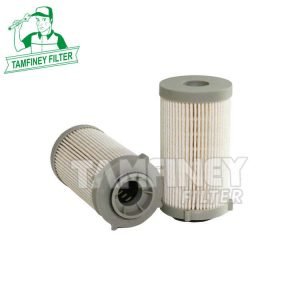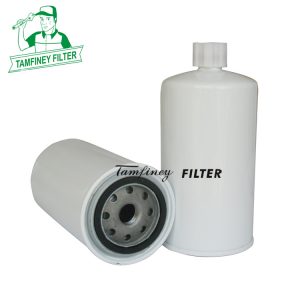


| Fuel Filter FS20165 5523768 40C7018 Parameter: | |
| Part Number | FS20165 5523768 40C7018 |
| Brand | Tamfiney |
| Weight | 865 g |
| Height | 232 mm |
| Outer Diameter | 120 mm |
| Inner Diameter/ Thread Size | |
| Minimum Order | 100 PCS |
| Place of Region: | Zhejiang, China |
| Payment Terms: | T/T |
| Price Terms: | FOB |
| Lead Time: | 30 to 50 days based on order quantities |
| Market Type: | After Market |
| Current Export Market: | Southeast Asian,North America, South America, Western Europe, Eastern Europe, Africa, Oceania |
Applications
• HYUNDAI HW 140 AHX 130 A LCRHX 140A LHX 145 A-LCR
• INGERSOLL RAND 12.15421.224
• JCB 427 AGRI427 HT435 S437 HT
• KALMAR DCG 120-12DCG 120-6
• LIUGONG 913 FCR915 FCR922 E922 F925 E930 F933 FCLG 856 HCLG 922 ECLG 926 ECLG 928 E
• SANDVIK DD 321DS 411
• SANY SY 215 CSY 215 C-9SY 245SY 265SY 365SY 365 C
Professional FS20165 Fuel/Water Separator Spin-On Filter 5523768 40C7018
1Q: How can I separate water from fuel?
The separation of water and fuel (such as gasoline, diesel, etc.) is mainly based on the density difference and physical properties of their immiscibility. Common separation methods
Static layering method: Using the density difference (water density of about 1 g/cm ³, gasoline density of about 0.7-0.8 g/cm ³), let the mixture stand for several hours, with water sinking to the bottom and fuel floating on the upper layer. Carefully suck out or pour out the upper layer of fuel. Suitable for situations with low water volume and no emulsification.
Professional oil-water separator: equipped with a built-in coalescing filter element, drainage valve, etc., it efficiently separates through mechanisms such as gravity settling, demulsification, adsorption, etc., with a separation efficiency of ≥ 95%, suitable for vehicle fuel systems.
2Q: Is a fuel water separator worth it?
On vehicles, fuel water separators are mainly used to remove moisture and impurities from fuel and protect the engine.
• Core role:
O Prevent moisture corrosion: Avoid acidic substances from corroding cylinders and piston rings.
>O Protect precision components: reduce wear and tear on fuel injectors and fuel pumps, and extend their lifespan.
>O Improve combustion efficiency: reduce fuel consumption by about 3% -5% and minimize carbon deposits.
>O Ensure cold start: Pre heated to prevent wax buildup, suitable for northern winter.
• Applicable vehicle models:
O Diesel vehicles (especially common rail systems): Highly recommended.
O High performance vehicles/modified vehicles: It is recommended to choose centrifugal or multi-stage separators.
O Family car: Universal gravity type is sufficient.
✅ Conclusion: Installing fuel water separators is a low-cost and high return protective measure for fuel vehicles, especially diesel vehicles.
3Q: Which is better, 2 micron or 30 micron?
When comparing 2 micron and 30 micron fuel filters, 'better' depends on the specific usage scenario, vehicle type, and fuel quality.
2 micron filter cartridge
Advantages: It can intercept finer particles (including colloids, oxides, etc.), suitable for environments with poor fuel quality, high dust, or high-precision fuel injection systems.
Applicable objects: construction machinery, mining dump trucks, pit mouth vehicles and other vehicles with complex working conditions; Or it can be installed in the first stage fuel filter assembly of Parker Racor or as a fine filter.
Disadvantages: Easy to clog, shortened replacement cycle, requiring more frequent inspection and maintenance.
30 micron filter cartridge
Advantages: Good oil permeability, low pressure drop, long service life, suitable for daily household use or ordinary commercial vehicles in areas with good fuel quality.
Applicable objects: ordinary tractor and non high load diesel vehicles, often used as coarse or pre filter stages.
Disadvantages: Weak filtering ability for small particles (<10 μ m), unable to effectively protect the high-pressure common rail fuel injection system.
Industry Recommended Standards
• Ordinary gasoline vehicles: 10-30 microns (mostly around 20 microns)
• Diesel vehicles (especially high-pressure common rail): 5-10 microns are recommended, and the National VI standard requires a filtration efficiency of ≥ 98% for 4-micron particles
• High performance gasoline/diesel engine: 5-20 microns
Conclusion
• If the vehicle is used in complex working conditions, poor fuel environments, or has been equipped with pre filtration systems such as Parker, 2 microns is better (but regular maintenance is required).
• If it is a regular household car or the fuel quality is guaranteed, 30 microns is sufficient and more economical and durable.
• It is not recommended to use a 2-micron filter element alone as the main filter, as it is prone to clogging; Usually used in conjunction with coarse filtration (such as 30 microns) to form multi-stage filtration.