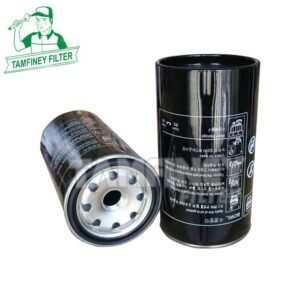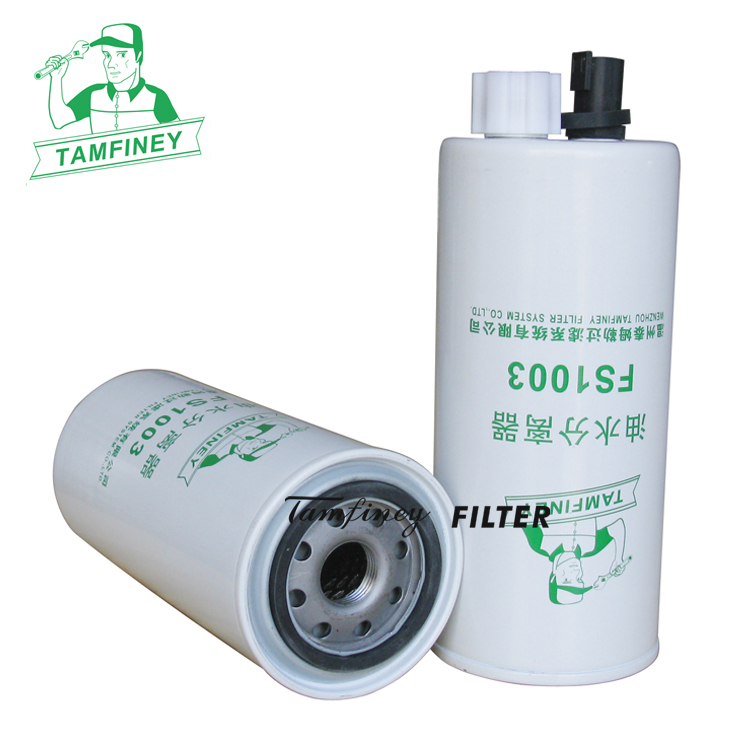


Fuel Filter FS1067 FS19596 BF1272-SPS Parameter: | |
| Part Number | FS1067 FS19596 BF1272-SPS |
| Brand | Tamfiney |
| Weight | 843g |
| Height | 255 mm |
| Outer Diameter | 94 mm |
| Inner Diameter/ Thread Size | 1"-14 |
| Minimum Order | 100 PCS |
| Place of Region: | Zhejiang, China |
| Payment Terms: | T/T |
| Price Terms: | FOB |
| Lead Time: | 30 to 50 days based on order quantities |
| Market Type: | After Market |
| Current Export Market: | Southeast Asian,North America, South America, Western Europe, Eastern Europe, Africa, Oceania |
Applications:
GROVE RT 9130 E2RT 9130 E3RT 9130 E4RT 9150 E3RT 9150 E4TMS 500 ETMS 500 E07
TEREX TFC 45 LX HC SIDERTFC 45 LX HC SIDER
VOGELE SUPER 1600-3ISUPER 1800-3SUPER 1800-3ISUPER 1800-3ISUPER 1803-3ISUPER 1900-3I
WIRTGEN W 100 FW 100 FIW 100 FIW 120 FW 120 FIW 130 FW 130 FIW 210W 210 IW 250 I
Professisonal FS1067 FS19596 BF1272-SPS Fuel Filter
Q: Are OEM fuel filters expensive?
Whether OEM fuel filters are "expensive" needs to be comprehensively judged based on factors such as price range, purchasing channels, compatible vehicle models, and installation methods.
Overview of Price Range
• Low price: Some OEM gasoline filters suitable for economy models or bulk purchases
• Mainstream price range: Most OEM fuel filters suitable for ordinary household cars are priced between $10-50.
• High price range: Mid to high-end models (such as Mercedes Benz, BMW, Volvo, etc.) or built-in filters (requiring replacement of oil pump assembly) can cost up to $60-100.
Key factors affecting prices
• Vehicle adaptability: Economy cars (such as Jetta and Tiggo) typically have filter cartridges priced between $10-30; Middle to high-end cars generally cost over $30.
• Internal vs External:
External type: easy to replace, usually priced between $5-30.
Built in (integrated into the fuel tank): Replacement is complex and often costs between $40 and $150.
Is it 'expensive'?
Compared to OEM parts or general parts, OEM parts are usually slightly more expensive by 10% -30%, but their quality and adaptability are more guaranteed.
Compared to the complete maintenance service provided by 4S stores, OEM filters themselves are not expensive, and their premium mainly comes from brand endorsement and warranty.
If only purchasing accessories for self replacement: OEM filter prices are within a reasonable range, and most models can be solved within $20.
Q: Are OEM fuel filters better than aftermarket?
OEM fuel filters have advantages in adaptability and consistency, but high-quality aftermarket products can match or even surpass them in performance, depending on the specific brand and model.
OEM filters: designated or produced by the vehicle manufacturer to ensure a complete match with the original vehicle design, comply with factory technical specifications, and have high reliability, especially in new vehicle models or high-precision fuel systems (such as high-pressure common rail).
High quality aftermarket products: International brands such as Mahle, MANN+HUMMEL, Bosch, Donaldson, etc. have reached or exceeded some OEM standards in terms of filtration efficiency (such as intercepting 5-micron particles), durability, and pollutant holding capacity in their high-end series.
Low price after-sales products: Some cheap filters may have problems such as poor material, poor sealing, and low filtration efficiency, and long-term use may damage the engine.
Q: Are metal fuel filters better than plastic?
Metal fuel filters and plastic fuel filters have their own advantages and disadvantages, and it cannot be simply said that "metal is better than plastic". It needs to be judged comprehensively based on the usage scenario, vehicle positioning, and actual needs.
• Metal casing (usually made of aluminum alloy or steel)
Advantages:
High strength and good pressure resistance: suitable for high-pressure electronic injection systems, not easily deformed or broken.
High temperature resistance and excellent heat dissipation: Especially aluminum alloy material helps the filter work stably under high temperature conditions.
More reliable sealing: It is less likely to experience sealing attenuation under long-term vibration, ensuring filtration efficiency.
Disadvantages:
High cost: Manufacturing and material costs are higher than plastic.
There is a risk of rust: The iron casing may rust in humid environments, and rust may enter the oil circuit and damage precision components such as fuel injectors.
Plastic casing (mostly made of engineering plastics such as PP and PET)
Advantages:
Low cost and lightweight: Helps to reduce overall vehicle costs and fuel consumption, and improve fuel economy.
Corrosion resistant and rust free: The molecular structure is dense and will not release impurities into the fuel, keeping the oil circuit clean.
Good insulation: reduces the impact of static electricity on the internal structure.
Disadvantages:
Relatively weak durability: Long term use may cause deformation and cracking, especially under extreme low temperatures or bumps.
Poor stability under high temperature and high pressure: sealing performance may decrease under high load conditions.