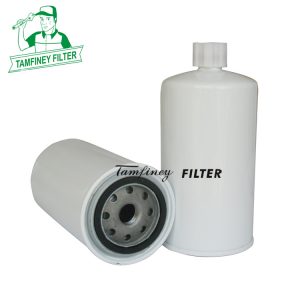

| Fuel Filter FS19728 Fuel Filter PF7748 FF5369W 33651XE Parameter: | |
| Part Number | FS19728 PF7748 FF5369W 33651XE |
| Brand | Tamfiney |
| Weight | 390g |
| Height | 173/180 mm |
| Outer Diameter | 96 mm |
| Inner Diameter | 17 mm |
| Minimum Order | 100 PCS |
| Place of Region: | Zhejiang, China |
| Payment Terms: | T/T |
| Price Terms: | FOB |
| Lead Time: | 30 to 50 days based on order quantities |
| Market Type: | After Market |
| Current Export Market: | Southeast Asian,North America, South America, Western Europe, Eastern Europe, Africa, Oceania |
Applications:
• KEESTRACK APOLLOAPOLLOARGOARGOB 3B 4B 5COMBO TIER IICOMBO TIER IIICRUISER 1060EXPLORER 1500 ECO-EP ELECTRICEXPLORER 1500 TIER IIIEXPLORER 1800 ECO-EP ELECTRICEXPLORER 1800 TIER IIIEXPLORER 1800 TIER IIIFRONTIER ECO-EP ELECTRICFRONTIER TIER IIIFRONTIER TIER IIIGIOVENOVUM 21NOVUM 21NOVUM 4215NOVUM ECO-EP ELECTRICNOVUM TIER IINOVUM TIER IIIS 3S 5STACKER 08-18STACKER 10-23
• VOGELE SUPER 1803-3
• WIRTGEN W 200 FiW 200 IW 250 IWR 240 I
Professional FS19728 Fuel Filter PF7748 FF5369W 33651XE
Q: Are aftermarket fuel filters good?
Whether the fuel filters in the aftermarket are effective depends on their brand, quality, and compatibility. Not all aftermarket products are inferior to original factory parts.
• Advantages:
o Some high-end brands excel in performance: they utilize efficient composite filter materials with a filtration accuracy of 4-10 microns, effectively trapping impurities and moisture, thereby protecting fuel injectors and high-pressure fuel pumps.
o High cost-effectiveness: Some brands offer lower prices than original factory parts while ensuring quality, making them suitable for cost-conscious car owners.
o Function optimization: For example, the design of diesel filters with a hand pump and water separation function (such as the FS1242 model) can improve cold start stability and enhance water filtration capacity.
• Disadvantages:
o Uneven quality: Low-priced non-original products may have issues such as uneven density of filter paper, poor sealing, and insufficient pressure resistance, which can easily lead to clogged fuel injectors or worn fuel pumps after long-term use.
o Adaptation risk: If non-original parts are not produced strictly in accordance with the original specifications, there may be hidden dangers such as installation mismatch and oil leakage.
Q: Does the brand of the fuel filter matter?
The brand of fuel filter is indeed important, mainly reflected in aspects such as filtration efficiency, durability, adaptability, and protection capability for the engine.
• Well-known brands (such as MANN-FILTER, MAHLE, BOSCH, and original factory parts) are more reliable in terms of quality control, material craftsmanship, and filtration accuracy. They can effectively intercept impurities and moisture in fuel, reduce engine wear, and extend service life.
• Inferior brand filters may have issues such as poor quality filter paper, inadequate sealing, and malfunctioning bypass valves, which can lead to impurities entering the fuel system, resulting in decreased power, increased fuel consumption, and even engine damage.
• Compatibility is crucial: Different vehicle models have varying requirements for filter interfaces, sizes, and flow rates. Original equipment or dedicated brand products can better ensure a perfect match.
• Comprehensive consideration of cost-effectiveness is necessary: Although original factory parts offer the best compatibility, international brands such as MANN-FILTER, MAHLE, and BOSCH strike a good balance between performance and price; some domestic brands (such as Shanghai Filtrac) have improved their quality in recent years and can also be considered as economical options.
Q: What is the difference between OEM and aftermarket fuel filters?
OEM fuel filters (Original Equipment Manufacturer, original factory accessories) differ from aftermarket fuel filters (i.e., non-original factory accessories or aftermarket parts) in multiple aspects, primarily in manufacturing standards, material processes, adaptability, filtration efficiency, and service life.
• Source and Standards
o OEM Filters: Produced by suppliers designated or authorized by automobile manufacturers, strictly adhering to the technical standards of the original equipment manufacturer to ensure full compatibility with the original vehicle design.
o Aftermarket filters: Produced by third-party manufacturers, they claim to be "compatible", but the quality varies greatly. Some products may simplify the manufacturing process or use inferior materials to reduce costs.
• Materials and Processes
o OEM filters generally use high-density, oil-resistant, anti-aging filter paper (such as pure wood pulp paper or synthetic composite materials), with a tight sealing structure and strong pressure resistance of the shell (electronic fuel injection systems require a pressure resistance of ≥500kPa).
o Aftermarket filters: low-priced products often use low-density filter paper, non-standard sealing rings, or even no sealing gaskets, resulting in low filtration efficiency, easy deformation, or leakage.
• Filtration accuracy and dust holding capacity:
o OEM products can effectively intercept particles above 5 microns, and some high-end models can even filter impurities down to 3 μm, and they also possess fuel water separation capabilities (especially for diesel engines).
o Aftermarket filters: is unstable, and inferior products struggle to block tiny particles. Long-term use may lead to issues such as clogged fuel injectors and wear and tear on high-pressure fuel pumps.
• Compatibility and reliability
o The OEM filter interface size, thread specification, and installation method are completely consistent with the original factory, allowing direct replacement without modification.
o Aftermarket filters: have issues such as dimensional deviations and poor sealing, which can easily lead to fuel leakage or filter rupture after installation.
• Service life and replacement cycle:
o OEM filters exhibit stable performance within the recommended replacement cycle (external: 20,000-30,000 kilometers, internal: 40,000-80,000 kilometers).
o Aftermarket filters: may experience increased pressure drop, blockage, or filter layer detachment within 10,000 to 20,000 kilometers, which in turn shortens the replacement cycle and increases maintenance risks.