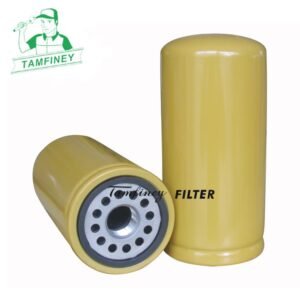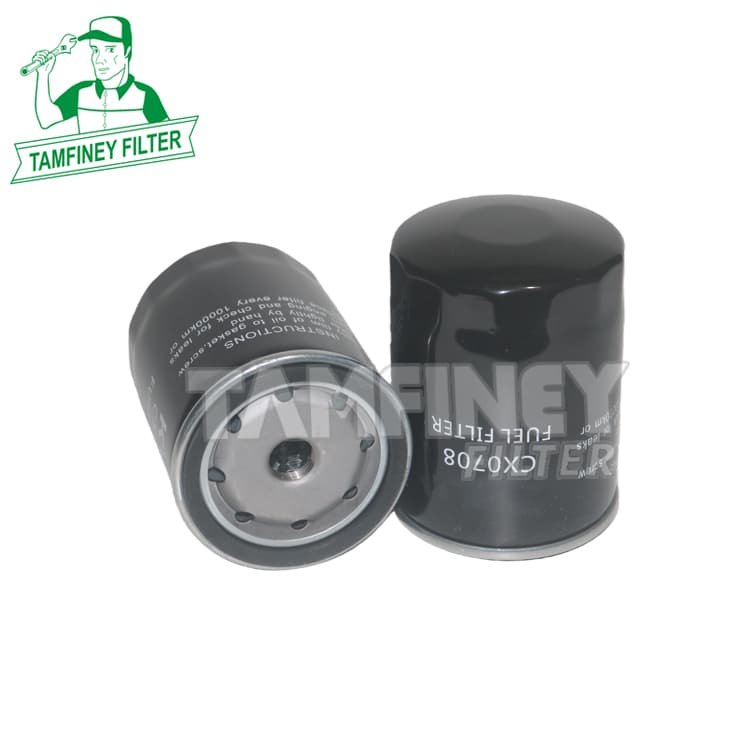


| Fuel Filter CX0708 CX7085 3903640 Parameter: | |
| Part Number | CX0708 CX7085 3903640 |
| Brand | Tamfiney |
| Weight | 361g |
| Height | 104 mm |
| Outer Diameter | 79 mm |
| Inner Diameter/ Thread Size | M16 X 1.5-6H INT |
| Minimum Order | 100 PCS |
| Place of Region: | Zhejiang, China |
| Payment Terms: | T/T |
| Price Terms: | FOB |
| Lead Time: | 30 to 50 days based on order quantities |
| Market Type: | After Market |
| Current Export Market: | Southeast Asian,North America, South America, Western Europe, Eastern Europe, Africa, Oceania |
CX0708 Applicaion:
BAUDOUIN 4M06-G4D0/S
DONGFENG DF 254 G2
KJ Power KJB 25-SKJB 44-S
Professional Forklift Fuel Filter CX0708 CX7085 3903640
Q: What are the signs of a bad forklift fuel filter?
The core signs of forklift fuel filter damage (mostly blockage or filtration failure) are concentrated in three aspects: power degradation, abnormal starting, and unstable operation. The specific manifestations are as follows:
Signs of core malfunction
Weak acceleration and load drop: Slow response during rapid acceleration, obvious lack of power during climbing or full load operation, and even "jerking" (one stop at a time) phenomenon, resulting in reduced combustion efficiency due to poor fuel supply.
Difficulty or inability to start: Multiple ignitions are required to start the car in cold or hot conditions, and in severe cases, the car cannot be started at all. The filter element is severely clogged, causing fuel to not reach the fuel injector.
Idle shaking and easy stalling: The engine runs unstably at idle speed, accompanied by significant vibrations in the vehicle body; It is very easy to suddenly stall during gear shifting, deceleration, or low load operation.
Auxiliary judgment signal
Abnormal increase in fuel consumption: To compensate for insufficient fuel supply, the electronic control system may increase fuel injection, resulting in a significant increase in fuel consumption and insufficient combustion.
Abnormal exhaust: The exhaust emits black smoke (common in diesel vehicles) or white smoke (moisture not separated into the combustion chamber), with a more pungent odor than before.
Component related damage: The fuel pump makes abnormal noises or overheats due to long-term high-pressure operation, and the fuel injector has poor atomization or blockage due to impurities entering.
Special Notice
If the forklift filter CX0708 is equipped with an fuel water separator, it is also necessary to observe the water level alarm light: flashing indicates excessive moisture and needs to be drained, while constant light may indicate sensor failure. If any of the above signs are found, the machine should be stopped immediately for inspection to avoid impurities damaging the high-pressure common rail system or fuel injectors.
Q: How do I replace a diesel forklift fuel filter?
When replacing the diesel forklift fuel filter, it is essential to strictly adhere to three core principles: cold engine operation, water drainage, and standardized exhaust, to prevent air from entering the high-pressure oil circuit, which could lead to starting difficulties or damage to the fuel injector.
I. Preparation
Tools and Materials: New filter element conforming to original factory specifications, oil collection tray (capacity > 2L), wrench/specialized removal socket, clean cotton cloth, protective gloves, and safety goggles.
Safety Confirmation: Park the forklift in a flat, well-ventilated area, engage the parking brake, turn off the engine and remove the key; disconnect the negative terminal of the battery to prevent accidental startup.
Environmental requirements: No open flames, keep away from heat sources, and ensure the working surface is dry and free of oil stains.
II. Replacement Procedure
Drain fuel and water: Loosen the drain valve at the bottom of the filter, and drain the accumulated water and old fuel into the oil pan. Close the valve once the water is fully drained. If equipped with a water level sensor, disconnect its plug first to prevent wiring harness entanglement.
Remove the old filter element:
Use a dedicated wrench to loosen the filter housing (or lower cover) counterclockwise, ensuring an oil tray is placed below to catch any residual diesel.
Remove the old filter element vertically upward, and avoid direct contact with the filter paper to prevent contamination.
Clean the installation base, inspect the sealing ring groove for integrity, and remove any residual debris.
Install a new filter element:
Remove the plastic seal of the new filter element, and apply a small amount of diesel or hydraulic oil to the O-rings on the top and bottom for lubrication (oil or vaseline is prohibited to avoid corrosion of the rubber).
Center the new filter element in the base, manually pre-tighten it 2-3 turns clockwise, then secure it to the recommended torque (typically 30-35 N·m) using a wrench. Avoid over-tightening to prevent deformation and leakage.
Install the reset and water release valve, as well as the water level sensor plug.
System exhaust (critical):
Loosen the bleeder bolt on the filter or oil pump.
Repeatedly press the hand oil pump (or turn on the power to activate the electric pump) until a continuous stream of diesel without bubbles flows out from the bleed bolt.
Tighten the bleed screw and check again whether the hand oil pump feels harder, confirming that the oil line is fully filled.
III. Startup and Inspection
Reconnect the negative terminal of the battery and start the engine to idle for 1~2 minutes.
Carefully inspect the filter interface, drain valve, and air vent bolt for any leaks.
Observe whether the engine runs smoothly. If there is no abnormal shaking or stalling, it can be put into normal use