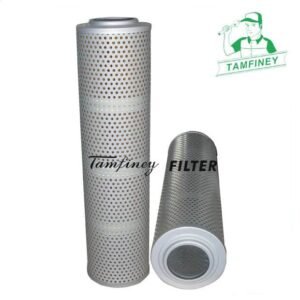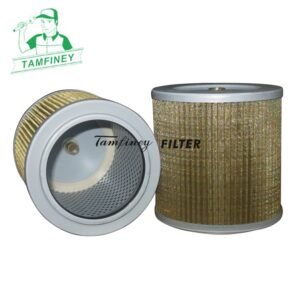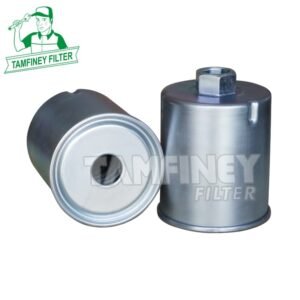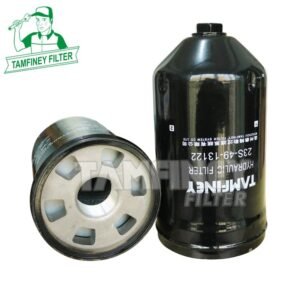


| Hydraulic Filter 400406-00381A 400406-00381 Parameter: | |
| Part Number | 400406-00381A 400406-00381 |
| Brand | Tamfiney |
| Weight | 4461g |
| Height | 467/475 mm |
| Outer Diameter | 150 mm |
| Inner Diameter/ Thread Size | 90 mm |
| Minimum Order | 100 PCS |
| Place of Region: | Zhejiang, China |
| Payment Terms: | T/T |
| Price Terms: | FOB |
| Lead Time: | 30 to 50 days based on order quantities |
| Market Type: | After Market |
| Current Export Market: | Southeast Asian,North America, South America, Western Europe, Eastern Europe, Africa, Oceania |
Applications:
DOOSAN INFRACORE SHANDONG SD 300 N
Professional Excavator Hydraulic Filter 400406-00381A 400406-00381
Q: What is the purpose of a hydraulic filter?
The purpose of hydraulic filters is to filter out solid particles and gel like pollutants in hydraulic oil, maintain the cleanliness of the oil, prevent component wear, jamming, or blockage, thereby ensuring stable operation of the hydraulic system and extending its service life.
Main functions
- Intercept impurities: remove manufacturing residues (welding slag, casting sand), external intrusion (dust), and pollutants generated internally (metal shavings, seal fragments, oxidized gum).
- Protective components: prevent valve cores, pumps, and motors with small gaps (μ m level) from failing due to particle jamming or scratching of the oil film, reducing internal leakage and heat generation.
- Control pollution level: Keeping the cleanliness of the oil within the required level of the system can prevent 75% -90% of hydraulic system failures according to statistics.
- Auxiliary balance: Some air filters also have a breathable function, maintaining the balance of fuel tank pressure and preventing pump suction from creating air pockets.
Key mechanism of action
- Physical interception: Blocking particles larger than the accuracy threshold through filter micropores or gaps.
- Magnetic adsorption: Specific models use magnetic materials to adsorb ferromagnetic wear particles.
- Scale containment: Continuously containing pollutants before blockage to ensure long-term filtration efficiency.
If not filtered in a timely manner, impurities can cause blockage of the throttle hole, strain on the mating surface, decreased efficiency, and accelerated deterioration of the oil, seriously affecting the reliability of the equipment.
Q: Why can't you use water in hydraulics?
Hydraulic systems are not entirely prohibited from using water, but ordinary pure water cannot directly replace hydraulic oil in conventional systems due to its extremely poor lubricity, strong corrosiveness, susceptibility to cavitation, low viscosity leading to significant leakage, and limitations in freezing point/boiling point. It can only be used in specially designed hydro-hydraulic systems (such as environmental protection, explosion-proof, or deep-sea scenarios) with modified or specialized components adapted for water media.
Analysis of Core Reasons
- Insufficient lubrication: Water fails to form an effective oil film on the surfaces of metal friction pairs, leading to rapid wear or even jamming of moving parts such as pumps, valves, and cylinders, significantly reducing their service life.
- Corrosion and Sealing Failure: The presence of oxygen and impurities in water can easily lead to electrochemical corrosion, causing ordinary rubber seals to swell and age, resulting in leaks. Hydraulic oil, on the other hand, provides both rust prevention and sealing protection functions.
- High cavitation risk: The low boiling point and high saturated vapor pressure of water make it prone to vaporization and bubble formation under high pressure and temperature. Bubble collapse impacts the metal surface (cavitation), damaging components and reducing efficiency.
- Too low viscosity: The viscosity of water is about 1/50 to 1/100 that of hydraulic oil, resulting in poor internal sealing, severe internal leakage, difficulty in establishing system pressure, and low volumetric efficiency.
- Poor temperature adaptability: Water expands and can crack pipelines when freezing at 0°C, while high temperatures cause easy evaporation; hydraulic oil can function stably between -30°C and 80°C+ with additives.