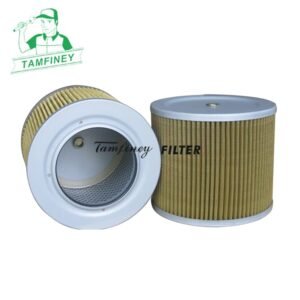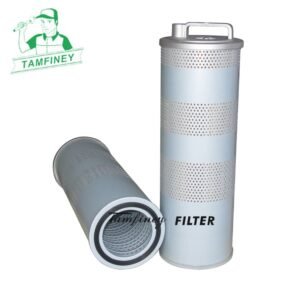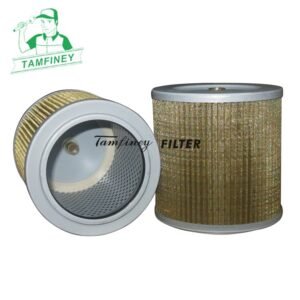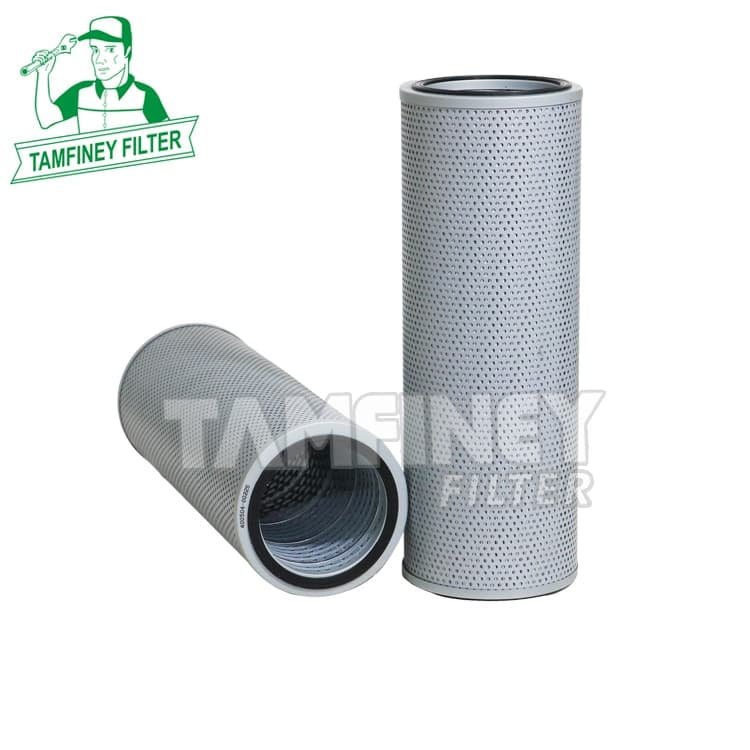



| Hydraulic Filter 400504-00225 400504-00034 SFH0225 Parameter: | |
| Part Number | 400504-00225 400504-00034 SFH0225 |
| Brand | Tamfiney |
| Weight | 2580g |
| Height | 414/419 mm |
| Outer Diameter | 150 mm |
| Inner Diameter/ Thread Size | 110 mm |
| Minimum Order | 100 PCS |
| Place of Region: | Zhejiang, China |
| Payment Terms: | T/T |
| Price Terms: | FOB |
| Lead Time: | 30 to 50 days based on order quantities |
| Market Type: | After Market |
| Current Export Market: | Southeast Asian,North America, South America, Western Europe, Eastern Europe, Africa, Oceania |
Applications:
BOBCAT E 145 Tier 4E 165E 220E 245 Tier 4L 205L 235L 255L 285
DEVELON DL 200-7DL 220-7DL 250-7DL 420-7DL 420-7 CVT DM-7DX 380 LC-7DX 380 LC-7KDX 420 LC-7DX 420 LC-7KDX 490 LC-7DX 490 LC-7KDX 530 DM-7DX 530 LC-7DX 530 LC-7KDX 530 LC-7 SLRDX 85 R-7
DOOSAN DX 140 LC-7DX 140 LCR-7DX 165 WR-7DX 225 LC-7DX 225 LC-7XDX 245 NHD-7DX 255 LC-7DX 380 LC-7
DOOSAN DAEWOO ACX 23 RRDL 250-5DL 400-3DL 400-5 DX 220 LC-5DX 225 LC-3DX 340 LC-5DX 350 LC-5DX 380 LC-3DX 380 LC-5
HYUNDAI HW 100 A
Professional Return Line Filter 400504-00225 400504-00034 SFH0225
Q: What is a return line filter?
Return line filters install at hydraulic system return lines or tank inlets. They trap metal particles, rubber debris and other contaminants. They keep oil clean before it flows back to the tank. They protect pumps and precision components in the system.
They mount at the end of return lines or on tank top/side/inside. They filter wear particles like metal powder and seal scraps. They stop re-entering contaminants from causing secondary wear. They maintain oil cleanliness at NAS 10-11 or ISO standards.
They work under low pressure, rated pressure ≤1.6MPa. They have large oil flow capacity and high dirt holding capacity. Some models have a bypass valve to avoid high back pressure.
Filter elements use fiberglass, composite filter paper or chemical fiber. Main filtration precision ranges from 10 to 20μm, customizable 3-40μm. Some metal mesh elements can be cleaned and reused for cost saving. Bypass valves open at 0.35-0.4MPa pressure difference automatically. They let unfiltered oil flow back to tank to avoid element rupture. Differential pressure transmitters monitor pressure across the element. They send electric or visual alarms to remind element replacement. Some units add check valves, magnets and flow diffusers as extras.
Q: What is the difference between suction and return hydraulic filters?
The core difference between oil suction and return hydraulic filters lies in their installation position, filtration accuracy, flow resistance requirements, and protection focus: the former is installed at the pump inlet to prevent large particles from being sucked in (coarse filtration, low resistance), while the latter is installed in the return oil circuit to keep the oil tank clean (fine filtration, back pressure resistance).
Key Differences Comparison
- Installation position: The oil suction filter is located at the oil suction port of the hydraulic pump (inside the oil tank or at the front end of the pipeline); The return oil filter is located between the return oil pipeline of the actuator and the oil tank.
- Filtration accuracy: The oil absorption is usually 80-180 μ m (coarse filtration) to prevent clogging of the pump inlet; The return oil is usually 10-40 μ m (fine filtration) to intercept wear particles and prevent cyclic pollution.
- Pressure and resistance characteristics: The oil suction filter requires extremely low flow resistance (to avoid pump cavitation), and the working pressure is generally ≤ 0.6MPa; The return oil filter can withstand a certain back pressure (commonly ≤ 1.6MPa), allowing for a higher pressure drop and often equipped with a bypass valve.
- Main function: The oil suction filter focuses on protecting the hydraulic pump from damage caused by large impurities; The oil return filter focuses on maintaining system cleanliness and removing metal shavings, sealing debris, and other debris generated by component wear.
- Flow selection logic: The rated flow rate of the oil suction filter should be ≥ pump flow rate × 2; The return oil filter should be selected based on the peak flow rate of the return oil (including the amplification factor of the differential circuit), which is often greater than the rated flow rate of the pump.
Selection precautions
The two are not interchangeable. If the high-precision oil return filter element is mistakenly used for the oil suction end, it is easy to cause the pump to become empty, cavitation, or even damage due to excessive resistance; If a low precision oil suction filter is used instead of the return oil end, it will not effectively remove pollutants generated in the system and accelerate component wear.