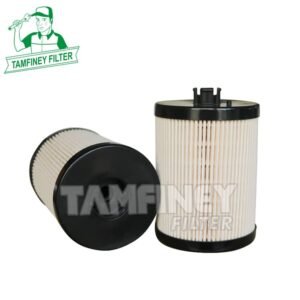


| Fuel Filter R160T R160P R160-MER-01 LFF8707 Parameter: | |
| Part Number | R160T R160P R160-MER-01 LFF8707 |
| Brand | Tamfiney |
| Weight | 918 g |
| Height | 230 mm |
| Outer Diameter | 108 mm |
| Inner Diameter/ Thread Size | 1"-14 UN |
| Minimum Order | 100 PCS |
| Place of Region: | Zhejiang, China |
| Payment Terms: | T/T |
| Price Terms: | FOB |
| Lead Time: | 30 to 50 days based on order quantities |
| Market Type: | After Market |
| Current Export Market: | Southeast Asian,North America, South America, Western Europe, Eastern Europe, Africa, Oceania |
What does R160T fit?
ISUZU EXZ 52
KALMAR ESC 450
KOBELCO SK 230 SRLC-5SK 260 NLC-9SK 270 SR LC-5 ESK 400 DLC-10
LIUGONG 925 DCLG 856
MANITOWOC 10000 E1100012000 E12000 E800085008500 E
MASSEY FERGUSON 6485
SDMO R 220
Professional Engine Separator Filter R160T R160P R160-MER-01 LFF8707
Q: How long do water separators last?
Q: Do diesel fuel filters remove water?
Yes, diesel filters can remove water, especially models that integrate fuel water separation function, which can effectively separate water from diesel through mechanisms such as gravity settling and hydrophobic materials.
Diesel filters mainly rely on the following methods for removing water:
Fuel water separation device: Most diesel filters are equipped with transparent water cups and drain valves underneath, which utilize the higher density of water compared to diesel to allow water to naturally settle and be manually discharged.
Multi layer filtration structure: Some high-end filters use coalescence and separation filters, which first aggregate small water droplets into large ones, and then block them with hydrophobic materials to achieve efficient separation.
Electronic monitoring function: Some intelligent models are equipped with moisture content sensors, which will trigger an instrument panel alarm when the moisture exceeds a threshold, reminding timely drainage.
It should be noted that not all diesel filters have strong water removal capabilities. Ordinary fine filters mainly remove solid impurities, while coarse filters or specialized fuel water separators are the key steps in removing water. To ensure the normal operation of the engine, it is recommended to regularly check and drain the accumulated water in the filter, especially when using the vehicle in humid or low-temperature environments.
Q: What micron fuel filter before injectors?
The filtering accuracy of the fuel filter before the injector is usually between 4-10 microns. As the "last line of defense" of the fuel system, it is mainly used to capture small particulate pollutants and protect precision components such as injectors and oil pumps in the high-pressure common rail system.
Different vehicle models and engine types have different requirements for filter accuracy, as follows:
Ordinary family cars: mostly around 20 microns, can effectively filter common impurities and ensure the normal operation of the engine.
High performance gasoline engines (such as turbocharged and direct injection): require higher filtration accuracy, generally 5-20 microns, and some can reach 10 microns or even lower.
Diesel engine: Especially for high-pressure common rail systems, cleanliness requirements are extremely strict. The precision of the secondary filter is usually 5-10 microns, and some even require less than 1 micron to prevent nozzle blockage and component wear.
Aviation fuel filter: The standard is more stringent, with an absolute filtration degree of 5-75 microns, depending on the model and operating conditions.
It is worth noting that the higher the filtering accuracy, the better. Excessive precision may lead to clogged filter elements, increased fuel flow resistance, and affect fuel supply stability. Therefore, a matching filter should be selected based on the vehicle engine type and usage environment.
Regularly replacing the fuel filter is the key to ensuring system cleanliness. It is recommended to refer to the replacement cycle in the vehicle manual, which is generally every 20000 to 48000 kilometers of driving.