Get a Free Quote
Professional Cross Reference Filter FS36209 FS36268 5268019 3991498 5264414
Your Best Cross Reference Filter FS36209 FS36268 5268019 3991498 5264414 Fuel filter manufacturer in China.
FOTON 5268019 CUMMINS 3991498 MLS 5264414
BALDWIN BF 1352 SPS BOMAG 31701239 ;DYNAPAC 966553694 HYUNDAI 11LD-70010;JCB 32/925595;MANN WK 9020 X; SF FILTER SK 3349; YALE 580042635 DONALDSON P550660; P550929 FLEETGUARD FS19616 FS36209 FS36268 FS19161


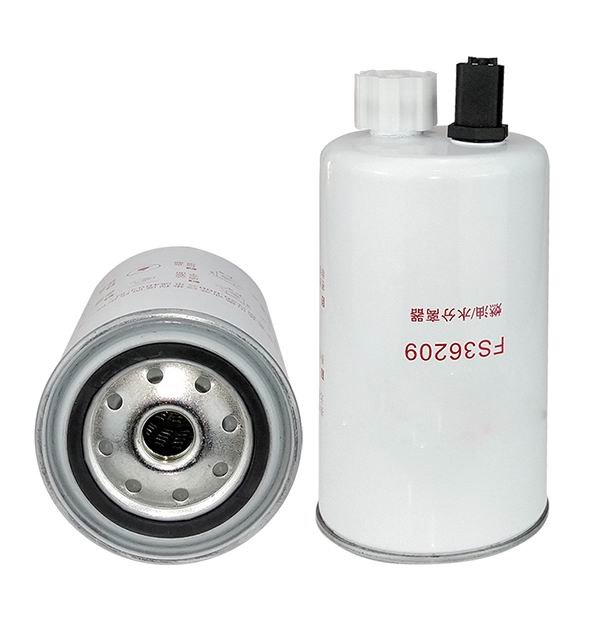
| Fuel Filter FS36209 FS36268 5268019 3991498 5264414 Parameter: | |
| Part Number | FS36209 FS36268 5268019 3991498 5264414 |
| Brand | Tamfiney |
| Weight | 769g |
| Height | 201 mm |
| Outer Diameter | 93 mm |
| Inner Diameter/ Thread Size |
M20X1.5 |
| Minimum Order | 100 PCS |
| Place of Region: | Zhejiang, China |
| Payment Terms: | T/T |
| Price Terms: | FOB |
| Lead Time: | 30 to 50 days based on order quantities |
| Market Type: | After Market |
| Current Export Market: | Southeast Asian,North America, South America, Western Europe, Eastern Europe, Africa, Oceania |
Applications:
Cummins ISF2.8
Professional Cross Reference Filter FS36209 FS36268 5268019 3991498 5264414
The FS36209 cross reference provides users with reliable alternatives across various filter brands. Importantly, it supports efficient maintenance planning with easy-to-find substitutes. When you choose FS36209 cross reference information, you save both time and effort. Additionally, this cross referencing minimizes equipment downtime and ensures continuously clean fuel. Therefore, many fleet managers depend on verified cross references to protect their vital machinery.
FS36209 Filter: Engine Protection You Can Trust
The fs36209 filter excels in removing contaminants and water from diesel fuel. As a result, it safeguards injectors and fuel pumps from premature wear. Furthermore, frequent replacement with a genuine fs36209 filter improves overall engine efficiency. Operators appreciate its robust build, ensuring top-tier performance under tough conditions. Moreover, consistent use results in longer service intervals and lower maintenance costs.
FS36268: Superior Filtration Technology
As another outstanding option, the FS36268 filter is designed for high filtration precision. It expertly captures even minute particles, enhancing engine protection and longevity. Moreover, the FS36268 is a trusted cross reference for FS36209, providing excellent fitment. Its advanced media supports high flow rates and reliable operation. Fleet owners value FS36268's easy installation and proven filtration performance.
5268019: Ideal for Rigorous Demands
Looking for a heavy-duty alternative? The 5268019 filter matches FS36209’s performance while adapting to strict operational demands. Its enduring construction stands up to vibration and temperature changes. Additionally, 5268019 maintains optimal fuel purity, supporting maximum engine output. Operators often prefer 5268019 for challenging industrial and fleet applications worldwide.
3991498: Consistent Quality and Convenience
Next, the 3991498 filter is recognized for its lasting quality and versatile replacements. Besides impressive filtration, it integrates smoothly with a wide range of equipment. When cross-referenced properly, 3991498 gives peace of mind to maintenance teams. It ensures that your vehicles remain efficient and protected at all times.
5264414: Reliable Choice for Modern Fleets
Lastly, the 5264414 filter answers the need for advanced fuel protection in today’s demanding work environments. With every use, 5264414 reduces engine deposits and performance issues. Not only does it cross-reference with FS36209, but it also meets global filtration standards. This filter keeps heavy-duty engines running reliably, mile after mile.
TAMFINEY: Your Cross Reference Filter Solution
With TAMFINEY, you can confidently select FS36209, FS36268, 5268019, 3991498, or 5264414. Our expert support helps fleets find the right cross reference filter for any application. Rely on TAMFINEY to maximize equipment uptime and ensure engine protection every day.
Q: How do I cross-reference a fuel filter part number?
Cross referencing fuel filter part numbers is to find the corresponding relationship between different brands or models, ensuring that the replaced parts match the original specifications perfectly. The following are commonly used methods and steps:
1. Check the markings on the accessory casing or packaging
The casing or original packaging of fuel filters usually bears the manufacturer's part number (such as "CH10938" or "JX0723"), which serves as the basis for cross referencing. For example, the number of Perkins oil filters starts with "CH" (such as CH10938), while Bosch filters may use numerical codes (such as 0 986 479 058), which can be associated with interchangeable models from other brands.
2. Refer to the vehicle maintenance manual or original factory catalog
The vehicle maintenance manual will list the original recommended fuel filter part numbers (such as "06J 115 562B"), which is the most authoritative basis for cross referencing. For specific brands (such as Perkins), the engine serial number or VIN code can be entered through the official electronic parts catalog (EPC) to directly obtain the compatible original factory number and interchangeable model.
3. Use VIN code or engine serial number to query online
Enter the 17 digit VIN code on the official website of the car brand or accessory platform (such as the MAN Filter official website), and the system will accurately match the appropriate fuel filter model to avoid manual verification errors.
For construction machinery or generators (such as Perkins engines), entering the engine serial number (such as "AB123456789") can bring up an exploded view and directly view the part number and cross reference information.
4. Consult authorized dealers or professional repair channels
Authorized dealers can quickly query accurate part numbers and provide cross reference recommendations through the original factory system (such as Perkins' after-sales support platform). The repair shop can also read the vehicle ECU information through the OBD interface, and lock the applicable models in combination with the EPC catalog to ensure compatibility.
5. Measurement of key parameters to assist in confirmation
If the identification is unclear or missing, a vernier caliper can be used to measure the thread diameter (such as M20 × 1.5), sealing ring diameter (such as φ 65mm), and total height (usually 80-120mm) of the fuel filter, and then match it with the brand exchange model table (such as WIX or Mahler's table).
Notes:
Prioritize checking the original factory number: When cross referencing, be sure to use the original factory part number as the standard to avoid errors caused by non-standard labeling of accessory parts from the secondary factory.
Be cautious of version differences: Different models or emission standards may correspond to different models, and the version needs to be confirmed based on the engine model and serial number.
Authenticity verification: When purchasing new accessories, scanning the dynamic QR code on the packaging can verify the model and authenticity, preventing the purchase of incompatible aftermarket parts.
By combining the above methods, cross referencing of fuel filter part numbers can be efficiently and accurately completed. If encountering specific brand or model questions, providing more details can further refine the suggestions.
Q: Are aftermarket fuel filters as good as OEM (Original Equipment Manufacturer) filters?
OEM (Original Equipment Manufacturer) fuel filters are filters that are originally equipped by the manufacturer when the vehicle leaves the factory, and are typically rigorously tested to ensure perfect compatibility and high performance with the vehicle system. After sales fuel filters (also known as replacement or aftermarket filters) are produced by third-party brands for maintenance or replacement purposes.
In terms of quality, the differences between aftermarket fuel filters and OEM filters may be reflected in the following aspects:
Performance consistency: OEM filters typically follow the original factory specifications, resulting in more reliable filtration efficiency and durability; After sales products may experience performance fluctuations due to differences in brand and manufacturing standards, but some well-known brands' products can also achieve similar levels.
Adaptability: OEM filters are specifically designed for specific vehicle models, ensuring worry free installation; After sales filters need to pay attention to model matching, otherwise installation problems or poor sealing may occur.
Cost and selection: After sales filters are usually more affordable and offer a variety of options, but users need to evaluate quality through certification marks (such as API, ILAC, etc.) or brand reputation.
Overall, if the after-sales filter meets the original factory standards (such as certification or good user feedback), its performance may be close to OEM products; But to ensure the best results, it is common to prioritize choosing OEM or well-known after-sales brands.
Q: Why use a fuel filter cross reference tool?
The fuel filter is a key component in the automotive fuel system, mainly used to filter impurities, moisture and other pollutants in the fuel, thereby protecting the precision components of the engine and ensuring the efficient operation of the fuel system. The following are the main reasons for using the fuel filter cross reference tool:
1. Ensure component compatibility
There are differences in interface size, installation method, and specifications among fuel filters of different vehicle models. Cross reference tools can help car owners or maintenance personnel quickly match the correct filter model, avoiding leaks or system failures caused by improper installation.
2. Optimize performance and durability
The filtration efficiency of the fuel filter directly affects the combustion efficiency and emission level of the engine. Cross reference tools typically integrate technical standards such as filtration accuracy and pressure differential requirements to help select products that meet original specifications or higher standards, thereby improving fuel economy and environmental friendliness.
3. Reduce maintenance costs and fault risks
Using mismatched filters may lead to issues such as clogged fuel injectors and worn fuel pumps, increasing maintenance costs. By using cross referencing tools to screen reliable products, engine failures caused by component failures can be reduced and vehicle lifespan can be extended.
4. Adapt to personalized needs
The driving environment (such as high dust and poor fuel quality) can affect the clogging speed of the filter. The cross information provided by the tool can assist in determining the durability of different brands or models, helping users choose products with longer replacement cycles or stronger filtering capabilities based on actual needs.
5. Improve maintenance efficiency
During maintenance, cross referencing tools can quickly verify the equivalence of multiple brand models, saving query time. For example, when the original parts are unavailable, the tool can recommend compatible alternatives to ensure timely maintenance of the vehicle.
In summary, the fuel filter cross reference tool integrates technical standards, vehicle model data, and user feedback to help achieve precise selection, ensuring stable operation of the fuel system while balancing economic and environmental requirements.