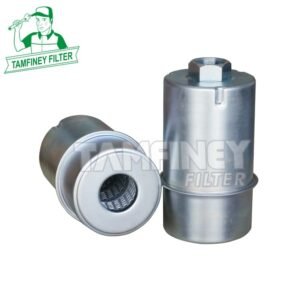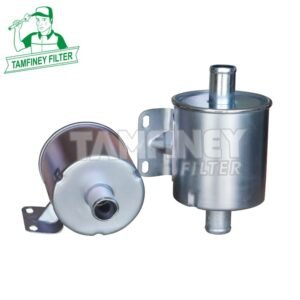


| Hydraulic Filter 3800305M91 25015M91 S76656 SH59026 Parameter: | |
| Part Number | 3800305M91 25015M91 S76656 SH59026 |
| Brand | Tamfiney |
| Weight | 115 g |
| Height | 121 mm |
| Outer Diameter | 55 mm |
| Inner Diameter | 34 mm |
| Material | Metal & Strainless Steel |
| Filter Media | 100-mesh or 125-micron stainless steel wire cloth Strainless steel blend |
| Typical Working Pressure | Up to approx. 6–10 bar |
| Filtration | Approx. 5–10 micron |
| Temperature Rating | Up to approx. 100–120°C |
| Minimum Order | 100 PCS |
| Place of Region: | Zhejiang, China |
| Payment Terms: | T/T |
| Price Terms: | FOB |
| Lead Time: | 30 to 50 days based on order quantities |
| Market Type: | After Market |
| Current Export Market: | Southeast Asian,North America, South America, Western Europe, Eastern Europe, Africa, Oceania |
Applications:
- Massey Ferguson Tractors: MF 231S, MF 241, MF 271, MF 281, MF 4325, MF 4335, MF 4345, MF 4355, MF 4360, MF 4365, MF 4370, MF 2650, MF 265S, MF 2660, MF 2665, MF 2670, MF 2680, MF 2685, MF 2690, MF 2695, MF 285S
- Challenger Tractors: MT 425, MT 445, MT 455, MT 465
Premium 3800305M91 25015M91 Hydraulic Oil Filter S76656 SH59026
Q: Can I use a standard automotive engine oil filter for a hydraulic system?
No, you can't. It is not recommended to replace hydraulic filters with automotive engine oil filters. The two are not compatible in terms of pressure rating, filtration accuracy, and structural design. Mixing them may cause sudden hydraulic system failure and lead to safety accidents.
The pressure of the hydraulic system during operation is much higher than that of the engine lubrication system, and standard automotive filters cannot withstand this high pressure, which can easily damage and cause the system to suddenly fail.
Hydraulic filters need to withstand system high pressure of 10-35MPa for a long time, and have the performance of high pressure without deformation, large flow without throttling, and high-precision without clogging; And the oil filter focuses on high temperature resistance and oil corrosion resistance, with a much lower pressure resistance level than hydraulic filter elements.
Even if it can be temporarily installed, the filter material and sealing structure of the machine filter are not designed for hydraulic oil. Once they fail, impurities will directly enter the hydraulic circuit, damaging precision components such as pumps and valves.
The key differences between the two
- Pressure resistance: The hydraulic filter element needs to withstand a high pressure of 10-35MPa; The pressure resistance level of the filter is much lower than this.
- Filter media: Hydraulic filter element filters hydraulic oil, machine filter filters engine oil, oil additives and different working conditions.
- Installation position: The hydraulic filter element is installed in the oil suction path, pressure oil path, return oil path, etc; The filter is fixed on the engine oil line.
Q: What are the different types of hydraulic filters?
Hydraulic filters can be classified based on three dimensions: filtration principle, installation position, and filtration accuracy, each with its own purpose and characteristics.
🔧 Classified by filtering principle
- Surface type filter: It intercepts impurities on the surface of the filter screen, has a simple structure, high flow capacity, and is easy to clean. However, its accuracy is relatively low. Common types include mesh type and line gap type, which are mostly used in pump suction ports.
- Deep type filter: The filter element has a tortuous channel inside, which can capture small particles with high accuracy but high pressure loss, and is not easy to clean. It is commonly made of materials such as paper core, sintered metal, felt, etc.
- Magnetic filter: It uses permanent magnet materials to adsorb metal impurities such as iron filings in oil, and is often combined with other filter elements to form a composite filter for coarse filtration.
📍 Classified by installation location
- Oil suction filter: installed at the oil suction port of the pump to prevent large particles from entering the pump. It has low accuracy, high flow capacity, and avoids suction. It is commonly made of stainless steel woven mesh.
- Pressure filter: installed at the pump outlet to protect downstream precision components, with high precision, and needs to withstand system working pressure and impact, such as this commonly installed before servo valves.
- Return oil filter: installed on the system return oil pipeline to remove pollutants before the oil returns to the oil tank, with high accuracy, but attention should be paid to flow pulsation and back pressure issues.
- Air breather filter: installed at the top of the fuel tank to prevent external dust and moisture from entering the tank with air, acting as the "mask" of the fuel tank.
📏 Classified by filtering accuracy
According to the size of impurity particles that can be filtered out, it can be divided into coarse filters (>100 μ m)
ordinary filters (10-100 μ m),
precision filters (5-10 μ m)
ultra fine filters (1-5 μ m).
The higher the precision, the easier it is for the filter element to clog. When selecting, a balance should be struck between filtration efficiency and cost, and there is no need to blindly pursue high precision