
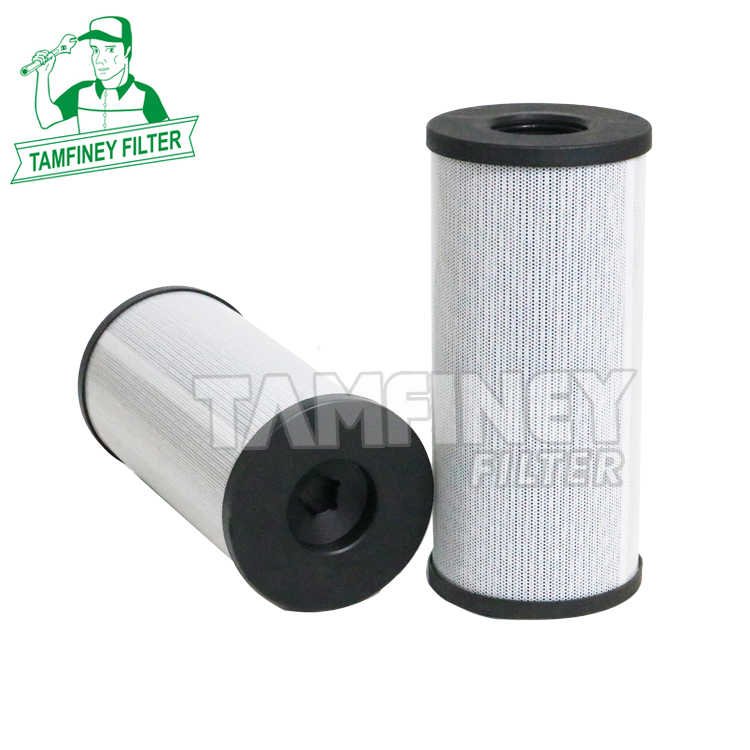



| Hydraulic Filter 328-3655 1R1809 1R-1809 HF35515 Parameter: | |
| Part Number | 328-3655 1R1809 1R-1809 HF35515 |
| Brand | Tamfiney |
| Weight | 1348 g |
| Height | 266 mm |
| Outer Diameter | 125 mm |
| Inner Diameter/ Thread Size | 51 mm |
| Minimum Order | 100 PCS |
| Place of Region: | Zhejiang, China |
| Payment Terms: | T/T |
| Price Terms: | FOB |
| Lead Time: | 30 to 50 days based on order quantities |
| Market Type: | After Market |
| Current Export Market: | Southeast Asian,North America, South America, Western Europe, Eastern Europe, Africa, Oceania |
Applications:
CATERPILLAR 12 M 3 AWD12 M VHP AUTOSHIFT14140 K140 M 214 M14 M III16160 M 3 AWD160 M 3 AWD16 M 316 M 31818 M 3785785 D785 D785 G789789 C789 D789 G793 F797 F966 HAD 55 BCX 35-P800D 6 N LGPD 6 N XLD 6 T
MASSEY FERGUSON 3645
Professional 25 Micron Hydraulic Filter 328-3655 1R1809 1R-1809 HF35515
Q: How many microns should a hydraulic filter be?
The accuracy of hydraulic filter elements does not have a single fixed value and needs to be selected according to the installation position and system cleanliness requirements: suction port 100-150 µ m, pressure pipeline 3-10 µ m, return pipeline 10-25 µ m, high-precision servo system ≤ 3 µ m.
Core selection criteria (by pipeline location)
- Suction Line: 100-150 µ m (coarse filter, anti pump cavitation, ensuring high flow and low resistance).
- Pressure Line Filter: 3-10 µ m (for protective valves and actuators, typically 3-5 µ m is selected for high-pressure systems).
- Return Line Filter: 10-25 µ m (captures system wear particles and maintains overall oil cleanliness).
- Off line/Beta Ratio High: 1-3 µ m (used for servo systems or extremely high cleanliness requirements, such as ISO 15/13 or below).
Key decision-making factors
- Component sensitivity: Servo valves should be ≤ 3 µ m, ordinary slide valves should be 5-10 µ m, and gear pumps/motors can accept 10-25 µ m.
- Filtration efficiency indicator: Focus on absolute accuracy or beta ratio, such as β ₁₀ ≥ 200, indicating a filtration efficiency of 99.5% for 10 µ m particles, which is more reliable than simply nominal "micron number".
- Flow rate and pressure drop: The higher the precision, the greater the pressure drop. It is necessary to match the pump flow rate to avoid suction or premature clogging of the filter element.
Do not directly apply universal values, be sure to refer to the ISO cleanliness level and minimum β value requirements specified in the equipment OEM manual; If the manual is missing, 10 µ m is recommended for the pressure side of conventional industrial systems, and 3-5 µ m is recommended for precision systems.
Q: How do you size a hydraulic filter?
There is no unified fixed size for hydraulic filters, and their appearance and interface dimensions depend entirely on the model, installation method (oil suction/return/pressure pipeline), rated flow rate, and brand standards, which need to be confirmed according to specific specifications.
Common Type Size Reference Range
Micro return filter : height approximately 127-786mm, cylinder diameter Φ 75-Φ 160mm, interface thread M22-M48 varying .
Double tube pipeline filter The common appearance is 263 × 233mm to 555 × 746mm, with a weight of up to 17kg, suitable for high flow systems.
Pilot filters: Some are only Φ 85 × 50mm, weighing 0.3kg, used for low flow auxiliary filtration.
Composition of key dimensional parameters
- Outline: length x width x height (or diameter x total height), determining the installation space.
- Interface specifications: nominal diameter (DN), thread type (such as M42 × 2), flange standard.
- Filter size: outer diameter x length (such as 325 x 660mm, 152 x 902mm, etc.), determines replacement compatibility.
- Installation hole spacing: The distribution size of the base bolts affects the fixing method.
Please provide specific models, application scenarios (such as oil suction ports/return oil lines/high-pressure pipes) or brands in order to query accurate dimensional data; Blind matching can easily lead to interface mismatch or spatial interference.
Q: Is a 25 micron hydraulic filter good?
The 25 micron hydraulic filter itself is a mature and commonly used industrial specification, but whether it is "good" depends on the specific application scenario, system component sensitivity, and installation location, and is not necessarily better if it is higher or lower.
Key Conclusions
- Applicable scenarios: 25 μ m is commonly used for oil return filtration, low-pressure pipelines, or general hydraulic component protection. It can effectively intercept worn metal shavings and larger particles, balancing filtration efficiency and flux resistance.
- Not applicable scenario: If the system contains servo valves (≤ 3 μ m) or proportional valves (≤ 5 μ m), using a 25 μ m filter alone cannot protect the core control components, which may cause the valve core to become stuck or worn.
- Key principle: The filtration accuracy must match the requirements of the most sensitive components in the system, and consider the working pressure (finer accuracy is required in high-pressure areas). Blindly pursuing high accuracy can lead to excessive pressure difference, insufficient flow, or premature clogging of the filter element.
Key dimensions for selection
- Component matching degree: Servo valve system requires 3 μ m, proportional valve requires 5 μ m, and ordinary cylinder/motor/directional valve can use 10-25 μ m; 25 μ m is only suitable for coarse filtration or oil return sections that do not require high cleanliness.
- Installation position: The oil suction port is usually equipped with an 80-100 μ m coarse filter to prevent cavitation; The pressure pipeline requires 10-15 μ m; The oil return pipeline commonly uses 20-25 μ m to capture wear particles.
- Pollution absorption and pressure difference: The 25 μ m filter element has a relatively large capacity for pollution, but if the system has a high pollution load and there is no bypass valve, frequent blockage will cause the bypass to open, resulting in unfiltered oil entering the system.


