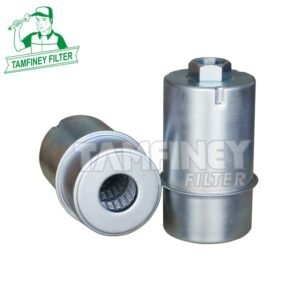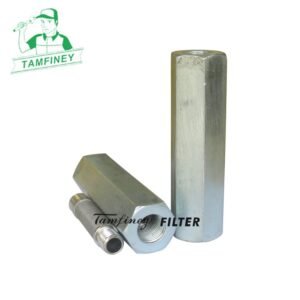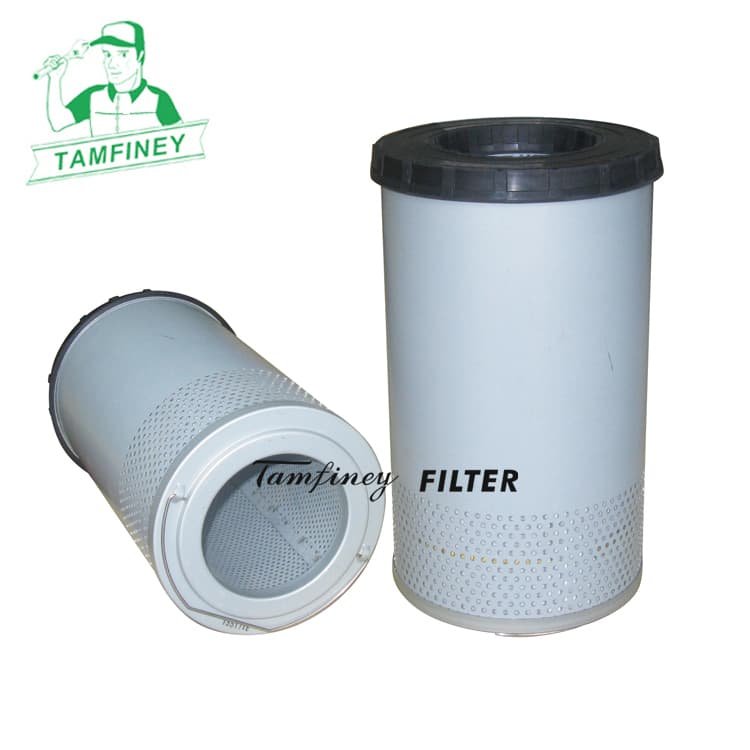
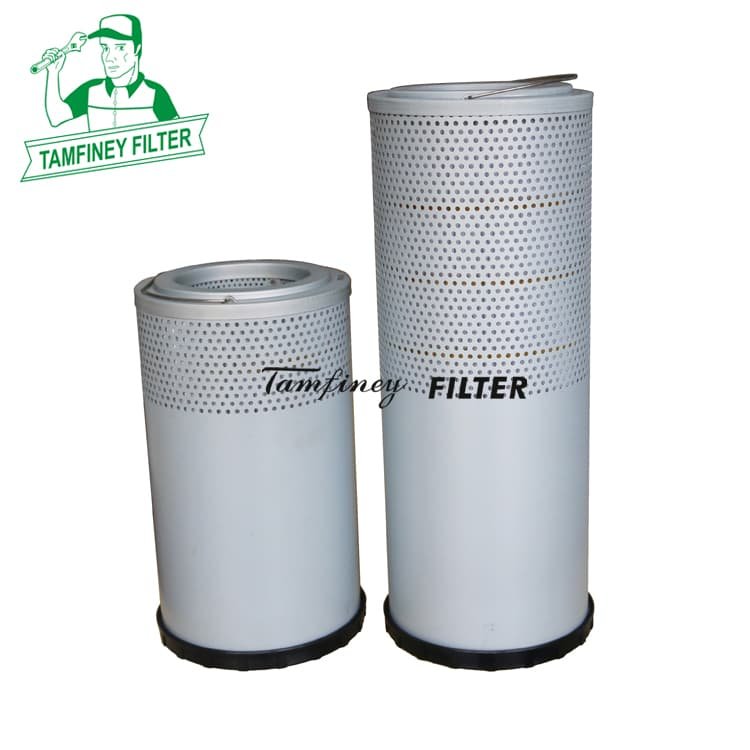



| Hydraulic Filter YN52V01025R100 YN52V01026P1 P502636 H41100 Parameter: | |
| Part Number | YN52V01025R100 YN52V01026P1 P502636 H41100 |
| Brand | Tamfiney |
| Weight | 2025g |
| Height | 260 mm |
| Outer Diameter | 148 mm |
| Inner Diameter | 92 mm |
| Material | Metal & Micro Glassfiber |
| Filter Media | Synthetic fiber blend; includes metal mesh reinforcement |
| Typical Working Pressure | Up to approx. 6–10 bar |
| Filtration | Approx. 5–10 micron |
| Temperature Rating | Up to approx. 100–120°C |
| Minimum Order | 100 PCS |
| Place of Region: | Zhejiang, China |
| Payment Terms: | T/T |
| Price Terms: | FOB |
| Lead Time: | 30 to 50 days based on order quantities |
| Market Type: | After Market |
| Current Export Market: | Southeast Asian,North America, South America, Western Europe, Eastern Europe, Africa, Oceania |
Applications:
KOBELCO
260 NLC-E10SK 130 LC-11SK 130 LC-11SK 140 LC-11SK 210 LC-11 ESK 210 LC/NLC-10SK 230 NLCR-5SK 230 SRLC-5SK 260 LC-10SK 260 LC-11SK 260 NLC-11SK 270 SR LC-5
Professional YN52V01025R100 Hydraulic Filter YN52V01026P1 P502636 H41100
Q: What are the most common hydraulic filters?
Oil suction filter
- Installation position: below the liquid level of the hydraulic pump suction pipeline or oil tank
- Core function: Filter out residual impurities in the oil tank and protect the hydraulic pump from particle wear
- Features: Low resistance, mostly made of 100-200 mesh metal woven mesh material, can be repeatedly cleaned and used, with coarse filtration accuracy, commonly used in oil tanks of construction machinery such as excavators and loaders.
Pressure pipeline filter/ Pilot filter
- Installation position: on the outlet pressure pipeline of the hydraulic pump
- Core function: Protect precision sensitive hydraulic components such as servo valves and slide valves, and filter out solid particles in high-pressure oil circuits
- Features: It can withstand working pressures of up to 21MPa and is equipped with a differential pressure transmitter and a bypass valve for dual protection. The strength of the filter element must comply with the ISO3724 fatigue testing standard and is a standard component of medium and high pressure hydraulic systems.
Return oil filter
- Installation position: on the hydraulic system return oil pipeline
- Core function: Intercept the wear particles generated by the operation of the executing components and complete the final purification before the oil returns to the tank
- Characteristics: Located in the low-pressure pipeline, it is the most effective position for controlling the overall pollution level of the control system. The proportion of original return oil filters used in construction machinery such as Liugong and Lingong on the market is extremely high.
Hydraulic Air Breather Filter
Installation position: Top vent of hydraulic oil tank
Core function: To prevent external dust and moisture from entering the oil tank with changes in the liquid level, equivalent to the "intake mask" of the oil tank
Characteristics: It requires a large dirt holding capacity to avoid negative pressure inside the oil tank, and is an essential component of all open hydraulic systems.
Q: What is the difference between paper and microglass media?
The core differences between filter paper and micro glass fiber media are reflected in multiple dimensions such as material properties, filtration performance, and applicable scenarios. They are not the same type of filtration material, with specific distinctions as follows:
I. Basic Definitions and Material Differences
Filter paper: Typically made with cotton cellulose as the core material, some composite types incorporate additional materials such as polypropylene or mixed cellulose esters. It belongs to the conventional fibrous filtration medium, where most products rely on the interwoven fibers to form pores for particle retention.
Micro glass fiber medium: Made from raw materials such as quartz sand and feldspar, it is produced by high-temperature melting to form ultrafine glass microfibers with diameters of 1-5μm. Essentially an inorganic non-metallic material, it forms a three-dimensional network of microporous structure through wet molding.
II. Core Performance Differences
Filtering Precision and Dust Capacity
- Filter paper: It has a relatively large pore size, typically intercepting less than 90% of 0.3μm particles. Its dust-holding capacity is only 1/3 to 1/5 that of micro-glass fiber media, making it prone to rapid clogging.
- Micro-glass fiber media: Achieves a filtration precision as low as 0.1μm, with a filtration efficiency of over 99.97% for 0.3μm particles. It can hold dust loads of 15-20g/m², which is 3-5 times that of ordinary filter paper.
Thermal and Chemical Stability
- Filter paper: Ordinary cellulose filter paper has a long-term usage temperature limit of no more than 120°C and can only withstand weak acids and alkalis. It is prone to damage and degradation when exposed to highly corrosive media.
- Micro glass fiber medium: With a melting point exceeding 600°C, the adhesive-free version can withstand high temperatures up to 500°C, adapt to strong acid and alkali environments with pH 1-14, and exhibits excellent resistance to biological erosion and outstanding flame retardancy.
Mechanical and Structural Characteristics
Filter paper: The fiber diameter is generally above 10μm, with poor uniformity in pore size distribution, and is prone to strength reduction and deformation issues due to humidity.
Micro glass fiber medium: With a fiber diameter of only 1-5μm, it exhibits excellent isotropy and uniform pore size distribution. It maintains stable strength even in a wet state and resists deformation and damage.