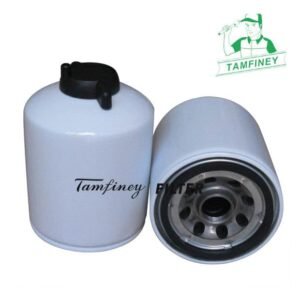

| Fuel Filter 130306380 130306180 276-1804 2761804 0000000038 00000-00038 915-093 Parameter: | |
| Part Number | 130306380 130306180 276-1804 2761804 0000000038 00000-00038 915-093 |
| Brand | Tamfiney |
| Weight | 130g |
| Height | 130mm |
| Outer Diameter | 62mm |
| Inner Diameter/ Thread Size |
|
| Minimum Order | 100 PCS |
| Place of Region: | Zhejiang, China |
| Payment Terms: | T/T |
| Price Terms: | FOB |
| Lead Time: | 30 to 50 days based on order quantities |
| Market Type: | After Market |
| Current Export Market: | Southeast Asian,North America, South America, Western Europe, Eastern Europe, Africa, Oceania |
Applications:
MECALAC MCL 8
ROTAIR MDVN 52 APG
WACKER NEUSON EW 65
WILSON P 110-2 50 HZ
Professional Wilson filter 130306380 130306180 276-1804 2761804 0000000038 00000-00038 915-093
Q: Can a dirty fuel filter affect gas mileage?
Yes, dirty fuel filters can impact fuel consumption and raise it.
When the filter gets dirty, its filtering ability drops.
Impurities may then enter the engine system.
This leads to low fuel pressure and abnormal fuel supply.
Dirty filters block fuel flow paths, reducing engine fuel supply.
It harms combustion efficiency as a result.
The engine computer detects abnormal operation and responds.
It extends fuel injection time or increases injection quantity to maintain power.
This action directly boosts fuel consumption.
Moreover, dirty filters can cause other issues.
These include difficulty accelerating or sudden jerks during acceleration.
Idle shaking may also occur.
All these problems worsen fuel consumption.
To reduce the impact, regularly check and replace the fuel filter.
Follow the vehicle manual’s recommendations for replacement intervals.
Typically, replace every 10,000-20,000 kilometers or as needed.
When replacing, inspect other fuel system components too.
Q: What does a 10 micron filter remove?
A 10 micron filter is a microporous filtration device with a filtration accuracy of 10 microns, which can intercept particles larger than the pore size through physical sieving principles. This type of filter is widely used in liquid and gas processing, with the core function of removing suspended particles, microorganisms, colloids, and other impurities.
In liquid processing, 10 micron filters are mainly used to remove larger particles such as suspended solids, colloids, and bacteria. They are commonly used in chemical and environmental water treatment fields, and can effectively protect subsequent process equipment (such as reverse osmosis membranes) and improve product purity.
In gas processing, 10 micron filters are suitable for filtering particles in the air, such as dust, pollen, or mist droplets. They are commonly used in air conditioning systems, clean rooms, or industrial ventilation equipment as pre filtration stages to extend the lifespan of high-efficiency filters and improve air quality.
Compared with other filtration technologies, the 10 micron filter belongs to the category of microfiltration, with a pore size range of usually 0.1-10 microns, capable of intercepting bacteria and other microorganisms. Its operating pressure is generally 0.1-0.6 MPa, and it can withstand temperatures up to 55 ° C. During maintenance, the filter element needs to be replaced or cleaned regularly to maintain efficiency.
Q: How often should I replace a 10 micron fuel filter?
The replacement cycle of fuel filters is not a fixed value, and it needs to be comprehensively judged based on various factors such as filter type, vehicle usage, fuel quality, etc. The 10 micron filtration accuracy itself does not directly determine the replacement frequency, but reflects the filtering ability of the filter.
General recommended cycle: External fuel filters (commonly found in some older models or external designs) are recommended to be replaced every 10000 to 20000 kilometers, while internal fuel filters (more common in modern models, integrated into the fuel tank) have a longer replacement cycle, usually 40000 to 100000 kilometers; If the vehicle is frequently used or the driving environment is harsh, replacement every 30000 kilometers can be considered as a general strategy.
Key influencing factors: The actual timing of replacement should focus on the following factors:
• Fuel quality: Regularly refueling at regular gas stations can extend the cycle appropriately. If low-quality fuel or private gas stations are frequently used, it is recommended to shorten it to 10000 to 30000 kilometers.
• Driving environment: Environments with high dust, humidity, or poor road conditions can accelerate filter clogging, which may require annual or every 20000 kilometers inspection and replacement.
• Vehicle usage: It is recommended to check high-frequency vehicles every 30000 kilometers, and low-frequency vehicles can be extended to 50000 to 100000 kilometers.
• Filter type and quality: Built in filters typically have a longer lifespan, but are more complex to replace; Choosing legitimate brand products can ensure filtration efficiency and service life.
Abnormal situation handling: If the vehicle experiences weak acceleration, engine shaking, abnormal fuel consumption, or the malfunction light is on, it may be a signal of filter blockage, and it needs to be checked and replaced immediately without waiting for a fixed mileage.