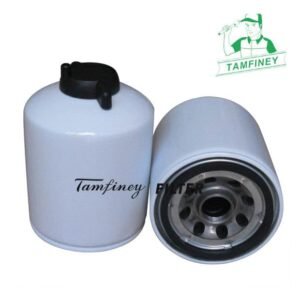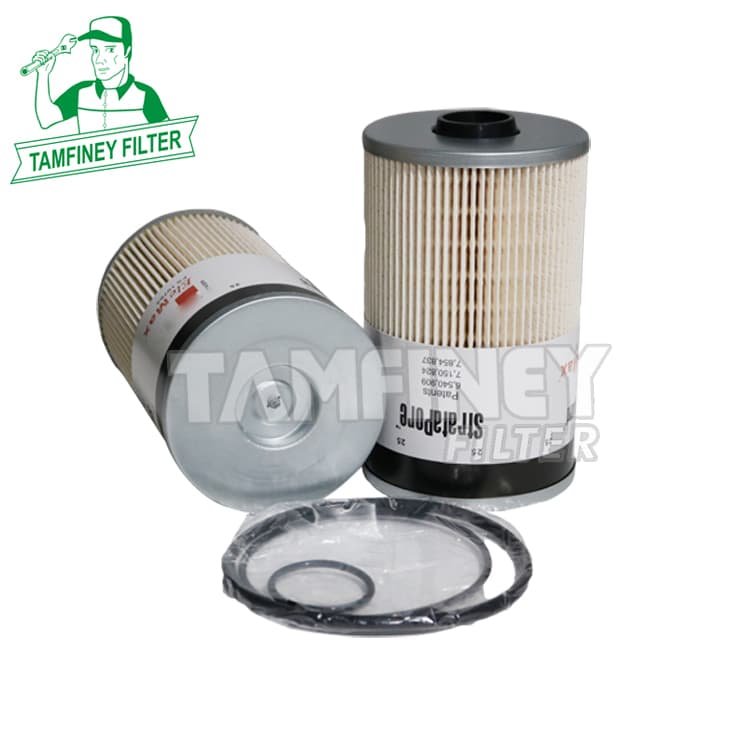


| Fuel Filter 21737499 PF7930 WF10005 SF10005 Parameter: | |
| Part Number | 21737499 PF7930 WF10005 SF10005 |
| Brand | Tamfiney |
| Weight | 411 g |
| Height | 173/180 mm |
| Outer Diameter | 106 mm |
| Inner Diameter | 17 mm |
| Minimum Order | 100 PCS |
| Place of Region: | Zhejiang, China |
| Payment Terms: | T/T |
| Price Terms: | FOB |
| Lead Time: | 30 to 50 days based on order quantities |
| Market Type: | After Market |
| Current Export Market: | Southeast Asian,North America, South America, Western Europe, Eastern Europe, Africa, Oceania |
Applications:
• VOLVO
Professional Volvo 21737499 Fuel Filter Insert PF7930 WF10005 SF10005
Q: What are the symptoms of a bad Volvo fuel filter?
When a Volvo fuel filter malfunctions, it mainly manifests as a series of engine operation abnormalities caused by obstructed fuel supply.
• Difficulty starting or cold start failure: A clogged fuel filter can lead to insufficient fuel flow, especially when the engine is cold. The engine struggles to obtain enough fuel to complete ignition, and multiple attempts may be required to successfully start the engine.
• Weak acceleration and "vehicle bumping" phenomenon: When stepping on the accelerator, the power response is sluggish, and there is a noticeable lack of power when overtaking or climbing hills; in severe cases, a jerking sensation may occur, causing the vehicle body to "bump" or "jolt".
• Obvious idling vibration: The engine speed is unstable at idle, and the steering wheel or seat shakes significantly. The vibration intensifies when the air conditioning is turned on.
• Abnormal flameout during driving: When shifting gears, slowing down, or driving at low speeds, the engine may suddenly flameout due to a temporary interruption of fuel supply, posing a safety hazard.
• Abnormal increase in fuel consumption: To compensate for insufficient fuel supply, the ECU will increase fuel injection, resulting in a 10%–20% increase in fuel consumption per 100 kilometers.
Q: How often should you change your fuel filter on your truck?
The replacement cycle of truck fuel filters is not fixed and requires a comprehensive judgment based on factors such as vehicle type, usage environment, fuel quality, and manufacturer recommendations.
• External fuel filter: It is recommended to replace it every 20,000 to 30,000 kilometers.
• Built-in fuel filter (often integrated with the fuel pump): It is recommended to replace it every 40,000 to 80,000 kilometers, and for some models, it can last up to 100,000 kilometers.
• Diesel trucks (such as heavy-duty trucks): Some manufacturers recommend replacing them either after 500 to 1000 hours of operation or annually.
Key factors influencing the replacement cycle
• Fuel quality: If inferior or impure fuel (such as from unlicensed gas stations) is regularly used, the replacement cycle should be shortened, and it may need to be replaced every 15,000 to 20,000 kilometers.
• Driving environment: Dusty, sandy, or poor road conditions can accelerate the clogging of the filter element, and it is recommended to replace it in advance.
• Vehicle usage frequency: For commercial trucks that are used frequently, even if the mileage has not reached the upper limit, it is recommended to replace them every 15,000 to 20,000 kilometers or annually.
Q: Where is the fuel filter on a Volvo?
The location of the fuel filter in Volvo models varies depending on the specific model and year. The following is a summary of the location information for major models based on publicly available data:
• XC60: Located in front of the right rear wheel of the chassis, directly above the metal hook of the right hand brake cable, and secured with a Phillips screw. It is an externally designed component that can be clearly seen after the vehicle is lifted.
• S90: Installed on the firewall behind the engine compartment.
• S60: Located on the right side of the engine, there is a circular cover with 3 nuts. Simply loosen the nuts to remove the filter element.
• XC90:
Most versions are located under the rear seats or in front of the fuel tank at the bottom of the vehicle body;
The US version is usually located near the left rear wheel;
For some models of the 2015 series, it is located inside the round cover on the right side of the engine.
• V40: The fuel filter is built-in and installed inside the fuel tank, integrated with the fuel pump. To replace it, it is necessary to disassemble the fuel tank or the fuel pump cover plate located under the rear seats.