Get a Free Quote

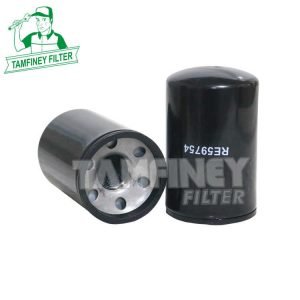
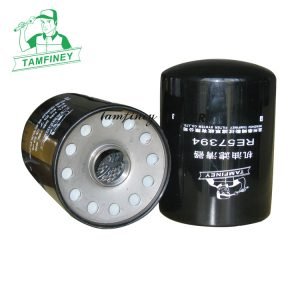
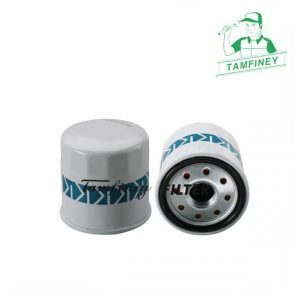
Premium Volkswagen Oil Filter Replacement 057115561M 057115561L 057115561K HU8001X HU7016X
Your best Volkswagen Oil Filter Replacement 057115561M 057115561L 057115561K HU8001X HU7016X Oil filter manufacturer in China.
Volkswagen 057115561M 057115561L 057115561K HU8001X HU7016X WIX WL7486, WL7486A, ZEKKERT: OF-4147E, ADV182106


| Oil Filter 057115561M 057115561L 057115561K HU8001X HU7016X Parameter: | |
| Part Number | 057115561M 057115561L 057115561K HU8001X HU7016X |
| Brand | Tamfiney |
| Height | 200 MM |
| Outer Diameter | 72MM |
| Inner Diameter/Thread Size | 29MM |
| Minimum Order | 100 PCS |
| Place of Region: | Zhejiang, China |
| Payment Terms: | T/T |
| Price Terms: | FOB |
| Lead Time: | 30 to 50 days based on order quantities |
| Market Type: | After Market |
| Current Export Market: | North America, South America, Western Europe, Eastern Europe, Africa, Oceania |
Applications:
BOMAG BM 2000/75BM 2200/75
HIMOINSA HMW 510HMW 550
MTU 10 V 1600 G20S12 V 1600 G20SDIVERS
STEMAC 10 V 1600G20F10 V 1600G20S12 V 1600G20F12 V 1600G20S
Premium Volkswagen Oil Filter Replacement 057115561M 057115561L 057115561K HU8001X HU7016X
Q: Where is the oil filter in a Volkswagen?
The position of a Volkswagen oil filter changes based on model and engine type. It usually sits in an easy-to-reach spot inside the engine compartment.
Here are common locations for Volkswagen oil filters. They often install them at the engine's front area. Examples include:
- The top or upper part of the engine: EA888 series engines, like those in Magotan and CC models, place the oil filter near the cylinder head cover. When you open the engine cover, look left or upper right to see a cylindrical part.
- Under the engine: EA211 series engines, such as in Bora and Lavida vehicles, may have the oil filter at the engine's bottom. You need to view it from beneath the car.
- Other reference spots: Some car models put the oil filter near the oil pump or dipstick in the upper left engine corner. Others may locate it near the front bumper in the front right area.
When searching for the oil filter, first check your vehicle's model and engine type. Use the vehicle manual or engine identification for this. Then, open the engine hood and observe the engine layout. Oil filters typically come in black or silver cylindrical housings with inlet/outlet pipes.
For replacement, follow these suggestions. It's best to perform the work at a 4S dealership or professional repair shop. If you do it yourself, ensure the engine cools down first. Use specialized tools for the job. Also, change the oil at the same time to keep the system clean.
Q: Can an oil filter last 10,000 miles?
The replacement cycle of the oil filter is usually measured in kilometers, but can be converted into miles as a reference. 10000 miles is equivalent to approximately 16093 kilometers, which is much higher than the commonly recommended mileage of 10000 kilometers. Therefore, in terms of distance, the oil filter may be able to travel 10000 miles, but this depends on multiple factors.
The replacement cycle of the oil filter is mainly affected by the type of oil: when using mineral oil, it is recommended to replace it every 3000 to 4000 kilometers (approximately 1864 to 2485 miles); Semi synthetic engine oil can be extended up to 5000 to 6000 kilometers (approximately 3107 to 3728 miles); And fully synthetic engine oil supports a replacement cycle of 8000 to 10000 kilometers (approximately 4971 to 6214 miles). If the vehicle uses fully synthetic engine oil and is well maintained, driving 10000 miles (16093 kilometers) may exceed the recommended standard and pose a risk.
Other key factors include vehicle usage environment, driving habits, and manufacturer recommendations: under harsh conditions (such as dusty or muddy roads), filters may clog faster and need to be replaced in advance; On the contrary, good maintenance and high-quality oil products can appropriately extend the cycle. Paired with original or high-quality filters, the cycle can also be extended, but it is generally not recommended to exceed 10000 kilometers (approximately 6214 miles) without replacement.
Q: When should you not use synthetic oil?
Although fully synthetic engine oil has superior performance, it is not suitable for all vehicles and usage scenarios. The following situations should be used with caution to avoid potential issues.
Old or high mileage vehicles: For vehicles that are over 10 years old or have traveled more than 200000 kilometers, engine parts wear and tear can lead to increased clearances. Fully synthetic engine oil, due to its strong fluidity and low viscosity, may exacerbate oil leakage or consume too quickly, affecting sealing performance.
Low frequency vehicles: Vehicles with an annual mileage of less than 5000 kilometers (such as those occasionally used on weekends), although fully synthetic engine oil has a long service life, there is a high risk of oxidation failure after opening. If not replaced in a timely manner, lubrication failure may occur due to expired engine oil, increasing engine wear.
Economy or low performance vehicles: Some micro cars and economy sedans have simple engine designs and limited technological capabilities. The original factory recommends using mineral oil or semi synthetic engine oil. Forcing the use of fully synthetic engine oil may increase fuel consumption due to excessive performance and may not bring significant protection and lift.
Specific driving conditions: In harsh environments such as extreme low temperatures (such as below -40 ℃) or frequent short distance driving, high temperature and high load, the performance of fully synthetic engine oil may accelerate and deteriorate. It is necessary to shorten the oil change cycle according to actual working conditions, otherwise the lubrication effect will decrease.
Blindly pursuing high performance: Some high-performance fully synthetic engine oils have viscosity that does not meet the original factory requirements, which may disrupt the original balance of the engine. Especially for modified vehicles, it is necessary to strictly follow the manufacturer's recommendations to avoid accelerated wear and tear.