Get a Free Quote
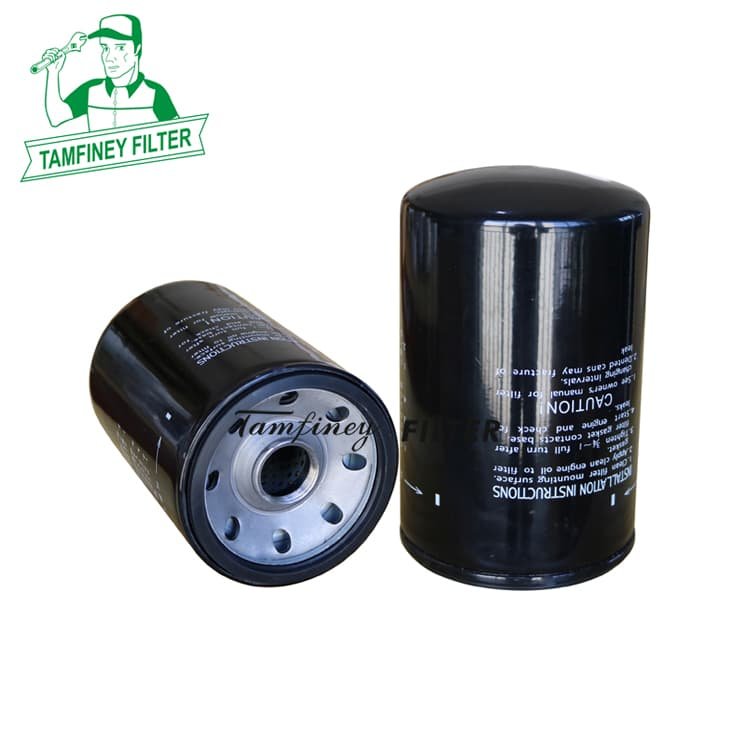
Spin On Filter 150-1012000C JX1013 B7223 C-5614 C5614 9N6007
Your Best Spin On Filter 150-1012000C JX1013 B7223 C-5614 C5614 9N6007 Oil filter manufacturer in China.
ATLAS COPCO-29005120 ,2900512000 BALDWIN-B7223 ,B7483 BEML-30Z5180495 CATERPILLAR-3I-1482 ,5W-3407N 9N6007; CHINA LOCAL-JX1011B JX1013A LIUGONG-SP101847 ,SP110636 MAHLE-KFO0332449 KOBELCO VA32G4001100J1M VA3424011101-DK ZZ6136515121 Sakura C-5614


| Oil Filter 150-1012000C JX1013 B7223 C-5614 C5614 9N6007 Parameter: | |
| Part Number | 150-1012000C JX1013 B7223 C-5614 C5614 9N6007 |
| Brand | Tamfiney |
| Weight | 928 g |
| Height | 169 mm |
| Outer Diameter | 107 mm |
| Inner Diameter/ Thread Size |
1"-1/8x16 |
| Minimum Order | 100 PCS |
| Place of Region: | Zhejiang, China |
| Payment Terms: | T/T |
| Price Terms: | FOB |
| Lead Time: | 30 to 50 days based on order quantities |
| Market Type: | After Market |
| Current Export Market: | North America, South America, Western Europe, Eastern Europe, Africa, Oceania |
What does 150-1012000C fit?
NEW HOLLAND E 135 BE 135 B SRE 135 B SRE 150 B SR
SDMO 125 KVA
ATLAS COPCO QAS 125QAS 150QAS 150QAS 180
DENYO DCA 125 SPKDCA 150 SPKDCA 150 SPKDCA 180
Performance Spin On Filter 150-1012000C JX1013 B7223 C-5614 C5614 9N6007
Q: What is a spin-on filter?
The spin-on filter is a filtration device with an integrated filter element design. It installs and disassembles via rotation. This equipment suits hydraulic systems, lubrication systems, and industrial fluid purification. Its core feature combines the filter element and housing into one unit. Users can replace it without tools, just screwing it in or out of the mount. This design makes operation very convenient.
Main Features:
Compact structure and light weight: The filter uses an aluminum alloy head and steel shell element. This combination looks good and is easy to install and transport.
Convenient replacement: The filter element comes as a pre-assembled unit. After blockage, replace it as a whole. No need to clean the housing, cutting maintenance time significantly.
Built-in safety mechanism: The filter head has a bypass valve. If the element clogs, oil bypasses it and flows directly. This keeps the system running and prevents damage from blockage.
Intelligent monitoring: The filter head usually includes a pollution blockage transmitter installation hole. It monitors the element status in real time, enabling preventive maintenance.
Efficient filtration: The element often uses high-performance paper-based or synthetic materials. It has low oil resistance and strong dirt holding capacity. Filtration accuracy typically ranges from 10-25 μm. This effectively removes pollutants like metal particles, gum, and carbon residue from oil.
Q: What is the difference between a cartridge filter and a spin on filter?
Core difference: Cartridge filter is classified according to filter material and structure, emphasizing the high-precision but non renewable characteristics of paper filter cartridges; Spin on type is classified according to installation and maintenance methods, emphasizing the convenience of quick replacement.
Filter material: The material of the cartridge filter element is fixed as special filter paper; The spin on filter has a wide range of material options, including PP cotton, activated carbon, ultrafiltration membrane, etc., which can be selected according to needs.
Maintenance: The cartridge filter cannot be cleaned and must be replaced; Whether the spin on filter element can be cleaned depends on its specific material, but the design is characterized by quick replacement.
Q: Can you replace a cartridge oil filter with a spin-on?
It is not possible to directly replace cartridge oil filters with spin on oil filters, as there are fundamental differences in structure, installation method, and adaptability between the two. The matching type must be selected according to the original design of the vehicle.
The types of oil filters are mainly divided into spin on type and cartridge type, which are not universal accessories:
Spin on filter: It is an integral sealed unit, and when replacing it, the entire filter needs to be unscrewed from the engine and a new complete component needs to be installed. This design is easy to replace quickly and is currently standard on the vast majority of modern sedans.
Cartridge filter: composed of a reusable metal casing and an internally replaceable paper filter element. When replacing, simply open the casing, remove the old filter element, replace it with a new one, and then reinstall the casing. This structure is still used in some older models or certain commercial vehicles.
Why can't we exchange?
- Incompatible physical structure:The installation interfaces, thread specifications, dimensions, and fixing methods of the screw on and paper core types are completely different. Forcefully installing may result in inability to secure, oil leakage, and even damage to the engine casing.
2. Different sealing and pressure design:The opening pressure of the internal sealing ring, bypass valve, and check valve of the two types of filters are precisely designed according to the original system. Using mismatched types may result in abnormal oil pressure, affecting lubrication effectiveness, and in severe cases, causing engine wear or failure. - Mismatch between filtration performance and flow rate:The filter paper materials, folding areas, and aperture designs of different filter elements are optimized for specific engine oil flow rates and filtration accuracy. Incorrect use of filter cartridges may result in decreased filtration efficiency or poor oil circulation.