Get a Free Quote

Professional Secondary Diesel Fuel Filters FF42000 11E1-70010 Fleetguard Cross Reference
Your Best Secondary Diesel Fuel Filters FF42000 11E1-70010 11E170010 4990879 Fleetguard Cross Reference Fuel filter manufacturer in China
SHANTUI 263-04-06003
CUMMINS 4990879
FLEETGUARD FF42000
Sisu 835362570, Vetus VD60210


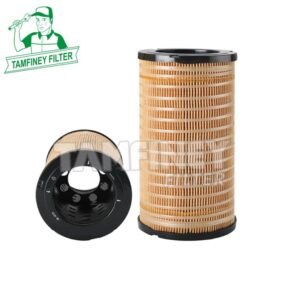
| Fuel Filter FF42000 11E1-70010 11E170010 4990879 Parameter: |
| Part Number | FF42000 11E1-70010 11E170010 4990879 |
| Brand | Tamfiney |
| Weight | 3553 g |
| Height | 116 mm |
| Outer Diameter | 82 mm |
| Inner Diameter/ Thread Size |
M16 X 1.5-6H INT |
| Minimum Order | 100 PCS |
| Place of Region: | Zhejiang, China |
| Payment Terms: | T/T |
| Price Terms: | FOB |
| Lead Time: | 30 to 50 days based on order quantities |
| Market Type: | After Market |
| Current Export Market: | Southeast Asian,North America, South America, Western Europe, Eastern Europe, Africa, Oceania |
Applications:
• FOTON F 402 WT
• FREMA AIGLON 80JUPITER 100JUPITER 140
• FSI C 50 HPMFTP 135TP 155TP 160
• FUCHS 107330 MHL331 MHL400 K434 MHL500 K701 M/702 M701 M/702 M703 M711 M712 K712 M713 M/713 MC713 MU/713 RC714 M/714 MU715722
• FURUKAWA 320 E
• GEHL GEHLMAX F 65
• GENSET MG 220MG 30 DZMPM 15/400 ICLMPM 7/250
• GOLDONI 35 ASTER35 C ASTER40 ASTER40 C ASTER40 RONIN45 ASTER45 C ASTER50 RONIN50 RONIN945 RS/DTEURO 45 SN
Professional Secondary Diesel Fuel Filters FF42000 11E1-70010 Fleetguard Cross Reference
Exceptional filtration is essential for every diesel engine’s health and efficiency. That’s why Secondary Diesel Fuel Filters such as the Fleetguard FF42000 and its interchangeable 11E1-70010 have become standards in the industry. At TAMFINEY, we supply top-grade solutions, helping our customers achieve peak engine performance and lasting fuel system protection.
Fleetguard FF42000: Dependable Filtration Power
Without a doubt, the fleetguard ff42000 is a trusted filter across heavy-duty diesel vehicles. This filter removes even the finest contaminants, safeguarding sensitive injectors and pumps. As a result, your engine continues to operate smoothly, even under challenging environments.
Thanks to its advanced design and robust construction, the ff42000 fits seamlessly into a variety of diesel systems. TAMFINEY proudly supplies quality fuel filters, ensuring consistent filtration, reliability, and easy replacements.
FF42000 Cross Reference: Versatility for Fleet Managers
Choosing the correct replacement filter can be challenging. However, the cross reference chart simplifies the selection process. Fleet supervisors especially appreciate how our cross-reference information matches with corresponding filters, such as 11E1-70010.
Furthermore, using these references allows for cost-effective maintenance and flexible inventory planning. In turn, fleets experience less downtime and greater operational efficiency.
FF42000 Filter: Designed for Maximum Protection
The ff42000 filter is specifically engineered for secondary fuel filtration. Its multi-layer media effectively captures particles, water, and resins. This advanced barrier prevents harmful contaminants from reaching the combustion chamber.
Moreover, FF42000’s efficiency means extended service intervals for your engine. That translates to lower maintenance frequency and substantial cost savings for fleet operators.
FF42000 Fuel Filter: Enhancing Diesel Engine Longevity
Many operators consider the ff42000 fuel filter essential for extending equipment life. By keeping fuel flowing cleanly, this filter reduces wear on engine components and improves overall fuel economy.
TAMFINEY supplies filters quickly, ensuring your engines spend more time working and less time waiting for parts. Additionally, we emphasize product authenticity and durability, delivering reliable filtration every time.
Fleetguard FF42000 cross reference: Seamless Integration
Equally important, the fleetguard ff42000 cross reference option provides maintenance flexibility. Our cross-reference information verifies compatibility with multiple filter brands and models, streamlining your procurement process.
Consequently, this versatility means operators never have to settle for subpar substitute filters. Instead, they enjoy trouble-free maintenance and uninterrupted engine operation.
11E1-70010: The Trusted Alternative
In some cases, the 11E1-70010 filter serves as a direct replacement for FF42000. Thanks to its strict adherence to OEM specs, the 11E1-70010 guarantees optimal filtration and compatibility.
Not only does TAMFINEY keep these filters on hand, but we also provide technical support for perfect fitment every order.
Why TAMFINEY for Secondary Diesel Fuel Filters?
TAMFINEY stands apart by delivering only quality-assured filters and expert filtration advice. From the Fleetguard FF42000 to its trusted cross reference 11E1-70010, we supply what you need, when you need it.
Fast logistics, professional advice, and responsive support come standard with every order. Above all, we help you maintain lower costs, less downtime, and higher productivity.
Conclusion
To summarize, Secondary Diesel Fuel Filters like the FF42000, together with the 11E1-70010 and cross references, ensure your fleet is always protected. Trust TAMFINEY to deliver original, high-efficiency fuel filters—safeguarding your engines and streamlining your maintenance, every day.
Q: What is the difference between the primary and secondary fuel filter in a diesel fuel system?
In the fuel system of diesel engines, the main fuel filter and the secondary fuel filter usually refer to different levels of components in the filtration system, and their differences are mainly reflected in the filtration level, installation position, filtration efficiency, and functional emphasis. The following is an explanation based on common designs of diesel filters.
Filter level and function
The main fuel filter generally refers to the fine filtration part of the system, responsible for removing small impurities from the fuel, ensuring that the fuel entering the injector is highly pure, reducing wear and ensuring the life of precision components. The secondary fuel filter is often used as a coarse filter to intercept larger particles and moisture, serving as a pre filter and protecting downstream equipment. In a multi-stage filtration system, the secondary filter may be located after the primary coarse filter to further improve the filtration accuracy.
Installation location and system process
The main filter is usually connected in series on the pipeline between the fuel pump and the fuel injection pump, directly facing the high-pressure fuel flow. The secondary filter (coarse filter) is often installed between the fuel tank and the fuel transfer pump as a primary filtration device, which first purifies the inhaled fuel.
Filtering efficiency and structural characteristics
The main filter adopts high-efficiency filter paper or composite material, with a high filtration efficiency (such as 99.5% or more), which can effectively separate micron level impurities and moisture. The structure of the secondary filter is relatively simple, and may use metal mesh or coarse filter materials. The filtration accuracy is low, but the flow resistance is small, and it focuses on intercepting large particles and separating water.
Work pressure and durability
The main filter needs to withstand high fuel pressure (such as 200-500 kPa), with strict structural sealing requirements, and is often designed as a rotary type to enhance reliability. The working pressure of the secondary filter is relatively low, and the maintenance cycle may be shorter. It is necessary to regularly clean or replace the filter element to maintain performance.
Q: What is the best factor to use when determining whether a fuel filter should be replaced?
When deciding whether to replace the fuel filter, multiple key factors should be considered comprehensively to ensure the accuracy of the decision and the maintenance of vehicle performance. The following are the main considerations:
• Mileage and time:
The replacement cycle of the fuel filter is usually based on the mileage, but the specific value needs to be combined with the vehicle type and usage situation. For example, external fuel filters are generally recommended to be replaced every 20000 to 40000 kilometers, while internal filters have a longer lifespan and can be extended to 60000 to 100000 kilometers. If the vehicle is parked for a long time or used infrequently, even if the mileage is not up to standard, consideration should be given to shortening the cycle, as fuel may settle in the filter for too long and produce sediment.
• Fuel quality: Fuel quality is the core factor affecting the lifespan of filters. Long term use of high-quality fuel from regular gas stations, with less impurities and moisture, can extend the replacement cycle; On the contrary, inferior fuel or gasoline containing ethanol will accelerate filter blockage and need to be replaced in advance. Experimental data shows that an increase in impurity content in fuel significantly increases the clogging rate.
• Driving habits and road conditions: Frequent short distance driving and urban congestion (such as sudden acceleration, sudden braking, idle start stop) can increase the burden on the fuel system, leading to faster accumulation of impurities. It is recommended to shorten the cycle by about 30%. In contrast, smooth driving and highway driving help extend the lifespan of the filter.
• Vehicle operating environment:
When driving in dusty, humid or harsh environments (such as construction sites, desert areas), impurities in the air may enter the filter through the fuel system and need to be replaced more frequently.
• Vehicle performance: Pay attention to abnormal symptoms of the engine, such as decreased power, weak acceleration, idle shaking, difficulty starting, or significant increase in fuel consumption (more than 10% -15%), which may be signals of filter blockage and should be checked first. Professional testing methods include measuring the fuel pressure difference or observing the fuel color and impurities inside the filter element.
Taking into account the above factors, regularly checking the status of the filter and adjusting the replacement plan based on the actual driving situation can effectively avoid fuel system failures.
Q: How often should you change a secondary fuel filter?
The replacement cycle of fuel secondary filters (usually referring to built-in gasoline filters) is generally recommended to be between 40000 and 80000 kilometers. If the vehicle uses high-quality fuel for a long time and is properly maintained, the cycle can be extended to 80000 to 100000 kilometers; But if you frequently refuel at non-standard gas stations or drive in dusty and humid environments (such as construction sites or beaches), you need to replace it at least 30000 to 40000 kilometers in advance.
Attention should be paid when replacing:
The built-in filter element is usually integrated into the oil pump assembly inside the fuel tank. Replacement requires disassembling the fuel tank, which is costly. It is recommended to have a professional operate it.
If there are symptoms such as weak acceleration, difficult cold start, idle shaking, or abnormal fuel consumption increase, it may be a signal of filter blockage and should be checked in a timely manner.
Choose original or branded accessories. Poor quality filter cartridges may cause oil contamination due to insufficient filtration accuracy, and even damage fuel injectors or three-way catalytic converters.
Regular inspections (such as during major maintenance) can help detect filter problems in advance and avoid engine performance degradation