Get a Free Quote
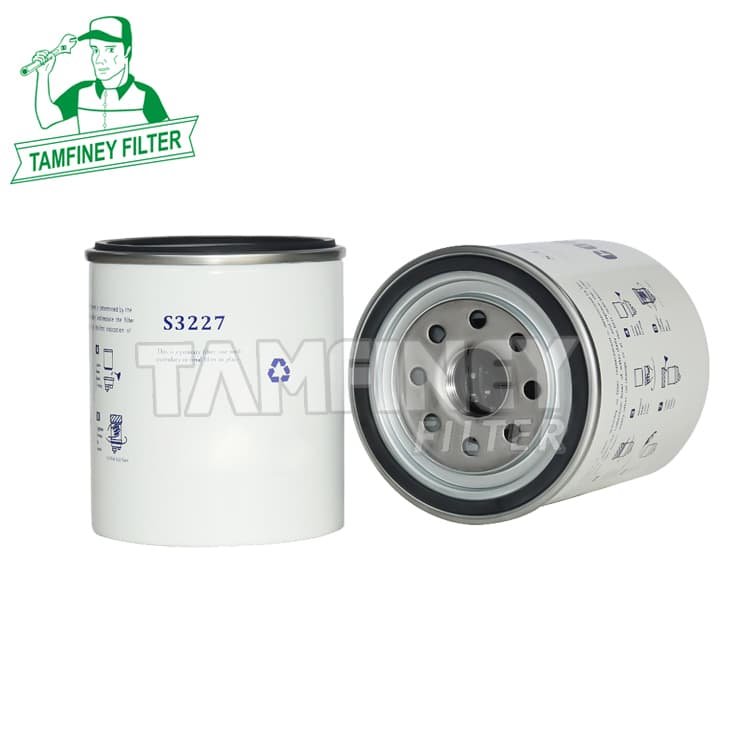
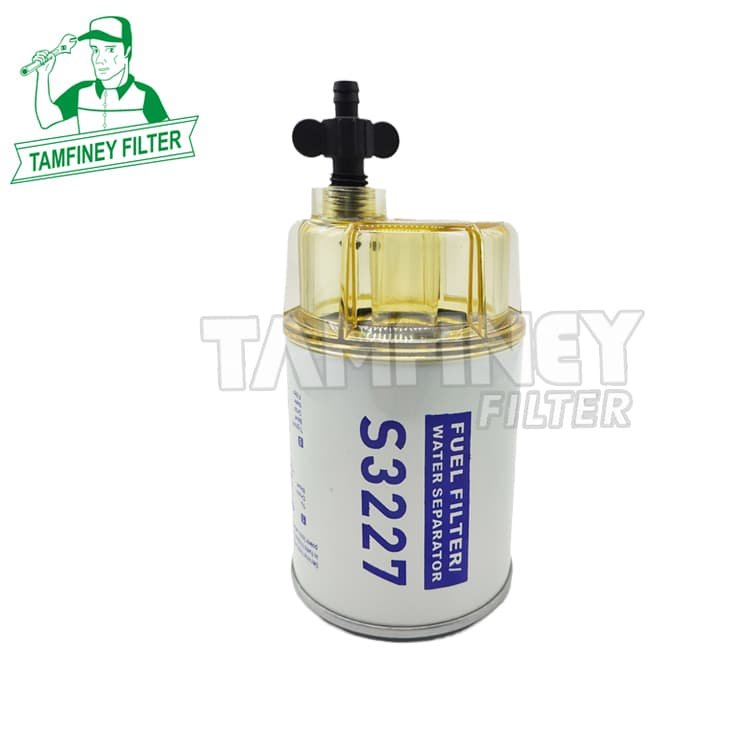
Professional Racor S3227 Fuel Filter Cross Reference 17670-ZW1-801AH 99105-20005 Marine fuel filter
Your best Racor S3227 Fuel Filter Cross Reference 17670-ZW1-801AH 99105-20005 Marine Fuel filter manufacturer in China.
Racor S3227 HONDA 17670-ZW1-801AH SUZUKI 99105-20005 Yamaha MAR245630300 MAR-24563-00-00 Baldwin BF46028-O


| Fuel Filter S3227 17670-ZW1-801AH 99105-20005 Parameter: | |
| Part Number | S3227 17670-ZW1-801AH 99105-20005 |
| Brand | Tamfiney |
| Weight | 540 g |
| Height | 102 mm |
| Outer Diameter | 97 mm |
| Inner Diameter/ Thread Size |
1"-14 3 1/4-10 |
| Minimum Order | 100 PCS |
| Place of Region: | Zhejiang, China |
| Payment Terms: | T/T |
| Price Terms: | FOB |
| Lead Time: | 30 to 50 days based on order quantities |
| Market Type: | After Market |
| Current Export Market: | Southeast Asian,North America, South America, Western Europe, Eastern Europe, Africa, Oceania |
Applications:
HONDA MARINE DIVERS
SUZUKI MARINE DF 175 AP
VOLVO-PENTA MARINE 3,0 GS3,0 SX4,3 DP-S4,3 GI-S4,3 GL-S4,3 SX-S5,0 DP-S5,0 GI-S5,0 GL-S5,0 SX-S5,7 DP-S5,7 GI5,7 GSI-S5,7 GS-S5,7 GXI-S5,7 SX-S8,1 DP-S8,1 GI-S8,1 GSI-SAQ 125 BDPX 375DPX 420DPX 500DPX 600
YAMAHA MARINE F 100 D/4
Professional Racor S3227 Fuel Filter Cross Reference 17670-ZW1-801AH 99105-20005 Marine fuel filter
Q: How do I install the S3227 element?
When installing PARKER filter S3227, follow these steps for correct operation. Before installation, turn off the device power and release any pressure. During old filter element removal, clean dust around the filter seat to prevent foreign objects entering the system.
For installation, start by checking the new filter element. Confirm the model is S3227 and inspect the sealing ring for integrity. Next, apply a small amount of compatible lubricating oil, like hydraulic oil or a specialized lubricant, evenly on the sealing ring. Avoid using too much lubricant.
Then, align the filter element with the filter seat. Rotate it clockwise until the sealing ring contacts the seat. After contact, tighten it by about 1/2 to 3/4 turn with force. Use a torque of 15-20Nm, as detailed in the equipment manual.
After starting the device, check for leaks at the connection. If leakage occurs, adjust and tighten the filter element. Remember to use only PARKER original or certified filter cartridges. Do not use expired products.
After installation, perform the first operation by draining and exhausting water. Regularly monitor the filter element status. Replace it based on the recommended cycle.
Q: How often should you change a fuel filter on a boat?
The recommended replacement cycle for marine fuel filters is usually between 30000 to 50000 kilometers, but the specific time may vary depending on your usage and fuel quality. If you frequently navigate in environments with poor oil quality or congested waters, it can shorten the distance to around 20000 kilometers for replacement. The replacement cycle of the built-in filter (located inside the fuel tank) may be longer, about 40000 to 80000 kilometers.
Key influencing factors
Fuel quality: Poor fuel quality can accelerate filter clogging. It is recommended to check every 20000 kilometers.
Usage environment: Long term idling or low temperature environment may shorten the service life and needs to be replaced in advance.
Model difference: Some ships are equipped with built-in filters, and replacement requires professional operation.
Replace signal
If there is weak acceleration, difficulty starting, or abnormal fuel consumption, it may be a signal of clogged filter element. It is recommended to prioritize referring to the maintenance manual of the vessel or consult professional maintenance personnel for more accurate advice.
Q: How to tell if a boat fuel filter is bad?
To determine whether the marine fuel filter is damaged, a comprehensive evaluation should be conducted based on the ship's operating status, fuel system parameters, and visual inspection. The following methods provide practical judgment basis based on the working principle and common fault characteristics of fuel filters.
Abnormal operating status is a common indication:
when a ship's engine experiences difficulty starting, weak acceleration, decreased power, or idle shaking, it may indicate a clogged filter leading to insufficient fuel supply. For example, slow power response during multiple attempts to start or rapid acceleration is often associated with mild to moderate filter blockage; If black or white smoke is emitted from the exhaust pipe, it may enter the combustion chamber due to impurities or moisture, and the filter needs to be checked carefully.
Pressure testing can provide objective evidence:
there is a pressure difference before and after normal filter operation, and if it is damaged or severely clogged, the pressure difference will be abnormal (such as approaching zero or significantly decreasing). Use a professional fuel pressure gauge to measure system pressure. If the reading is below the standard range, it may indicate excessive resistance or damage to the filter element.
Visual inspection includes appearance and internal condition:
• Appearance inspection: Observe whether there are cracks, rust, deformation or fuel leakage marks on the filter housing, which directly indicate physical damage.
• Internal inspection: After disassembly, inspect the filter element. If there is severe accumulation of impurities, discoloration, or damage on the surface, it should be replaced immediately; Release the fuel from the filter element for observation. If the color is too dark or contains obvious impurities, it also needs to be treated.
Maintenance records and preventive measures: Refer to the ship maintenance manual and perform preventive maintenance according to the mileage or usage cycle (such as every 30000 kilometers or regular replacement); If the fuel quality is poor (such as high sand content), the inspection interval should be shortened. At the same time, pay attention to the status of the engine malfunction light. Abnormal lighting may be associated with filter blockage or sensor signals.