Get a Free Quote
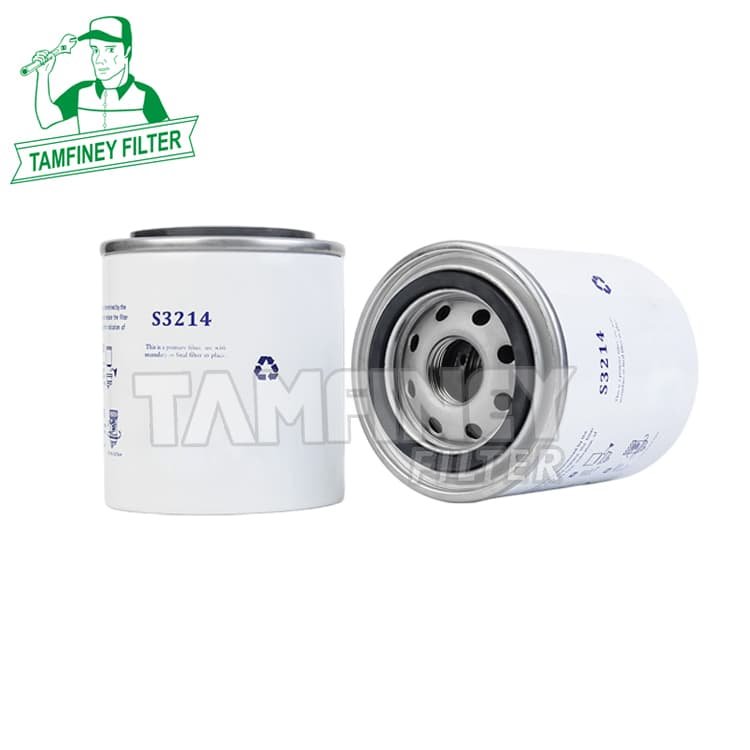
Professional Racor S3214 Filter 118-7920 35-809099 771839 B32014
Your best Racor S3214 Filter 118-7920 35-809099 771839 B32014 Fuel filter manufacturer in China.
Parker S3214 118-7920 35-809099 771839


| Fuel Filter S3214 118-7920 35-809099 771839 B32014 Parameter: | |
| Part Number | S3214 118-7920 35-809099 771839 B32014 |
| Brand | Tamfiney |
| Weight | 540 g |
| Height | 102 mm |
| Outer Diameter | 97 mm |
| Inner Diameter/ Thread Size |
1"-12 3 1/4-10 |
| Minimum Order | 100 PCS |
| Place of Region: | Zhejiang, China |
| Payment Terms: | T/T |
| Price Terms: | FOB |
| Lead Time: | 30 to 50 days based on order quantities |
| Market Type: | After Market |
| Current Export Market: | Southeast Asian,North America, South America, Western Europe, Eastern Europe, Africa, Oceania |
Applications:
- MERCRUISER DIVERS
- Yamaha
- Suzuki
- Volvo Penta
- OMC
- Honda
- Tohatsu
Professional Racor S3214 Filter 118-7920 35-809099 771839 B32014
Q: What is the S3214 filter?
S3214 filter is a fuel water separator commonly used to remove moisture and impurities from the fuel system to protect the engine from pollution. It belongs to the Racor brand product line and is commonly used in fuel treatment systems for diesel engines or heavy machinery equipment.
Q: How do you install or service a Parker Racor filter?
Preparation Before Installation
-
Equipment Familiarization
- Review equipment drawings to confirm installation location, model specifications, and system parameters (e.g., working pressure, medium type, flow rate).
- Verify compatibility between filter and filter element models (e.g., filter element material must match medium and pressure requirements).
-
Installation Area Preparation
- Ensure the installation area is clean, dust-free, and oil-free to prevent contamination.
- If the environment has high dust or oil/gas levels, install a pre-treatment device (e.g., coarse filter) upstream.
-
Component Inspection
- Check the filter body, filter element, and sealing components (e.g., O-rings) for damage.
- Confirm the filter element packaging is intact and uncontaminated.
- Verify spare sealing rings are compatible with the medium.
-
Tool and Material Preparation
- Prepare clean installation tools (torque wrenches, wrenches, level gauges, etc.) free of oil stains and rust.
- Gather auxiliary materials such as clean hydraulic oil (or system-compatible lubricants) and white silk cloths.
-
System Preprocessing
- Turn off the hydraulic system or equipment power source.
- Release residual pressure from accumulators via pressure relief valves until the pressure gauge reads 0MPa.
- Open the filter’s bottom oil drain valve and collect residual medium in a clean container (do not return it to the oil tank).
Installation Steps
-
Basic Fixation
- For vertical filters, ensure verticality deviation ≤ 1°/m.
- For horizontal filters, ensure levelness deviation ≤ 2mm/m.
- Use a level to calibrate and firmly secure the filter to prevent vibration-induced seal failure.
-
Interface Preparation
- Clean the filter connection port (flange, thread, etc.), removing rust, oil stains, and debris.
- Inspect the sealing surface for flatness, scratches, or deformations.
- Repair or grind the surface if necessary.
-
Filter Element Installation
- Remove the new filter element’s packaging (avoid violent collisions before removing the protective film).
- Handle the filter element gently to prevent damage to the filter material.
- For vertical installation, orient the corrugated plate perpendicular to the ground.
- For horizontal installation, ensure the sealing end faces the medium inlet direction.
-
Connection Method
- For threaded connections, wrap 3-4 turns of sealing tape around the male thread (starting from the second thread).
- Tighten evenly with a wrench to the recommended torque (e.g., 25-30N·m for 1/2" NPT interface).
- For flange connections, place compliant gaskets (e.g., nitrile rubber gaskets for oils) and tighten bolts diagonally and evenly.
-
Exhaust and Pressure Testing
- Open the upstream valve and slowly open the downstream valve to exhaust air from the casing (some models have dedicated exhaust valves).
- Maintain pressure for 10 minutes at 1.1 times the working pressure.
- Confirm no leakage at interfaces or seals.
Key Notes
- Always follow manufacturer guidelines for torque values and compatibility.
- Use clean tools and materials to prevent contamination.
- Perform pressure testing to ensure system integrity before operation.
This guide ensures safe and efficient installation and maintenance of Parker Racor filters. Let me know if you need further clarification!
Daily Maintenance
Perform visual inspections daily or weekly. Check if the filter housing is deformed or leaking. Look for medium leakage at sealing surfaces and interfaces. Use a white silk cloth to wipe and check for oil stains.
Monitor the differential pressure indicator. Replace the filter element when the pointer enters the red zone (usually ≥ 0.5-1.0 bar). Record pressure difference and flow rate changes at inlet and outlet. If the pressure difference drops suddenly, the filter element may be damaged. If the flow rate decreases abnormally, the filter element may be clogged.
Address the pressure difference promptly if it exceeds the manufacturer’s threshold (typically 0.2-0.3 bar). For Racor models with automatic drainage, verify the drainage device works properly. Operate manual drainage models once daily or per shift, especially in high humidity. This prevents condensation water mixing with impurities and blocking or corroding the filter material.
Regular Maintenance and Troubleshooting
Replace the filter element every 6-12 months under normal conditions. shorten the cycle to 3-6 months in harsh environments (high pollution, high temperature). After system malfunctions (e.g., pump wear or pipeline rupture), replace the filter element immediately and flush the system.
The replacement process includes these steps: Stop the machine and release pressure. Close upstream and downstream valves. Disassemble the housing by rotating counterclockwise or loosening flange bolts. Remove the old filter element and record pollutant type and accumulation. Install a new filter element and note the installation time.
Q: Is S3214 for gas or diesel?
S3214 is a 10 micron fuel filter fits for OMC, Evinrude, Johnson, Mercruiser, and Volvo Penta outboard/inboard marines. It is for gasoline/petrol.