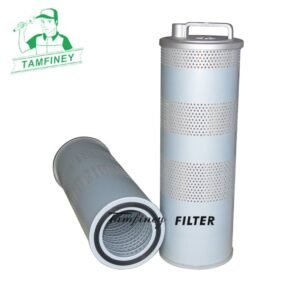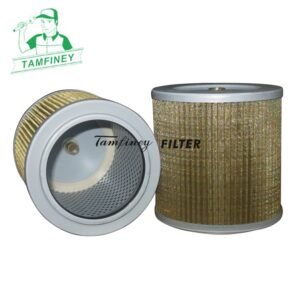


| Hydraulic Filter PT8484 W01AG255 14375005 P564859 Parameter: | |
| Part Number | PT8484 W01AG255 14375005 P564859 |
| Brand | Tamfiney |
| Weight | 380 g |
| Height | 225 mm |
| Outer Diameter | 60 mm |
| Inner Diameter | 35 mm |
| Material | Plastic & Glass Fiber |
| Filter Media | Glass fiber with mesh blend |
| Typical Working Pressure | Up to approx. 6–10 bar |
| Filtration | Approx. 5–10 micron |
| Temperature Rating | Up to approx. 100–120°C |
| Minimum Order | 100 PCS |
| Place of Region: | Zhejiang, China |
| Payment Terms: | T/T |
| Price Terms: | FOB |
| Lead Time: | 30 to 50 days based on order quantities |
| Market Type: | After Market |
| Current Export Market: | Southeast Asian,North America, South America, Western Europe, Eastern Europe, Africa, Oceania |
Application:
Common Industrial Sectors:
- Heavy mobile and construction equipment
- Industrial manufacturing and machinery
- Steel mills and foundry equipment
- Power generation and general plant hydraulic/lube circuits
Premium PT8484 Hydraulic Element W01AG255 14375005 P564859
Q: What micron rating should a hydraulic filter be?
There is no unified value for the micrometer level of hydraulic filters, it depends on what components are installed in the system. The most commonly used empirical value is 10 μ m, and generally hydraulic systems with a filtration accuracy of not less than 10 μ m can meet most working conditions.
The recommended accuracy for different components and positions varies greatly, and can be compared to:
- Pilot filter for Servo valve: requires high-precision filtration of about 3-5 μ m to protect the valve core from being stuck by small particles.
- Ordinary pressure filter: usually use 5-10 μ m filters.
- Return oil filter: The mainstream precision is 10-20 μ m, with two common levels of 10 μ m and 20 μ m.
- Oil suction strainer: Generally, a coarse filter of 100-180 μ m is used to protect the hydraulic pump.
📏 How to choose accuracy
- Check the system level: The more precise the system and the higher the pressure, the stricter the requirements for oil cleanliness, and the higher the filtration accuracy. For example, a precision servo system requires oil impurities with a particle size of less than 1 μ m, and the filter accuracy needs to be between 1-3 μ m.
- Check the installation positions: coarse filtration at the oil suction port, medium precision filtration in the return oil circuit, and precision filtration in front of the servo valve. Each of the three positions has its own responsibilities.
- Reference for accuracy classification: coarse filtration (>100 μ m), ordinary filtration (10-100 μ m), precision filtration (5-10 μ m), and ultra fine filtration (1-5 μ m).
Q: Can a clogged hydraulic filter cause a machine to run slow or hot?
Yes, a clogged hydraulic filter can indeed slow down the machine's operation and may also cause overheating.
After clogging, the resistance to oil flow increases, leading to higher system pressure loss, reduced output force or speed from the actuator. Simultaneously, energy is converted into heat at the filter element, and with increased internal leakage, oil temperature continuously rises, potentially exceeding the dangerous threshold of 80°C. This results in accelerated component wear, degraded sealing, and in severe cases, may cause "sticking" or trigger system shutdown.
🔧 Typical Consequences
- Slow operation: Excessive pressure loss affects the speed and output force of the actuator, making the overall machine's movement appear "labored.".
- Excessive oil temperature: The pressure drop converts into heat, reducing oil viscosity and increasing internal leakage, creating a vicious cycle.
- Component wear: When the bypass valve is forced to open, impure oil directly enters the system, accelerating wear on precision components such as pumps and valves.
- Emergency Failure: Components may "lock up" during severe blockages, and thermal deformation of the machine can also compromise the original precision.
⚠️ Key Focus
Once the bypass valve opens after the hydraulic filter becomes clogged, unfiltered impurities will directly enter the hydraulic system, causing irreversible damage to core components.
It is recommended to regularly inspect and replace the filter elements, especially after continuous high-intensity operation. If sluggish movement or abnormal oil temperature rise is observed, prioritize checking whether the hydraulic filter is clogged.