
Get a Free Quote
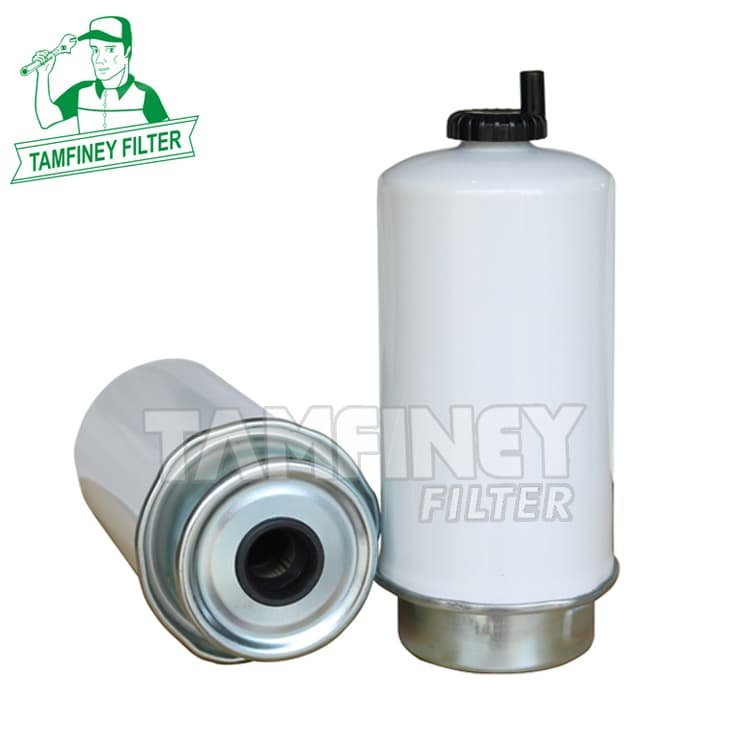
Perkins Water Separator 26560141 BF7677 BF7677-D BF7951-D
Your best Perkins Water Separator 26560141 BF7677 BF7677-D BF7951-D Fuel filter manufacturer in China.
Perkins 26560141 BALDWIN-BF1255 ,BF7677 ,BF7677D ,BF7898D ,BF7951D ,BF7953D CASE 1931137 ,2854796 ,2855755 ,84269164 CHALLENGER-4275626M1 4280423M1 Steyr 162000080877, 162000080886



| Fuel Filter 26560141 BF7677 BF7677-D BF7951-D Parameter: | |
| Part Number | 26560141 BF7677 BF7677-D BF7951-D |
| Brand | Tamfiney |
| Weight | 360g |
| Height | 197 mm |
| Outer Diameter | 88mm |
| Inner Diameter/ Thread Size |
|
| Minimum Order | 100 PCS |
| Place of Region: | Zhejiang, China |
| Payment Terms: | T/T |
| Price Terms: | FOB |
| Lead Time: | 30 to 50 days based on order quantities |
| Market Type: | After Market |
| Current Export Market: | Southeast Asian,North America, South America, Western Europe, Eastern Europe, Africa, Oceania |
What is the 26560141 used for?
PERKINS VK 37862VK 37886VK 37977VK 38036
RENAULT AGRI ARES 836 RZ
SISU 33 DT33 DTA66 ETA
STEYR 1170 CVT6135 CVT6145 CVT6155 CVT6170 CVT6170 CVT6190 CVT9080 MT9090 MT9100 MTM 9100
Professional Perkins Water Separator 26560141 BF7677 BF7677-D BF7951-D
Q: What is the purpose of a Perkins water separator?
The Perkins fuel water separator is a critical fuel system component designed specifically for Perkins engines. Its main purpose is to purify moisture and impurities in diesel or fuel to protect precision engine components and improve operational efficiency.
• Remove water from fuel: By utilizing the density difference between oil and water, the water is separated and collected in a water collection tank through the principle of gravity settling, to prevent water from entering the fuel injection system and causing corrosion or poor combustion.
• Intercept solid impurities: Filter particles such as sediment and metal debris to prevent wear or blockage of precision components such as fuel injectors and plunger fittings.
• Improve combustion efficiency: Provide clean fuel, improve combustion quality, thereby reducing fuel consumption and harmful emissions.
• Enhance low-temperature adaptability: Some models have heating function to prevent diesel from waxing in low-temperature environments, ensuring smooth engine start-up.
• Extend engine life: By continuously purifying the fuel, the internal wear of the engine is significantly reduced, the failure rate is lowered, and the overall service life is extended.
This type of fuel water separator is widely used in engineering machinery, generator sets, ships, and commercial vehicles that use Perkins engines, and is an important guarantee for ensuring stable operation of power systems.
Q: How often should I drain the water separator?
• Under normal operating conditions: It is recommended to empty the vehicle every 2000-3000 kilometers or every 3 months.
• High humidity, frequent short distance cycling (less than 10 kilometers per trip) or rainy areas: Water accumulates faster, it is recommended to reduce emissions to once every 1000-1500 kilometers.
• Winter low temperature environment: To prevent the oil-water mixture from freezing and blocking the pipeline, daily inspection and drainage may be necessary.
• Observation method:
If the indicator light on the instrument panel lights up, immediately drain the water;
If the bottom is a transparent water cup, the water accumulation can be directly observed. If the water level is too high, it needs to be emptied.
Q: How do you bleed a Perkins fuel system after changing the filter?
After replacing the Perkins engine fuel filter, in order to ensure the normal operation of the system, it is necessary to completely exhaust the air in the fuel system. The standard deflation steps are as follows:
1. Preparation work
Ensure that the new filter has been installed correctly, sealed properly, and oriented correctly.
If conditions permit, the new filter can be pre filled with clean diesel before installation to reduce air intake.
Prepare tools: wrench, screwdriver, cleaning cloth, gloves, and goggles.
2. Exhaust the air from the filter
Find the air release screw on the top or side of the diesel filter (usually a copper screw with a rubber hose connection).
Loosen the air release screw slightly with a wrench (1-2 turns are sufficient, do not completely remove).
Repeatedly press the hand pump (located near the filter or on the fuel line) until the diesel discharged from the vent is continuous and without bubbles.
Immediately tighten the air release screw and stop pumping oil.
3. Exhaust high-pressure oil circuit air (if applicable)
If the engine is still difficult to start or runs unstably, it is necessary to further exhaust the air in the fuel injection pump or high-pressure fuel pipe.
Loosen the bleed screw or high-pressure oil pipe joint nut on the fuel injection pump.
Continue to press the hand oil pump or use the starter to drive the engine (no more than 30 seconds each time, with a 2-minute interval) until a stable flow of oil without bubbles flows out from the release point.
Quickly tighten the joint and stop the operation.
4. Startup and Verification
Attempt to start the engine. If it starts smoothly and runs smoothly, it indicates successful deflation.
If there are still difficulties in starting, shaking, or insufficient power, repeat the above deflation steps and check the sealing of the pipeline or whether the filter model matches.


