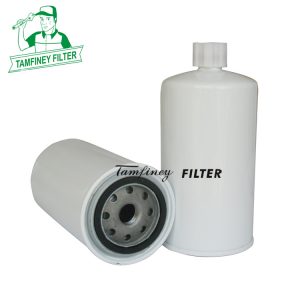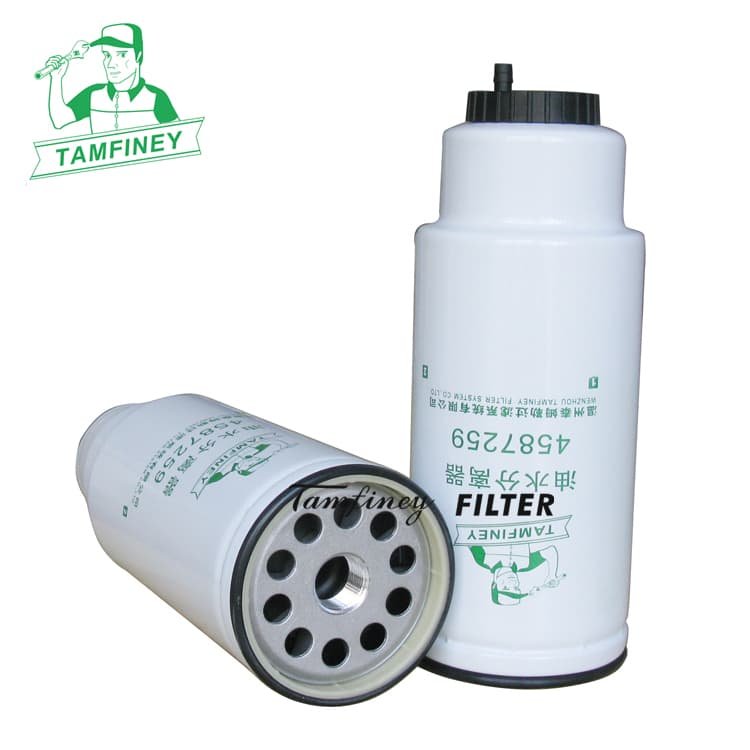
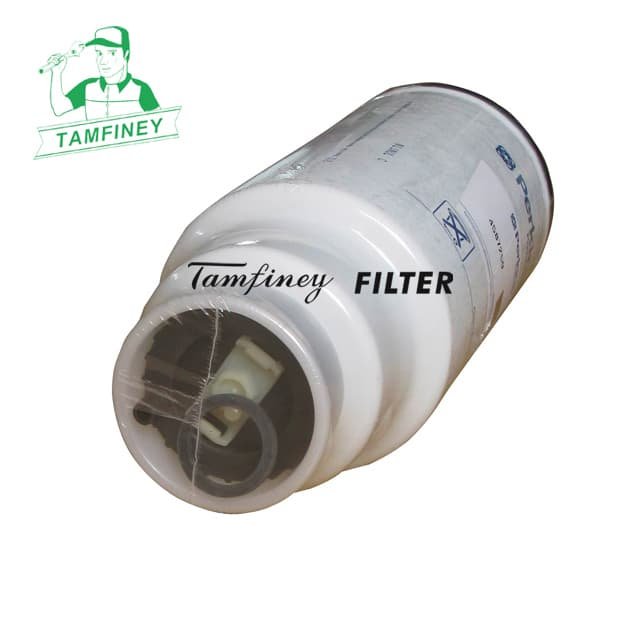


| Fuel Filter 4587259 423-8524 4238524 4770550 10000-71730 Parameter: | |
| Part Number | 4587259 423-8524 4238524 4770550 10000-71730 |
| Brand | Tamfiney |
| Weight | 959g |
| Height | 270 mm |
| Outer Diameter | 108 mm |
| Inner Diameter/ Thread Size |
1-14 UN |
| Minimum Order | 100 PCS |
| Place of Region: | Zhejiang, China |
| Payment Terms: | T/T |
| Price Terms: | FOB |
| Lead Time: | 30 to 50 days based on order quantities |
| Market Type: | After Market |
| Current Export Market: | Southeast Asian,North America, South America, Western Europe, Eastern Europe, Africa, Oceania |
Applications:
CATERPILLAR 966 M966 M966 M XE972 M980 MPM 310
EPIROC Flexiroc D 55SMARTROC C 50SMARTROC D 65-10 LF
HAMMEL VB 950 DK
HAMMELMANN HDP 504
PERKINS LGDF 1012
WILSON P 275-5
ZB GROUP THOR 1521 K
Professional Perkins Fuel Filter Replacement 4587259 423-8524 4238524 4770550 10000-71730
Q: When should 4587259 be changed (maintenance intervals)?
This fuel filter requires changing every 15,000 to 30,000 miles (or 500 hours for heavy equipment), but always check your specific engine's manual, as intervals vary by model, fuel quality, and operating conditions; many suggest changing it with every other oil change (around 10k-20k miles) or as indicated by onboard systems.
Synchronous replacement: Replace the diesel filter synchronously with other components (such as the oil filter) to form a complete maintenance loop.
Regular inspection: Before each operation or during regular maintenance, check the filter for any signs of blockage, leakage, or damage, and replace it in advance if necessary.
Record maintenance logs: Detailed records of each replacement time for easy tracking and prediction of the next replacement cycle.
Q: Do you need to do anything after replacing a fuel filter?
After replacing the fuel filter, the following key steps need to be taken to ensure system safety and performance:
• Safety preparation and initial inspection: Firstly, operate the engine in a cold state, disconnect the negative wire of the battery to prevent electric shock, and strictly prohibit smoking and fire. The work area should be kept clean. Start the engine after replacement, focus on checking for leaks in the fuel lines and connections, and observe if the engine is running smoothly.
• System pressure and sealing verification: Before installation, it is necessary to release the fuel system pressure (such as unplugging the fuel pump relay and starting the engine until it shuts down). After installation, ensure that the arrows at the inlet and outlet of the filter are consistent with the fuel flow direction, and that the connection is well sealed to prevent leakage.
• Performance monitoring and maintenance: Regularly check for leaks in the filter and surrounding areas, use high-quality fuel, and keep the work area clean to extend system life.
Q: What happens if you don't prime a fuel filter?
The fuel filter is a critical component in the fuel system, whose main function is to filter impurities in the fuel and ensure that the fuel entering the engine is clean. If the fuel filter is not filled with fuel (i.e. not properly filled with fuel or in an air filter state), it can directly cause fuel supply problems, leading to a series of engine failures.
The direct consequences of fuel filter not being filled with fuel include: firstly, insufficient fuel supply, as there is a lack of fuel inside the filter, which cannot form normal fuel supply pressure, resulting in difficulty or inability to start the engine. Even if the engine is barely started, it may experience idle shaking or weak acceleration due to unstable fuel supply; Secondly, the engine performance deteriorates due to a decrease in fuel consumption, reduced combustion efficiency, weakened power output, insufficient vehicle power, and increased fuel consumption; In addition, long-term operation may damage components, such as overheating and damage to fuel pumps due to increased fuel supply resistance, or wear and tear of precision components such as fuel injectors and pistons due to unfiltered impurities; Finally, exhaust emissions may exceed the standard due to insufficient combustion producing excessive harmful substances.