Get a Free Quote
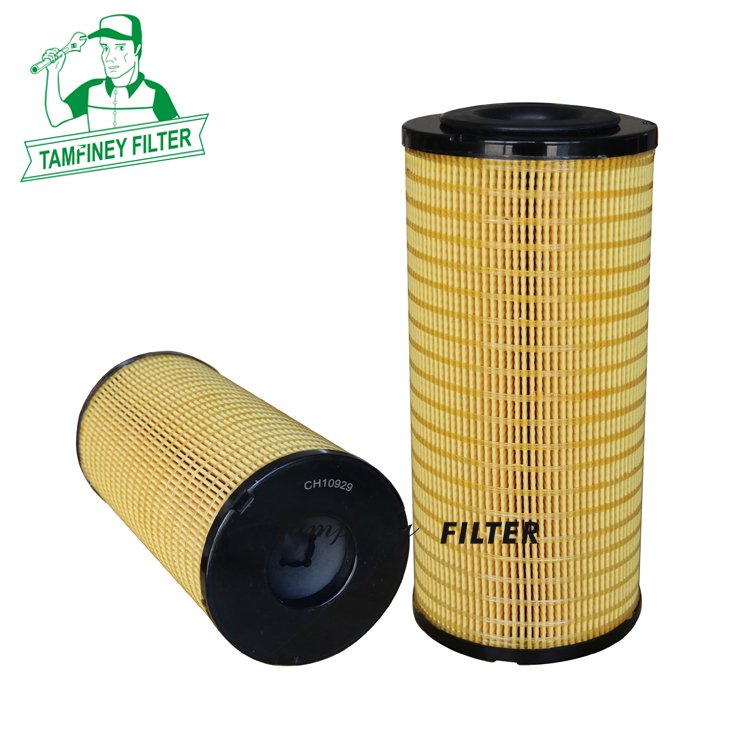
Premium Perkins Diesel Oil Filter P7321 996452 996-452 P502477 EO-5101
Your best Perkins Diesel Oil Filter P7321 996452 996-452 P502477 EO-5101 Oil filter manufacturer in China.
Baldwin P7321 996452 996-452 Donaldson P502477 Sakura EO-5101


| Oil Filter P7321 996452 996-452 P502477 EO-5101 Parameter: | |
| Part Number | P7321 996452 996-452 P502477 EO-5101 |
| Brand | Tamfiney |
| Height | 263/267mm |
| Outer Diameter | 125mm |
| Inner Diameter/Thread Size | 43mm |
| Minimum Order | 300pcs |
| Place of Region: | Zhejiang, China |
| Payment Terms: | T/T |
| Price Terms: | FOB |
| Lead Time: | 30 to 50 days based on order quantities |
| Market Type: | After Market |
| Current Export Market: | North America, South America, Western Europe, Eastern Europe, Africa, Oceania |
Application:
2H ENERGY GEM 400 PP 500P 650
CATERPILLAR GEP 450F-4
COELMO PDT 256 G2
FG WILSON P 450 E2
GESAN DPAS 400 E
MFL R-CI 130-130 TV
MOSA GE 445 PSX-EAS
OLYMPIAN GEP 450F-4GEP 500GEP 550-2GEP 700
PERKINS 2206C-E13TAG32206-E13TAG2306C-E14TAG22306C-E14TAG32506C-E15 TAG12506-E15TAG2806A-E18 TAG22806C-E16
SIMED 650 KVA
WILSON P 350 P3P 410 P3P 450P 500-1 50HZP 550-1 50HZP 550 E3P 635 E/PP 660-1 50HZP 700-1 50HZP 750-1 60HZ
Premium Perkins Diesel Oil Filter P7321 996452 996-452 P502477 EO-5101
Q: What's better, Baldwin or Wix?
Baldwin vs. Wix: A Quick Comparison
Hey there! Let's cut to the chase: Baldwin is your go-to for heavy-duty industrial filters, while Wix shines in the automotive aftermarket. Here's the breakdown:
Brand Background & Product Range
- Baldwin: Specializes in hydraulic and industrial filtration systems, built for durability and precision in harsh environments like construction machinery.
- Wix: Focuses on automotive filters (oil, fuel, air) for cars and light trucks, offering wide compatibility and affordability.
Performance & Quality
- Baldwin: Excels in high-temperature, high-pressure, and high-precision filtration, ideal for demanding industrial applications.
- Wix: Prioritizes reliability and cost-effectiveness, meeting standard automotive needs with solid quality control.
Price & Availability
- Wix: Generally more affordable, perfect for budget-conscious car owners.
- Baldwin: Higher upfront cost (especially for industrial models), but often lower long-term costs due to durability.
- Availability: Wix is widely available in automotive markets; Baldwin is typically sourced through professional industrial suppliers.
When to Choose Which?
- Choose Baldwin for industrial equipment (e.g., construction machinery, hydraulic systems) requiring high-performance filtration.
- Choose Wix for automotive maintenance (e.g., oil filters for cars) where cost-effectiveness and adaptability matter most.
Q: How often should you change the oil filter on a diesel engine?
Diesel engine oil filters are usually replaced every 5000 to 10000 kilometers or every 6 months to 1 year, depending on the type of oil, driving environment, and vehicle requirements.
🔧 Key factors affecting replacement cycle
• Oil type:
Mineral oil: Replace every 5000 kilometers or half a year (due to high impurities and clogged filter elements).
Fully synthetic oil: can be extended up to 10000 kilometers or 1 year (with higher cleanliness).
• Driving environment:
Urban roads: replaced according to standard cycles.
Sand, haze or construction road sections: shortened to within 5000 kilometers (due to clogged dust acceleration filter).
• Differences in vehicle models:
For example, SAIC Maxus T60 diesel version: replace every 5000-10000 kilometers.
High end models (such as Mercedes Benz diesel version): may support longer cycles, but please refer to the manual.
Q: What is the function of the oil filter in a diesel engine?
The diesel engine oil filter is a key component of the engine lubrication system, whose core function is to filter impurities in the engine oil, ensure the cleanliness of the lubrication system, and thus protect the normal operation of the engine.
The main functions include:
• Filter impurities: effectively filter out mechanical impurities such as dust, metal debris, carbon deposits, and gum in engine oil, preventing these particles from accelerating engine component wear.
• Keep the engine oil clean: By intercepting harmful particles, it delays the oxidation and deterioration of the engine oil, prolongs its service life, and maintains its lubrication effect.
• Protecting the engine: reducing friction and wear between moving parts, lowering the risk of failure, indirectly improving fuel economy and power stability.
Working principle and performance requirements: The oil filter usually adopts a full flow design (connected in series with the main oil passage) to ensure that all oil is circulated and filtered; High quality filters need to have high filtration accuracy (such as filtering out particles larger than 30 microns), low flow resistance, and long service life. Some models also integrate overflow valves to allow unfiltered oil to flow urgently in low temperatures or when the filter element is clogged, avoiding engine damage caused by oil shortage.