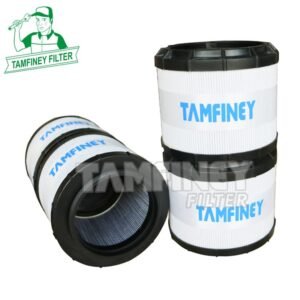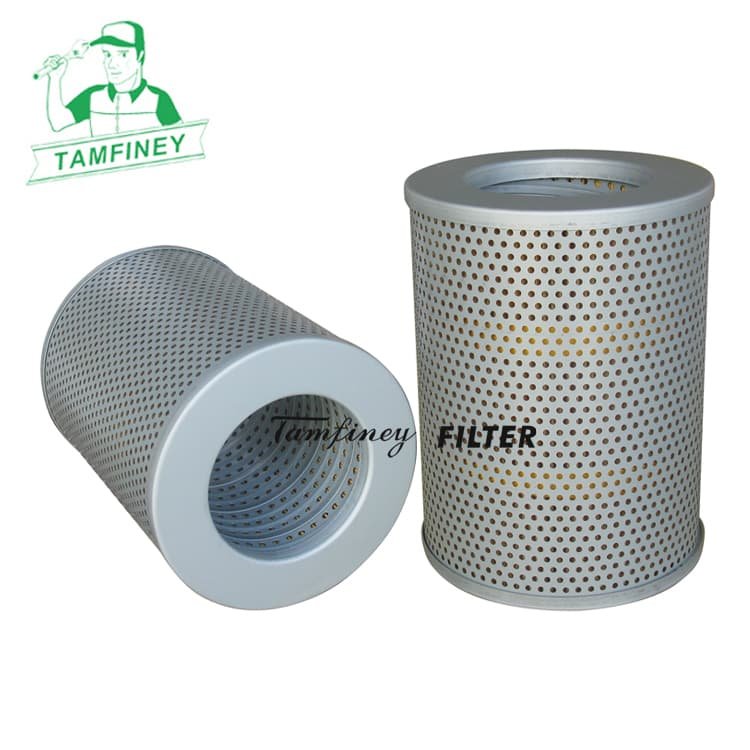



| Hydraulic Filter P550787 207-60-71181 HF35360 207-60-71182 2076071183 Parameter: | |
| Part Number | P550787 207-60-71181 HF35360 207-60-71182 2076071183 |
| Brand | Tamfiney |
| Weight | 1248 g |
| Height | 200 mm |
| Outer Diameter | 150 mm |
| Inner Diameter | 92 mm |
| Material | Metal & Paper |
| Filter Media | High-efficiency pleated cellulose / synthetic fiber |
| Typical Working Pressure | Up to approx. 6–10 bar |
| Filtration | Approx. 5–10 micron |
| Temperature Rating | Up to approx. 100–120°C |
| Minimum Order | 100 PCS |
| Place of Region: | Zhejiang, China |
| Payment Terms: | T/T |
| Price Terms: | FOB |
| Lead Time: | 30 to 50 days based on order quantities |
| Market Type: | After Market |
| Current Export Market: | Southeast Asian,North America, South America, Western Europe, Eastern Europe, Africa, Oceania |
Applications:
KOMATSU D 155 AX-6HM 300-3 LCPC 180-7 LCPC 180-8 LCPC 200-8 LC/NLCPC 210-10 LCIPC 210 LC-8PC 210 NLC-8PC 228-3 US LCPC 230-8K NHDPC 230-8 NHDPC 240-10 LC/NLCPC 240-7 LCPC 240-7 LCPC 240-8 LC/NLCPC 290-8 LC/NLCPC 290 HPW 180-7E0 LCPW 220-7EO LCWA 450-6WA 470-6WA 480-6
Premium P550787 Hydraulic Filter 207-60-71181 HF35360 207-60-71182 2076071183
Q: What does the micron rating mean on a hydraulic cartridge?
Micron level "refers to the unit of measurement for the filtration accuracy of hydraulic filter elements (1 μm=0.001mm), indicating the particle size range that the filter element can intercept, but ≠ 100% interception of particles of that size.
Core meaning: The nominal "X μm" usually refers to the nominal filtration accuracy, and the actual efficiency needs to be comprehensively judged based on the β value or absolute filtration accuracy; According to the ISO 16889 standard, the nominal accuracy corresponds to an efficiency of generally 90% to 95%, not absolute interception.
Typical application matching:
Oil suction filter: 80-180 μm (coarse filter)
Return filter: 3-25 μm (normal to fine filtration)
Pilot filter: ≤ 3 μm (special precision filter)
Attention: Judging performance based solely on micrometer count may lead to misjudgment. It is necessary to simultaneously confirm the compatibility of testing standards, beta curves, and system cleanliness levels (ISO 4406).
Q: How to tell if a hydraulic filter is clogged?
Core judgment basis: Prioritize checking the differential pressure indicator/alarm device, then comprehensively confirm by combining system actions, noise, and temperature anomalies.
1. Direct signal monitoring (most reliable)
- Pressure differential transmitter alarm: Most industrial hydraulic filters are equipped with a pressure differential indicator or an electrical contact alarm light; when the pressure differential between the inlet and outlet of the filter reaches 0.3–0.5 MPa, it indicates the need for replacement.
- Manual differential pressure measurement: When no automatic device is available, connect two pressure gauges to the inlet and outlet of the filter element respectively. A differential pressure >0.3 MPa (typically <0.1 MPa for new filters) indicates severe blockage.
2. Abnormal System Operation Manifestations
The actuator is sluggish or weak in movement: especially with a noticeable speed drop after loading. A clogged return oil filter can cause back pressure to rise and hinder oil discharge, while a blocked suction oil filter may lead to insufficient pump flow or even "suction starvation.".
- Abnormal noise and vibration: Dull humming sounds, cavitation burst noises, or high-frequency whistling in pipelines occur in the pump area.
- Abnormal oil temperature rise: Increased circulation resistance leads to intensified heating, and prolonged blockage can cause the oil temperature to exceed 80°C, accelerating oil degradation and component wear.
- Unstable motion: exhibits crawling, trembling, or stuttering.
3. Auxiliary Verification Methods
- Visual Inspection Upon Shutdown: After disassembly, observe whether the filter element surface has accumulated excessive sludge or metal debris. Replace immediately if the filter material is cracked, deformed, or if the sealing ring is aged (non-reusable disposable filter elements).
- Oil Condition Analysis: Sample to check for turbidity or sedimentation; professional testing for particle size exceeding standards or abnormal viscosity changes.
- Cycle Prediction: For normal operating conditions, replacement is recommended every 1,000–2,000 hours or 3–6 months. In harsh environments, the interval should be shortened to 1–3 months or 100 hours.
⚠️ Note: Avoid misjudgment based solely on "pressure rise"—hydraulic filter clogging often leads to flow reduction and insufficient system pressure. Hydraulic systems typically exhibit symptoms such as unmet set pressure at the actuator or pressure-holding failure. If the pressure difference does not trigger an alarm but symptoms are evident, other fault sources like pump internal leakage or valve sticking should be investigated simultaneously.