Get a Free Quote

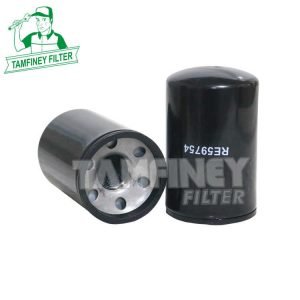
Oil Filter Part Number JX1023 42537127 LF3321 LF3973 LF3675
Your best Oil Filter Part Number JX1023 42537127 LF3321 LF3973 LF3675 Oil filter manufacturer in China.
FLEETGUARD LF3675 LF3730 LF3973 LF9667 LF3379 LF17513 LF3321 HF35197 AGCO-AG121853 SANDVIK-55072766 JOHN BEAN-3A11555 KALMAR 921691.0001 923110.0057 KOHLER-41190023 ,41190024 LINDE-E760001001 LIUGONG-JX1023 SHANGCHAI 430-1012010A SISU-1216400551 NEW HOLLAND-1448077 ; NISSAN 5221706577 15251525 SAAB-1347726 ; SAKURA-C55011 C-55222 C-55221 UD TRUCKS 15200-9Z00A 5222771970


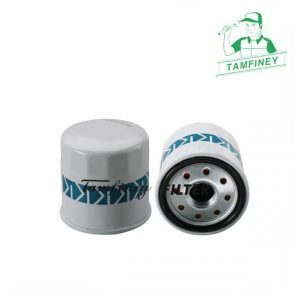
| Oil Filter JX1023 42537127 LF3321 LF3973 LF3675 Parameter: | |
| Part Number | JX1023 42537127 LF3321 LF3973 LF3675 |
| Brand | Tamfiney |
| Weight | 1169 g |
| Height | 260 mm |
| Outer Diameter | 108 mm |
| Inner Diameter/ Thread Size |
1 1/8-16 UN |
| Minimum Order | 100 PCS |
| Place of Region: | Zhejiang, China |
| Payment Terms: | T/T |
| Price Terms: | FOB |
| Lead Time: | 30 to 50 days based on order quantities |
| Market Type: | After Market |
| Current Export Market: | North America, South America, Western Europe, Eastern Europe, Africa, Oceania |
What does JX1023 fits?
INGERSOLL RAND 21.2159.255HP 600 WCATLM 600 GLM 635 XLLMR 600 CP 1050 SCATXHP 750 WCATXHP 760 WCATXP 750 WACATXP 900 WCAT
LAVERDA M 304M 304 LSM 305M 306 LS
LIUGONG CLG 842LG 952LG 953LG 956 LLG 958 LZL 40 B
MACK DM 685 SF 786 STR 685 S
PONSSE COBRAHS 10 COBRAHS 16 ERGOS 16 BUFFALOS 16 BUFFALO
SABO ROBERINE 1510ROBERINE 1602-5DROBERINE 1700 DROBERINE 1900-5D
SDLG LG 952LG 953
SDMO GS 400 SV 400 K
SEM MACHINERY 659 C
SHANTUI SD 16SG 18SL 50 WSL 50 W-2SL 50 W-3SL 60 W-2
SULLAIR 285 H285 HH
TAMROCK DC 301 RRANGER 500RANGER 500RANGER 700RANGER 700RANGER 800RANGER 800
Precision Oil Filter Part Number JX1023 42537127 LF3321 LF3973 LF3675
Q: How do I find my oil filter part number?
To find your oil filter part number, you can refer to the following authoritative and practical methods:
• Check the manufacturer's part number on the filter housing: This is the most direct way. The oil filter housing is usually clearly labeled with a part number consisting of letters and numbers (such as "JX1023"), which is the part number. Pay attention to cleaning the surface dirt for identification.
• Refer to the vehicle maintenance manual: The manual will clearly list the part number of the oil filter that is suitable for your vehicle model. Be sure to confirm that the manual version is consistent with your vehicle model year, otherwise errors may occur.
• Query through Vehicle Identification Number (VIN): The VIN code contains key information about the vehicle and can accurately obtain the compatible part number.
• Consult a car dealer or professional repair shop: After providing the model, year, and VIN code, technicians can accurately provide the part number and recommend compatible models.
• Observe the physical characteristics of the old filter (auxiliary means): If the above method is not feasible, the size, thread specification, interface type, etc. of the old filter can be measured as a selection reference, but the accuracy is relatively low.
It is recommended to prioritize using VIN queries or maintenance manuals for the highest accuracy; If the filter has not been replaced and the number is clear, reading the housing number directly is the quickest way.
Q: Can I use a different brand oil filter?
Different brands of oil filters can be used, but the prerequisite is to ensure that their models are fully compatible with the vehicle. The brand itself is not the determining factor, the key lies in whether the specifications, interface dimensions, sealing design, filtering performance, etc. meet the original factory requirements.
Key points
Different brands but the same model/compatible model can be interchanged: for example, both Fleetguard and Hitachi have models specifically designed for the Volkswagen Sagitar (such as Bosch LF3321, Hitachi 42537127), both of which can be used and have their own advantages.
It cannot be assumed that two filter cartridges are universal solely based on their "similar appearance" or "same displacement": even if two filter cartridges look similar, details such as internal structure, thread size, and bypass valve opening pressure may differ, and forced installation may result in leakage or filtration failure.
Same car series/same engine is usually interchangeable: If multiple cars use the same engine (such as Volkswagen EA888), their oil filters can often be interchangeable, but the specific model needs to be checked.
Prioritize the selection of specialized vehicle models: refer to the vehicle maintenance manual or enter the vehicle model through formal channels to obtain recommended models.
Practical advice
1. Confirm the vehicle model and engine model:such as "Volkswagen Sagitar 1.4T 2020 model".
2. Check the compatible filter cartridge model:You can do it through the following methods: View the maintenance chapter in the vehicle's user manual;
Consult a 4S store or professional repair shop.
3. Choose a legitimate brand and compatible model.
⚠️ Do not mix filter cartridges from different brands that are not compatible, even if they are all "fully synthetic" or "universal", as design differences may affect engine life.
If you need to inquire about specific compatible models, you can provide the vehicle brand, model, year, and engine displacement to Tamfiney Filter for accurate recommendations.
Q: What do the numbers on an oil filter mean?
The part numbers on the oil filter typically represent key information such as specifications, performance, and dimensions of the filter, but their specific meanings vary depending on the manufacturer and coding system, with no unified standard.
General meaning
The combination of model numbers and letters primarily conveys the following types of information:
1. Series or Product Code: Used to identify specific models, filters with the same series number often have identical internal and external diameter dimensions.
2. Dimensional parameters: Numbers typically indicate the height or diameter of the filter, with units possibly in inches (in) or centimeters. For example, "8" may represent a height of 8 inches (203.2 mm).
3.Filtration Performance:Alphanumeric combinations can indicate filtration accuracy (e.g., 6μm), filtration ratio (e.g., ≥200), and characteristics such as the presence of a metal guard screen.
4. Applicable Vehicle Models or Engines:Some models directly correspond to vehicle or engine specifications, assisting users in matching the correct product.
5. Performance Grade: In certain coding systems, a higher number may indicate better filter performance (e.g., 1011, 1021, 1031).
Type and Material: Letters often denote filter types (e.g., "C" for diesel oil filters, "J" for oil filters) or sealing material types (e.g., "Z" for fluororubber).
How to Interpret Correctly
Due to inconsistent encoding rules, the most reliable method is:
• Inspect the markings on the filter housing or packaging, and refer to the coding interpretation guide in the product manual or on the brand's official website.
• Refer to the vehicle maintenance manual to obtain the accurate OEM-recommended filter model.
Use a caliper to measure the dimensions of the threaded port and sealing ring to ensure compatibility with the vehicle, especially when the coding is unclear.