Get a Free Quote

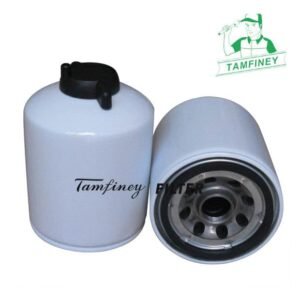
Liebherr Fuel Filter P551034 H7090WK30 KC249D
Your Best Liebherr Fuel Filter P551034 H7090WK30 KC249D Fuel filter manufacturer in China.
Donaldson P550554 P551034 Hengst H7090WK30 Mahle KC249D CASE 1685159C91


| Fuel Filter P551034 H7090WK30 KC249D Parameter: | |
| Part Number | P551034 H7090WK30 KC249D |
| Brand | Tamfiney |
| Weight | 756 g |
| Height | 159 mm |
| Outer Diameter | 108 mm |
| Inner Diameter/ Thread Size |
1" - 14 |
| Minimum Order | 100 PCS |
| Place of Region: | Zhejiang, China |
| Payment Terms: | T/T |
| Price Terms: | FOB |
| Lead Time: | 30 to 50 days based on order quantities |
| Market Type: | After Market |
| Current Export Market: | Southeast Asian,North America, South America, Western Europe, Eastern Europe, Africa, Oceania |
What applications is the P551034 used for?
• Autocar Trucks: ACL series
• Mercedes-Benz: Integro M-O 550
• Caterpillar: L6 10.5L, L6 12L, L6 14.6L
• Detroit Diesel: L6 11.1L, L6 12.7L, L6 15.2L
• LIEBHERR PR 754
Professional Liebherr Fuel Filter P551034 H7090WK30 KC249D
Q: How often should I change Liebherr fuel filter?
Liebherr is a well-known German manufacturer of construction machinery. The replacement cycle of fuel filters used in its equipment (such as excavators, cranes, etc.) is different from that of ordinary passenger cars, and needs to be comprehensively on factors such as equipment model, usage intensity, working environment, and fuel quality.
Suggested replacement cycle
Under normal operating conditions (using high-quality diesel and clean working environment):
• Replace the fuel filter every 500-1000 hours of operation.
• Or replace it every 1-2 years, whichever comes first.
Under harsh working conditions (with high dust, impurities, and the use of non-standard diesel):
• Check and consider replacement every 250-500 hours.
• If the fuel system experiences difficulties starting, decreased power, or weak acceleration, the filter should be checked immediately.
• First maintenance (after new or major repairs):
Most Liebherr equipment manuals recommend replacing the fuel filter after the first 250 hours of operation to remove any impurities that may remain during the manufacturing or assembly process
Q: How do you know if you have water in your fuel filter?
To determine whether there is water in the fuel filter, the following methods can make a comprehensive judgment:
• Observe the inside of the filter: Remove or inspect the fuel filter. If there are water droplets, accumulated water, or obvious layering (water in the lower layer and oil in the upper layer) inside, it indicates that there is moisture in the fuel.
• Check the fuel condition: Normal gasoline should be clear and transparent or slightly light yellow. If the fuel is cloudy, white or emulsified, it may contain water.
• Observe the vehicle's operating status:
Fuel containing water can cause engine shaking, insufficient power, slow acceleration, stalling, and even difficulty starting, while the malfunction light may light up.
• Check the oil condition: If a white emulsion (oil emulsion) appears on the inside of the oil filler cap, it indicates that moisture may enter the oil system through the combustion chamber, indirectly reflecting water ingress into the fuel tank or fuel system.
• Extract fuel sample for testing: Use a hose to extract fuel from the bottom of the fuel tank and place it in a transparent container for static testing. If there is obvious stratification (the lower layer is water), it is confirmed that the fuel contains water.
• Check the dashboard indicator lights: Some vehicles are with a fuel moisture sensor. If the WIF (Water in Fuel) light flashes, it usually indicates that there is too much moisture in the filter or fuel water separator, and it needs to be drained; If it stays on, it may be a sensor malfunction.
• Check the feul water separator: Diesel or some gasoline vehicles are equipped with fuel water separators. If the drain valve discharges water or the indicator light is on (such as a three-point icon), it indicates that the filter has collected water.
⚠️ If it is confirmed that the fuel contains water, it is recommended to handle it as soon as possible: a small amount of water can be added to the fuel water remover; If there is a lot of moisture, the fuel tank needs to be cleaned, the fuel filter needs to be replaced, and the fuel system needs to be inspected by professional maintenance personnel.
Q: How do you unclog fuel filters?
Most modern gasoline vehicles use disposable paper-element fuel filters, which are not recommended for cleaning. They should be replaced directly when reaching the service interval (typically every 15,000–30,000 kilometers).
Some diesel vehicles or older gasoline models may be equipped with washable metal filters, which can be cleaned according to specifications.