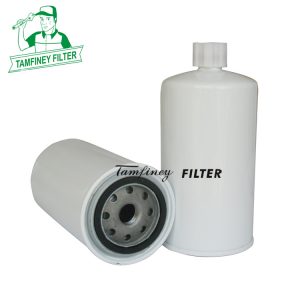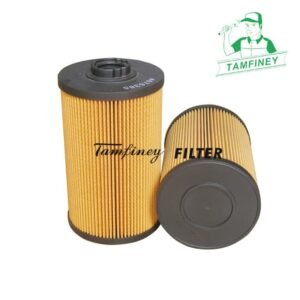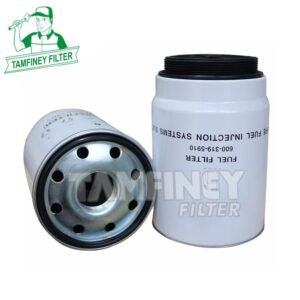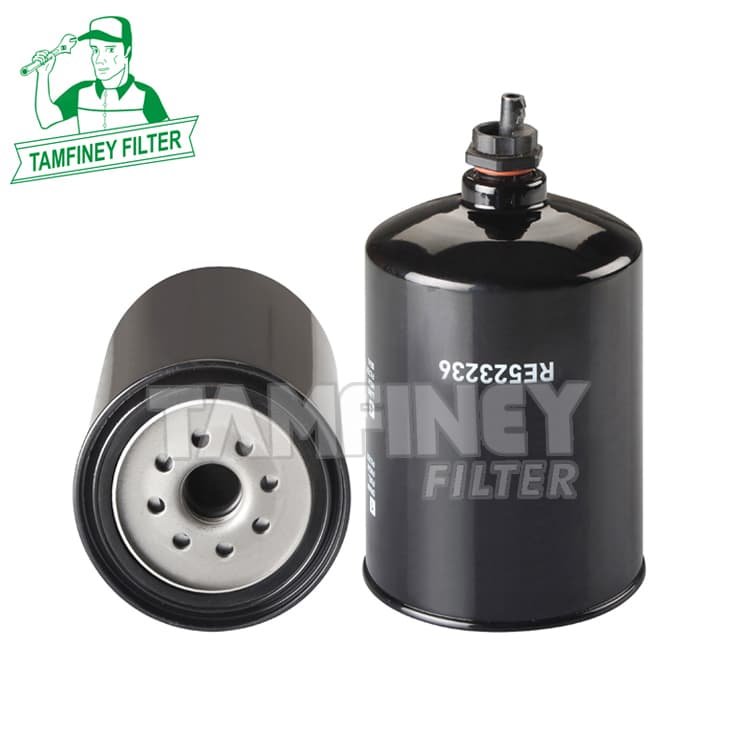


| Fuel Filter FS19956 RE523236 RE541747 RE547044 Parameter: | |
| Part Number | FS19956 RE523236 RE541747 RE547044 |
| Brand | Tamfiney |
| Weight | 689g |
| Height | 172 mm |
| Outer Diameter | 110 mm |
| Inner Diameter/ Thread Size |
1-14 |
| Minimum Order | 100 PCS |
| Place of Region: | Zhejiang, China |
| Payment Terms: | T/T |
| Price Terms: | FOB |
| Lead Time: | 30 to 50 days based on order quantities |
| Market Type: | After Market |
| Current Export Market: | Southeast Asian,North America, South America, Western Europe, Eastern Europe, Africa, Oceania |
Applications:
• JOHN DEERE 1110 E IT41210 E IT41270 E ITA43 AFM 75-M16068 AFM 75-M26068 AFM 75-M36068 AFM 75-M46068 AFM 85-M16068 AFM 85-M26068 AFM 85-M3
• JOHNSTON 4045 SFM 85-M5
• LIEBHERR L 566L 580
• ROTTNE F 13F 15 CF 15 CF 18F 18 DH 11 CH 14 CH 20H 20H 20H 20 B
• RUBBLE MASTER RM 100 GORM 120
• SDMO R 275 C 3R 330 C 3R 330 C 3
• TIMBERJACK 1210 E1270 D1270 E Gen 11470 D ECO 31711 D
Professional John Deere Fuel Filter FS19956 RE523236 RE541747 RE547044
Protect Your Engine with Effective Fuel Filtration
Contaminated fuel often leads to engine issues. Because fine particles enter diesel during storage or delivery, risk increases. Not only can these impurities reduce power, but they may cause expensive breakdowns. Therefore, choosing the right John Deere Fuel Filter is crucial for farm equipment.
Advanced Filtration for Lasting Performance
Reliable filtration makes a big difference in daily operations. Whenever engines face harsh conditions, a strong filter is necessary. Therefore, TAMFINEY recommends the John Deere Fuel Filter for trusted protection in every season. Not only does this filter deliver high efficiency, but it also extends engine life. Because modern engines require precision, quality filtration is essential.
FS19956: The Core Filter for Every Task
At the center of our range lies FS19956. Whenever fuel must be spotless, FS19956 stands ready. Not only does it trap small particles, but it also ensures water separation. Therefore, your John Deere engines keep running without interruption. Owing to robust design, FS19956 performs reliably even in high-pressure environments. Because farm work never stops, you need filters that meet your demands.
Supporting Performance with Multiple Cross References
Although FS19956 is key, many filters offer valuable alternatives. For example, RE523236 provides backup during urgent filter swaps. Whenever supply shortages happen, RE541747 serves as an effective substitute. Not only does it offer seamless compatibility, but it also maintains consistent flow rates. In addition, RE547044 supports operations during busy planting and harvest periods. Because TAMFINEY carries all references, farmers enjoy real flexibility with every maintenance cycle.
Seamless Maintenance for Maximum Uptime
Fast filter replacement boosts equipment productivity. Not only are TAMFINEY filters easy to install, but maintenance procedures also require minimal downtime. Whenever filters need changing, operators save hours and avoid long delays. Therefore, flawless installation and reliable performance go hand in hand. Because farm schedules are tight, straightforward maintenance matters most.
Continuous Protection Through Changing Conditions
Fuel quality can shift quickly with suppliers or weather. Because impurities increase during rainy seasons, filtration is even more important. Whenever engines operate in dusty fields, the John Deere Fuel Filter keeps contaminants out. Not only does FS19956 manage water, but the cross references counter solid particles efficiently. Therefore, year-round defense allows machinery to keep performing at top levels.
TAMFINEY Quality: Trusted Worldwide
TAMFINEY stands for proven durability and global standards. Not only are our John Deere Fuel Filters tested thoroughly, but every model meets strict OEM requirements. Whenever issues arise, helpful support keeps you moving forward. Because warranties are in place, buyers operate with confidence. Therefore, TAMFINEY filters are trusted by farmers worldwide.
Enhance Productivity and Engine Longevity
Because fuel injectors are sensitive, proper filtration is essential for modern tractors. Not only does FS19956 protect these systems, but RE523236, RE541747, and RE547044 offer continuous coverage. Whenever filtration is strong, engines last longer and need fewer repairs. Therefore, upgrading to TAMFINEY filters means higher yields and reduced maintenance costs.
Conclusion: Rely on TAMFINEY for Fuel Filtration Excellence
Engine failures often begin with poor filtration choices. Because the John Deere Fuel Filter range secures farm machinery, operators experience fewer problems. FS19956 is the core solution, complemented by RE523236, RE541747, and RE547044 for dependable maintenance flexibility. Not only will performance rise, but downtime and repair expenses will also drop. Therefore, trust TAMFINEY to deliver the fuel filtration advantage your equipment deserves.
Q: What are three locations where a fuel filter may be found?
The position of the fuel filter varies depending on the vehicle model, but it can usually be found in the following three locations:
1. Inside the fuel tank: For built-in fuel filters, they are usually assembled with the gasoline pump and installed directly inside the fuel tank.
2. Under the vehicle chassis: External fuel filters are commonly found at the oil pipe connections of the chassis, and can be easily found along the fuel supply pipeline leading to the fuel tank. They look like a metal can.
3. Engine compartment: Some car models have fuel filters installed in the engine compartment, usually located near the fuel tank.
Search suggestions:
If you need to search specifically, an effective method is to start from the fuel supply pipeline of the fuel injector and search upstream (towards the fuel tank) along the pipeline. If an independent filter can be seen on the pipeline, it is external; If you keep looking near the fuel tank without seeing the external one, then it is likely to be built inside the tank.
Q: How to tell if a fuel filter needs replacing?
To determine whether the fuel filter needs to be replaced, various methods such as observing the vehicle's operating symptoms, referring to the mileage, and conducting professional inspections can be used to make a comprehensive judgment. The following are the main methods and indicators:
🔍 Observe the symptoms of vehicle operation
If the following phenomena occur, it may be a signal of fuel filter blockage or reduced efficiency:
• Decreased power: Weak acceleration, especially when going uphill or at full load, requires deeper throttle to obtain normal power feedback.
• Difficulty starting: Multiple ignitions are required to start, or it cannot be started directly when the car is cold.
• Idle shaking: There is a noticeable shaking or trembling phenomenon when the engine is idling.
• Abnormal increase in fuel consumption: Under the same road conditions, fuel consumption suddenly increases by more than 10% -15%.
• Engine stalling during driving: Poor fuel supply to the engine may cause sudden stalling.
📅 Reference replacement cycle (based on mileage)
Fuel filters are divided into two types: internal and external, with different replacement cycles:
• External filter (usually installed at the bottom of the vehicle): It is recommended to replace or inspect it every 20000 to 40000 kilometers, and it is generally recommended to check it at around 20000 kilometers.
• Built in filter (integrated into the fuel tank): has a long lifespan, it is recommended to replace it every 60000 to 100000 kilometers.
• Special factor adjustment: If low-quality fuel is used for a long time, frequent short distance driving, or in a dusty and humid environment, the cycle should be shortened to 10000 to 20000 kilometers.
In addition, turbocharged engines have higher fuel requirements and the replacement cycle may be shorter than naturally aspirated engines (such as 20000 to 30000 kilometers).
🛠️ Professional testing methods
• Fuel pressure detection: Use a fuel pressure gauge to measure the pressure difference before and after the filter. If the pressure difference exceeds 30 kPa or the manufacturer's specified value, it indicates that the filter element is clogged and needs to be replaced.
• Disassembly inspection: Drain the fuel from the filter and observe the color and impurities. If the gasoline is dark, black, or contains obvious particulate matter, it is recommended to replace it.
💡 Other precautions
• Prioritize referring to the vehicle manual: Manufacturers of different car models may have different recommendations, and the most reliable method is to consult your car's user and maintenance manual.
• Comprehensive judgment: Symptom examination and mileage reference can be used as preliminary judgments, but professional testing (such as stress testing) is more accurate, especially when uncertain.
If the above symptoms occur, it is recommended to promptly go to a professional repair shop for inspection to avoid affecting engine performance or causing greater damage due to fuel supply issues.
Q: Should a lawn tractor fuel filter be full?
Whether the fuel filter of a lawn tractor should be filled with engine oil depends on its specific type and installation method. Lawn tractors typically use diesel engines, so the term 'fuel filter' discussed here mainly refers to diesel filters.
Core conclusion: Normally, when replacing a diesel filter, there is no need to intentionally fill it with diesel. The key is to ensure proper installation, especially good sealing. Here are detailed explanations and operational suggestions:
1. Why is it usually not necessary to fill it up?
Diesel filters (especially designed for tractors) are different from oil filters. Its main function is to filter impurities in diesel, ensure the purity of the fuel, and thus protect the engine. When replacing, the installation method determines whether pre oiling is required:
• Mainstream situation: direct connection type. Most diesel filters are directly connected to the fuel pump, rather than through a single fuel delivery pipe. In this case, after replacement, when you start the engine or refuel the fuel tank, the fuel will naturally fill the filter without creating air resistance that affects fuel supply. Therefore, there is no need to specifically fill the filter with diesel before installation.
• Special installation method: If the filter is installed vertically upwards and connected through a fuel pipe, it may be recommended to fill it with fuel before installation to avoid air resistance during start-up. But this is relatively rare on common tractors.
2. Key steps for replacement
Although it is not necessary to fill it up, the following points are crucial:
Check the sealing ring: Before installing a new diesel filter, be sure to apply a layer of new diesel or engine oil on the rubber sealing ring, which can lubricate and seal, and prevent oil leakage in the future.
Ensure correct direction: Pay attention to the arrow indication on the filter during installation to ensure the correct direction of fuel flow.
Check for leaks: After replacement, start the engine and carefully inspect the filter and connections for fuel leaks.
Summary
For the majority of lawn tractor diesel filters, your operation should be:
1. It is not necessary to fill the diesel filter with diesel in advance like changing the oil filter.
2. It is necessary to apply lubricant to the sealing ring during installation and ensure that the installation direction is correct.
3. Focus on checking the sealing after replacement to ensure there is no leakage.