
Get a Free Quote
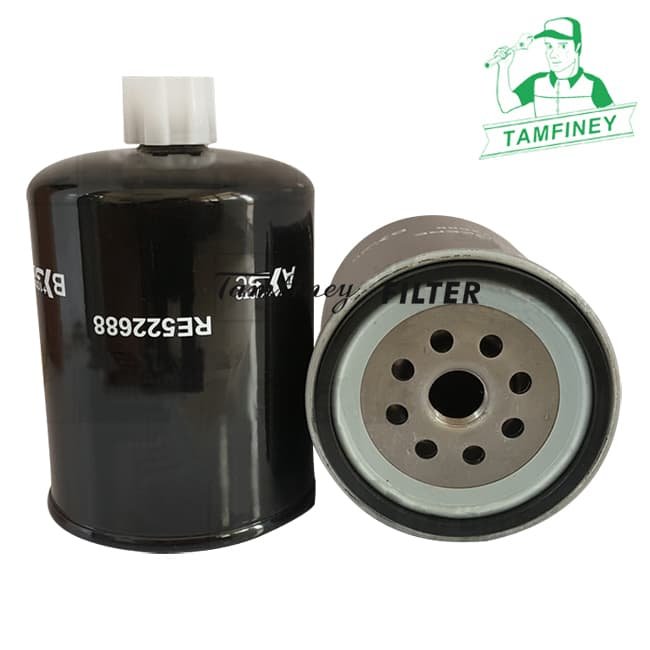
Professional John Deere Tractor Fuel Filter RE522688 PS10967 P551027 P550669 FS19700
Your best John Deere Tractor Fuel Filter RE522688 PS10967 P551027 P550669 FS19700 Fuel filter manufacturer in China.
DONALDSON P551027 P550669 Agco 509248D1 AG139028 BALDWIN-BF7853 FLEETGUARD-FS19700 ; JOHN DEERE-RE522688 RE522684; M.D.F. SARL-MDF9046180507 ; MANN WK11017 FRAM PS10967


| Fuel Filter RE522688 PS10967 P551027 P550669 FS19700 Parameter: | |
| Part Number | RE522688 PS10967 P551027 P550669 FS19700 |
| Brand | Tamfiney |
| Weight | 689g |
| Height | 174 mm |
| Outer Diameter | 108 mm |
| Inner Diameter/ Thread Size |
7/8-14 |
| Minimum Order | 100 PCS |
| Place of Region: |
Zhejiang, China |
| Payment Terms: | T/T |
| Price Terms: | FOB |
| Lead Time: | 30 to 50 days based on order quantities |
| Market Type: | After Market |
| Current Export Market: | Southeast Asian,North America, South America, Western Europe, Eastern Europe, Africa, Oceania |
Applications:
• CHALLENGER 81338133
• JOHN DEERE 35104920753 G759 J759 JH770 D771078107820792081208220832084208520903903 JH9640 WTS9680 WTS9780 CTS9996
• LUGGER NL 1166 H
• NEUSON 242 HV242 HVT
• TERRAGATOR 8103 Vinasse
• TIMBERJACK 1710 D
Professional John Deere Tractor Fuel Filter RE522688 PS10967 P551027 P550669 FS19700
Reliable Filtration: The Key to Tractor Endurance
Modern farming demands sustained performance from every machine. Because tractors operate in tough environments, filtration has become critical. Not only does clean fuel prevent engine damage, but it also prolongs equipment life. Therefore, using a quality John Deere Tractor Fuel Filter ensures your operation remains smooth and productive.
Why Choose RE522688 for Advanced Engine Protection?
Among various options, RE522688 stands out for John Deere tractors. Owing to its innovative design, it constantly delivers clean fuel to the engine. Whenever dirt or water might threaten your fuel system, RE522688 provides a strong defense. Furthermore, this filter fits seamlessly with a range of John Deere models. As a result, downtime decreases and engine reliability improves. TAMFINEY’s commitment to quality means every RE522688 filter is extensively tested before reaching your hands.
Cross References: Expanding Possibilities
Considering operational variation, TAMFINEY offers flexible solutions. Although RE522688 is the core focus, filters like PS10967 provide additional compatibility. In fact, PS10967 features robust water separation, helping tractors perform during challenging seasons. Sometimes, operators prefer P551027 for its high dirt-holding capacity. Because each filter tackles specific challenges, maintenance planning gets easier. Moreover, P550669 acts as a trusted backup when stock levels shift. Consequently, you always have a reliable filter for every situation.
FS19700: High-Performance Filtration for Peak Periods
In busy periods, such as planting or harvest, engine stress increases. Whenever you need additional defense, FS19700 strengthens your filtration system. Not only does FS19700 excel at removing fine particles, but it also withstands frequent fuel changes. As conditions change, switching to FS19700 guarantees your tractor runs consistently. Therefore, using compatible references with RE522688 ensures optimal results year-round.
TAMFINEY Quality Assurance: Trusted by Professionals
Operators must trust every part under the hood. Because TAMFINEY uses premium materials, each John Deere Tractor Fuel Filter performs under pressure. Moreover, our filters meet rigorous OEM standards. Whenever quality questions arise, TAMFINEY support is always ready to help. Not only is every filter warranty-backed, but our testing covers diverse climates and fuel types. As a result, breakdowns are minimized and maintenance costs stay low.
Simple Installation and Smooth Maintenance
Time-saving design matters. Because TAMFINEY filters fit perfectly, installation requires minimal effort. Not only do our products come with easy-to-follow guides, but replacement takes only a few steps. Furthermore, regular filter changes boost fuel efficiency, reduce emissions, and extend engine life. Whenever operators replace their filters on schedule, productivity stays high. Therefore, choosing TAMFINEY means your workflow is never interrupted.
All-Season Protection with TAMFINEY Filters
Seasonal changes bring new filtration needs. Not only does spring dust challenge fuel purity, but winter fuels can contain moisture. Because TAMFINEY offers various John Deere Tractor Fuel Filter options, your engine is protected year-round. For example, swapping from PS10967 to P551027 during seasonal shifts maximizes protection. Whenever your workload rises, P550669 and FS19700 provide valuable backup. Therefore, operator confidence remains high through changing conditions.
Conclusion: Invest in Reliable Filtration for Lasting Performance
Every field demands strong, reliable tractors. Because fuel filtration safeguards engines, smart operators choose TAMFINEY filters. RE522688 delivers core protection, while PS10967, P551027, P550669, and FS19700 build flexible backup. Not only do you avoid costly repairs, but you also guarantee uninterrupted fieldwork. Whenever quality matters, choose TAMFINEY for John Deere Tractor Fuel Filters. Therefore, your machines last longer, require less maintenance, and operate efficiently through every season.
Q: How to install a John Deere fuel filter?
The specific steps for installing a John Deere fuel filter are basically the same as the general method, but need to be adjusted according to the model of your John Deere equipment (such as tractor or construction machinery). The following are detailed steps based on the installation method of a universal fuel filter, combined with safety precautions and key details.
Preparation
• Tools and materials: Prepare fuel filters, oil containers, wrenches, screwdrivers, pliers, sealant (if needed), and clean cloths that are compatible with your device model. Ensure that all tools are complete and avoid interruptions in operation.
• Safety measures: Choose to operate in a cold state (such as the next morning) to reduce fuel system pressure; Avoid wearing synthetic clothing to prevent static electricity and sparks; Ensure good ventilation in the work area.
• Release fuel system pressure: This is a critical step to prevent fuel injection during disassembly. The method includes: unplugging the fuel pump fuse or relay, and then starting the equipment until the fuel runs out and automatically shuts off.
Installation steps
1. Position the fuel filter:
The fuel filter is usually located under the engine or near the fuel tank. For John Deere equipment, it may be necessary to use a jack to lift the equipment
2. Disassemble the old filter:
✪ Place the oil receiving container under the oil pipe to prevent fuel leakage and contamination.
✪ Use a tool (such as a wrench) to loosen the clamps on the connecting pipes at both ends of the filter, slowly remove the oil pipe, and allow residual fuel to flow into the oil receiving container.
✪ Remove the fixing bolts of the filter and remove the old filter. Pay attention to recording the installation direction (there is usually a fuel flow arrow on the filter).
3. Install a new filter:
❈ Compare the old and new filter models to ensure a perfect match (inconsistent models may lead to performance issues or leaks).
❈ Install the new filter onto the fixed bracket, ensuring that the direction is correct (the fuel inlet and outlet should be consistent with the original design, usually with arrows pointing towards the engine direction).
❈ Connect the fuel pipeline: First connect the inlet, fit the pipe clamp and clamp it with pliers, and then handle the outlet. Avoid excessive force to prevent damage to the interface.
❈ Tighten the fixing bolts to ensure that the filter is securely installed.
4. Inspection and testing:
A. Restore the fuel system (such as plugging in a fuse) and start the equipment to idle for a few minutes.
B. Carefully inspect the connection for any fuel leaks. If there is any leakage, stop the machine immediately and tighten it again.
C. After confirming that there is no leakage, the equipment can be put into normal use.
Precautions
• Model matching: John Deere has a variety of equipment models, so it is important to check the filter specifications (such as interface size and filtration accuracy). You can refer to the equipment manual or consult the dealer.
• Safety first: Incomplete release of fuel system pressure may pose a fire risk, so stay away from open flames during operation.
• Environmental protection treatment: Old filters and collected fuel should be properly disposed of according to local regulations to avoid environmental pollution.
If your device model is special (such as John Deere specific tractor series), it is recommended to consult the official maintenance manual for customized guidance. If encountering difficulties during operation, priority should be given to contacting professional maintenance personnel.
Q: How do you start a diesel tractor after changing the fuel filter?
Difficulty starting a diesel tractor after replacing the fuel filter is a common problem, mainly due to air intake into the fuel system, insufficient system pressure, or installation details. The following are startup steps and suggestions based on common situations:
Inspection and preparation before startup
Check the fuel system: Ensure that there is sufficient clean fuel in the fuel tank and turn on the fuel pump switch (if any) to allow the fuel to start flowing.
• Confirm correct installation: Check whether the new fuel filter is installed properly, including whether the sealing ring is intact and whether the fastening nut is tightened, to avoid air infiltration into the system.
• Preheating and exhaust:
Turn the key to the "ON" position (do not start the engine), hold for a few seconds, and allow the fuel pump to pressurize the fuel system.
If the tractor is equipped with a manual oil pump (usually located on the coarse filter), press it continuously while loosening the exhaust nut on the filter until there is continuous fuel without bubbles flowing out, and then tighten the nut.
• Check battery level: Ensure that the battery is fully charged, as starting requires sufficient power to drive the starter.
Startup operation steps
• First startup attempt:
Step on the clutch pedal (manual transmission) or brake pedal (automatic transmission), turn the key to the "START" position to start the engine. Control the startup time within 5-10 seconds each time. If unsuccessful, wait for at least 15 seconds before attempting again.
• Multiple attempts with exhaust:
If it does not start the first time, repeat the exhaust operation (press the manual oil pump and exhaust), and then try to start it again. For a common rail engine, it may be necessary to drag the engine multiple times until the fuel system exhausts the air.
• Run after startup:
After the engine is successfully started, let it run smoothly at idle for a few minutes and observe whether the instrument panel parameters (such as oil pressure and water temperature) are normal to ensure system stability.
Common problems and precautions
• New filter adaptation period: After replacing the new filter, the engine may need to run for a short period of time (such as tens of kilometers) to fully adapt, and the starting performance may gradually improve.
• Handling of continuous start-up difficulties: If multiple attempts still fail to start, it is necessary to check whether the fuel filter matches the tractor model, whether the fuel injector or high-pressure fuel pump is faulty, or contact professional maintenance personnel for troubleshooting.
Following the above steps can improve the success rate of startup. If the problem occurs repeatedly, it is recommended to prioritize checking installation details and system sealing.
Q: How many fuel filters does a tractor have?
Most tractors are equipped with a fuel filter. This filter is the core component of the fuel system, responsible for filtering impurities and moisture in diesel and protecting the engine.
However, in some specific situations, tractors may be equipped with multiple fuel filters:
• Dual stage filtration system: Some high-performance or large tractor fuel systems will use two-stage filtration, equipped with two fuel filters to provide more thorough fuel purification.
• Model differences: Different manufacturers have different designs, for example, data shows that the number of diesel filters for SAIC Maxus V80 models is generally 2-4. For tractors, the specific quantity needs to be referred to the official technical manual of the model you are using.
Summary and Suggestions:
Due to the wide variety of tractor models, it is not possible to generalize the exact number of fuel filters. The most reliable method is to consult the "User Manual" or "Maintenance Manual" of the tractor you are driving, which will clearly indicate the quantity, model, and replacement cycle of the fuel filter.
In daily maintenance, it is essential to use filter cartridges that meet technical requirements and replace them promptly according to the maintenance cycle. This is crucial for ensuring the normal operation of the engine and extending its service life.


