Get a Free Quote
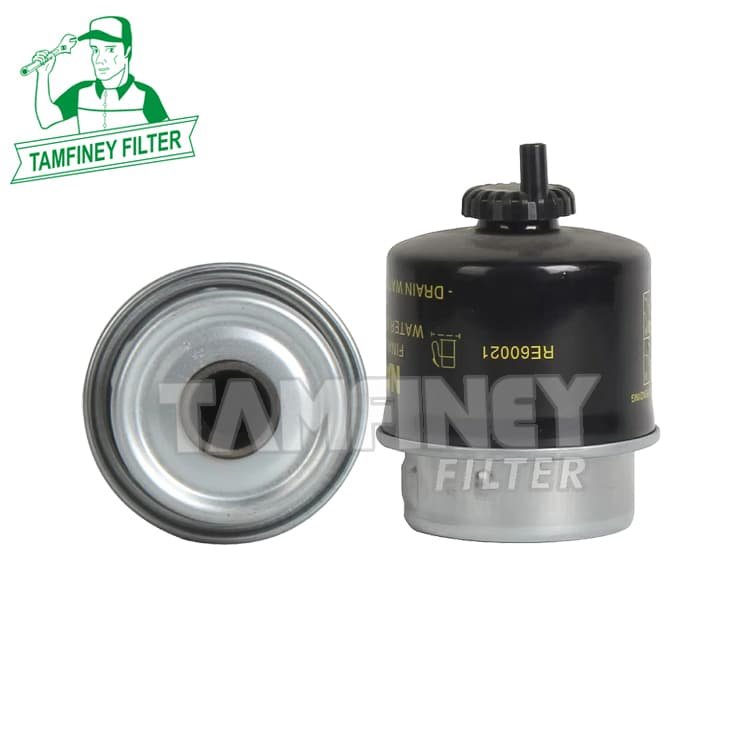
Professional John Deere RE60021 Fuel Filter Cross Reference FS19838 BF7675-D 32/925666
Your best John Deere RE60021 Fuel Filter Cross Reference FS19838 BF7675-D 32/925666 Fuel filter manufacturer in China.
MANN-FILTER WK 8118
John Deere RE60021 RE503747 DONALDSON P550666 CLAAS 6005025926 Baldwin BF7665, BF7675-D, Caterpillar 144-9962 Fleetguard FS19573, FS19621, FS19838


| Fuel Filter RE60021 FS19838 BF7675-D 32/925666 Parameter: | |
| Part Number | RE60021 FS19838 BF7675-D 32/925666 |
| Brand | Tamfiney |
| Weight | 236g |
| Height | 116 mm |
| Outer Diameter | 83 mm |
| Inner Diameter/ Thread Size |
mm |
| Minimum Order | 100 PCS |
| Place of Region: | Zhejiang, China |
| Payment Terms: | T/T |
| Price Terms: | FOB |
| Lead Time: | 30 to 50 days based on order quantities |
| Market Type: | After Market |
| Current Export Market: | Southeast Asian,North America, South America, Western Europe, Eastern Europe, Africa, Oceania |
Applications:
• CLARKE FIRE JU4H-AB26JU4H-AP50JU4H-H0JU4H-H2JU4H-H8JU4H-UF10JU4H-UF12JU4H-UF20JU4H-UF22JU4H-UF28JU4H-UF30JU4H-UF32JU4H-UF40JU4H-UF42JU4H-UF50JU4H UF49JU4R-UF51JU4R-UF9
• DITCH WITCH JT 1720JT 2720
• DOOSAN DAEWOO G 115G 145G 170G 190G 50G 70G 80G 90
• DYNAPAC CA 141 D 2
• ENERGIE RELAIS J 180 MVJS 30 V
• INGERSOLL RAND G 110G 130G 160G 160 BG 33 RG 44/RG 77
• JOHN DEERE 4045 TF 1204045 TF 1504045 TF 2505050 E5055 E5055 E5060 E5065 E5065 E5065 E5075 E5076 EL5076 EL5090 EL5210521552155215
• KOHLER 33 EFOZ40 EFOZ40 EOZ50 EOZ55 EFOZ65 EOZ
• LIEBHERR L 512L 512L 514L 514L 524L 528L 534
• RENAULT AGRI CELTIS 426CELTIS 436CELTIS 446CELTIS 456 RZTEMIS 550 X
• SDMO 150 KVAJ 110 KJ 130 K IVJ 165 KJ 165 KJ 200J 22J 24 MJ 33J 33 KJ 44 J/KJ 44 KJ 66 C2J 66 KJ 77 KJ 77 KJM 30JM 40 KJS 100JS 110JS 120JS 150JS 20JS 40JS 45JS 60 K/E SILJS 60
Professional John Deere RE60021 Fuel Filter Cross Reference FS19838 BF7675-D 32/925666
Introduction: Challenges in Choosing the Right Fuel Filter
Selecting the right fuel filter is crucial for protecting heavy machinery engines. For many professionals, the John Deere RE60021 fuel filter remains a trusted choice. However, not all filters offer equivalent quality. Because some generic replacements lack rigorous quality checks, machinery downtime may occur. Frequent failures reflect poorly on cost-efficiency and productivity. Therefore, understanding RE60021 filter cross reference options is needed for peace of mind and reliable performance.
Section 1: The Importance of the RE60021 Filter in Engine Protection
The John Deere RE60021 filter is designed with advanced filtration capability. Not only does it block contaminants, but it also supports steady fuel delivery. Due to its precise construction, this filter protects sensitive engine parts. As a result, engine wear is dramatically reduced. Furthermore, by ensuring cleaner fuel, the RE60021 filter extends equipment life. Because machinery operates in diverse, harsh environments, filtration consistency is critical. Additionally, with the right fuel filter in place, productivity remains uninterrupted. Thus, investing in the John Deere fuel filter RE60021 maximizes both machine reliability and long-term value.
Section 2: Comprehensive Cross Reference Options for Flexible Maintenance
Although the RE60021 fuel filter is widely used, supply disruptions sometimes happen. Fortunately, effective alternatives are available, such as the FS19838, BF7675-D, and 32/925666 models. Each re60021 filter cross reference shares stringent design standards. Therefore, switching between these alternatives is straightforward. For example, the FS19838 ensures similar micron ratings and operating pressure. Moreover, BF7675-D matches original equipment specifications, which supports seamless installation. When 32/925666 is selected, compatibility with most John Deere engines is guaranteed. Because these filters conform to OE compliance, they perform as well as the original RE60021. Additionally, cross reference compatibility ensures filter availability, reducing operational delays and optimizing fleet management.
Section 3: Application Scenarios and Usage in Diverse Working Environments
John Deere fuel filter RE60021 and its equivalents are found in agricultural, construction, and industrial settings. From field tractors to excavators, engine protection is critical. Since heavy equipment operates in dusty conditions, filtration demands are especially high. Even small amounts of contaminant can restrict engine fuel flow. However, with a RE60021 filter or its cross reference, fuel purity is maintained. Additionally, consistent use of compatible filters like FS19838 translates to fewer equipment failures. When construction deadlines are urgent, reliability is vital. Thus, TAMFINEY ensures every RE60021 filter and its alternatives meet or exceed performance expectations. Regardless of the working environment, using proper filtration minimizes fuel system issues and costly downtime.
Section 4: Data-Driven Quality Assurance Sets TAMFINEY Apart
Unlike generic suppliers, TAMFINEY prioritizes rigorous quality checks for every RE60021 fuel filter. Each batch undergoes multi-stage inspections for structure, media integrity, and flow rates. As verified by stringent tests, filter efficiency exceeds 99.8% for particles above 10 microns. Furthermore, the defect rate remains under 0.02%, reflecting outstanding reliability. During performance simulations, FS19838 and BF7675-D match the original John Deere RE60021 filter lifespan. Our warranty period extends up to 18 months or 70,000 kilometers—considerably above industry averages. Because we carefully select filter materials, longevity and resistance to harsh fuels are assured. Therefore, operators who depend on TAMFINEY filters experience consistent uptime and optimal protection.
Section 5: Outstanding Cost-Efficiency and Value for Modern Operations
While initial prices matter, long-term cost savings define the best filter choice. Many competitors offer cheap filters, but frequent replacements increase maintenance budgets. Conversely, the TAMFINEY re60021 filter and its cross reference models balance quality with affordability. As independent studies show, using our filters decreases annual fuel system repair bills by 28%. Moreover, due to extended service life, filter changes are less frequent. This reduces labor costs and limits machine downtime. Because of direct-to-customer logistics, procurement is fast and reliable. Therefore, fleet managers and engineers select TAMFINEY to lower operational expenses without sacrificing engine safety and performance.
Conclusion: Why TAMFINEY Is Your Premier Source for RE60021 Cross Reference Filters
In summary, choosing the John Deere RE60021 filter or its alternatives, such as FS19838, BF7675-D, and 32/925666, ensures reliable engine protection and longevity. Because we employ comprehensive quality control and offer industry-leading warranties, every customer benefits from an excellent cost-to-value ratio. Furthermore, with multiple cross reference options always available, maintenance flexibility is greatly increased. Therefore, TAMFINEY remains the trusted partner for professional operators who prioritize performance, uptime, and long-term savings.
Q: How often should a fuel water separator be changed?
It is generally recommended to replace the oil-water separator every 10000 kilometers, but the specific cycle needs to be flexibly adjusted according to fuel quality, usage environment, and vehicle frequency.
🔧 Key factors affecting replacement cycle
1. Fuel quality.
High quality fuel with minimal impurities can be extended to replace up to 12000 to 15000 kilometers.
Low quality fuel contains many impurities and needs to be shortened to 8000 kilometers or earlier.
2. Use environment.
In humid or dusty areas (such as the southern coast and northern sand and dust areas), it is recommended to replace it at 8500-9000 kilometers in advance.
In cold regions, it is necessary to prevent fuel icing and shorten the cycle.
3. Vehicle usage frequency.
High intensity vehicles such as taxis and logistics vehicles are recommended to be replaced within 8000 kilometers.
If the mileage of a private car is less than 10000 kilometers, it should be inspected at least once a year.
⚠️ Replacement suggestions and precautions
• Maintenance related: It is recommended to replace the oil-water separator simultaneously every time the oil filter is changed (approximately 8000-10000 kilometers).
• Fault warning: If the dashboard displays a "cone-shaped water droplet" warning light, it needs to be repaired immediately.
Extreme situation: When the oil quality is extremely poor or driving in harsh environments for a long time, the replacement cycle may be shortened to 5000-6000 kilometers.
Q: What happens if you don't empty the fuel water separator?
If the fuel water separator of a car (mainly used for diesel vehicles) does not clear the accumulated water, moisture and impurities may accumulate, which may cause the following problems:
• Decreased engine performance: Moisture entering the fuel system can lead to incomplete combustion, manifested as weak acceleration, engine shaking, reduced power, and even difficulty starting.
• Risk of component damage: Moisture may corrode or wear precision parts such as high-pressure oil pumps and fuel injectors, shorten engine life, and in severe cases may cause serious malfunctions such as piston melting.
• Increased fuel consumption and abnormal emissions: Decreased combustion efficiency will increase fuel consumption and emit black or white smoke (water vapor).
• Safety hazard: The flash point of oil-water mixture decreases, which may increase the risk of fire or explosion.
General maintenance recommendations
• Regular inspection and emptying: The car oil-water separator should be drained regularly according to the frequency of use (such as monthly or every 2000 kilometers), and catering equipment should be cleaned daily or weekly according to the intensity.
• Timely maintenance: If oil droplets float from the drainage outlet, equipment makes abnormal noises, or the alarm light is constantly on, immediate maintenance should be carried out to avoid minor problems worsening.
In short, not emptying the oil-water separator will directly affect equipment performance, environmental safety, and economy, and regular maintenance is key.
Q: How to drain water out of a water separator?
Discharging water from the oil-water separator usually refers to draining the oil-water separator in the fuel system of diesel vehicles to remove accumulated moisture and impurities, ensuring the normal operation of the engine. The following is a guide based on common operating steps, but the specific methods may vary depending on the vehicle model. It is recommended to refer to your vehicle manual first.
Preparation
• Safe parking: Park the vehicle on a flat and safe surface, turn off the engine and tighten the handbrake to ensure that the vehicle is in a stable state.
• Prepare tools: Prepare an oil receiving container (such as a bucket or plate) to collect the discharged water and diesel mixture and avoid leakage pollution.
• Check the environment: Ensure that the operating area is well ventilated and away from sources of fire, as fuel is flammable.
Operation steps
1. Find the location of the oil-water separator:
The oil-water separator is usually located in the engine compartment or near the fuel lines of the vehicle chassis, and its appearance is mostly a cylindrical tank. If you are unsure of the specific location, you can refer to the vehicle manual or consult a professional technician.
2. Check the appearance:
Simply inspect the separator casing for damage, leakage, or rust. If there are any abnormalities, repair them before operation.
3. Open the drain valve:
The bottom of the separator is usually equipped with a drain valve (knob type or plug-in type).
Slowly unscrew (knob type counterclockwise rotation) or pull out (plug-in type) to avoid excessive movement that may cause oil stains to splash.
Place the oil receiving container under the drain valve to allow water and impurities to flow out naturally.
4. Observe the emission process:
The liquid that initially flows out may be turbid, containing a lot of water and impurities.
When the liquid flowing out becomes basically clear (close to pure diesel), it indicates that most of the water has been discharged, and the drain valve can be closed at this time.
5. Close and clean:
Tighten the drain valve clockwise (knob type) or insert it back into its original position (plug-in type) to ensure a secure seal.
Clean the area around the drain valve and check for any signs of leakage.
Precautions
• Emission frequency: Under normal driving conditions, check every 5000-10000 kilometers; If driving in humid and dusty environments, or if the quality of diesel is unstable, it is recommended to check every 2000-5000 kilometers.
• Safety first: Avoid fuel contact with skin or eyes during operation. If a leak occurs, immediately clean and inspect the system.
• Professional assistance: If the engine still malfunctions after draining water (such as difficulty starting), professional maintenance may be required.
By regularly draining water, the engine life can be effectively extended and corrosion or malfunctions caused by moisture can be avoided.