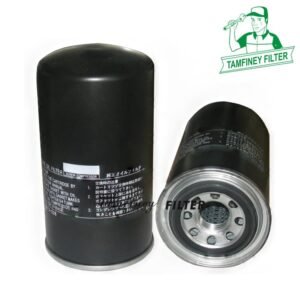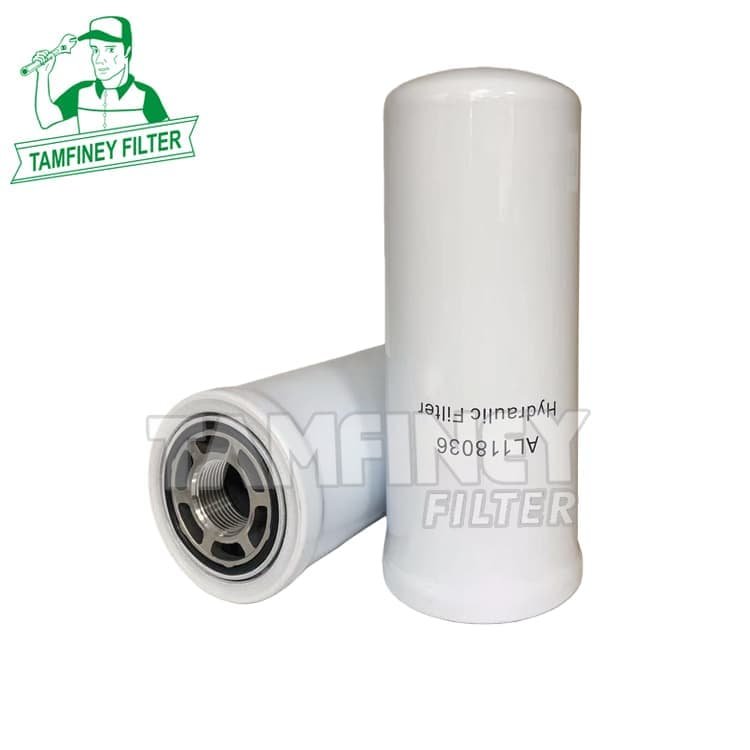


| Hydraulic Filter RE205726 RE34958 HF6565 222-6713 Parameter: | |
| Part Number | RE205726 RE34958 HF6565 222-6713 |
| Brand | Tamfiney |
| Weight | 1084 g |
| Height | 144 mm |
| Outer Diameter | 95 mm |
| Inner Diameter/ Thread Size | 1 3/8-12 UN |
| Minimum Order | 100 PCS |
| Place of Region: | Zhejiang, China |
| Payment Terms: | T/T |
| Price Terms: | FOB |
| Lead Time: | 30 to 50 days based on order quantities |
| Market Type: | After Market |
| Current Export Market: | Southeast Asian,North America, South America, Western Europe, Eastern Europe, Africa, Oceania |
Applications:
JOHN DEERE R 4045R 4050 IR 4060R 4060R 4140iR 4150iS5 500S5 500S 560S 560S 650S 660S 670S 670S 670 IS 680 IS 680 IS 680 IS 690S 690S7 600S7 600S7 600S7 600S7 600S7 600S7 600S7 600S7 700S7 700S7 700S7 700S7 700S7 700S7 700S7 800S7 800S7 800S7 800S7 800S7 800S7 800S7 850S7 850S7 850S7 900S7 900S7 900S7 900S7 900T5 400T 550T 550T 550T5 500T 560T5 600T5 700T6 500T 660T 660T6 600T 660 I HILL MASTERT 670T6 700T6 800W 540W 540W 540 CW 550W 550W 550W 550W 650W 650W 660W 660WL 53
Premium John Deere Hydraulic Oil Filter RE205726 RE34958 HF6565 222-6713
Q: How often should I change my John Deere hydraulic filter?
John Deere hydraulic filters do not have a uniform fixed cycle and should be executed according to the specific model manual; The general reference is: the first 250 hours for the return oil/high-pressure filter element, every 500 hours thereafter, and approximately every 2000 hours for the suction filter element. In harsh working conditions, it needs to be shortened or adjusted according to oil testing.
Reference interval for core replacement (working hours)
1. Return filter: Replace after 250 hours of initial operation and every 500 hours thereafter.
2. High pressure pipeline filter: usually synchronized with the return oil filter element (every 500 hours), and it is recommended to use it more frequently for some models.
3. Suction filter: Generally replaced every 2000 hours (some models may be longer, please refer to the manual).
4. Pilot filter: It usually follows the cycle of the return oil filter element (every 500 hours), depending on the configuration.
Key influencing factors and operational recommendations
• Manual must be consulted: Different models (such as tractors, harvesters, excavators) and hydraulic system configurations have significant differences
• Working condition adjustment: The cycle needs to be shortened in harsh environments such as high dust, high temperature, and continuous heavy load; If the device supports it, it is recommended to regularly check the cleanliness of the hydraulic oil and dynamically adjust it accordingly.
• Principle of synchronous replacement: When replacing hydraulic oil, all types of hydraulic filter elements (return oil, suction oil, pilot, high pressure) should be replaced simultaneously, and the effect of replacing them separately will be greatly reduced.
• Abnormal signal: If iron, copper, or rubber debris is found after removing the filter element, it indicates that the hydraulic components may be worn out and the system needs to be repaired before replacing the filter element.
Please do not rely solely on general data for operation. Be sure to check the John Deere official maintenance manual corresponding to your device model to obtain accurate cycles.
Q: Can I use a standard oil filter for a hydraulic system?
Hydraulic systems cannot directly use standard oil filters, as there are fundamental differences in design standards, pressure resistance, filtration precision, and material compatibility between the two. Mixing them may result in filter element rupture, system contamination, or component damage.
• Pressure resistance varies: Hydraulic systems (especially high-pressure pipelines) often operate at pressures of 10-42MPa or higher, requiring filters to pass the ISO 2941 burst test. In contrast, oil filters are specifically designed for engine lubrication systems and cannot withstand hydraulic shocks, making them highly prone to bursting and allowing unfiltered oil to bypass the system.
• Mismatch between filtration precision and efficiency: Hydraulic components (such as servo valves and proportional valves) require high-precision filtration of 3-10μm with high β values, while oil filters prioritize high flow rates and bypass protection. Although nominal precision may be comparable, the lack of multiple-pass testing tailored to hydraulic oil contamination characteristics makes them ineffective in intercepting fine particles.
• Material compatibility risk: The hydraulic oil additive system differs from engine oil. The sealing rubber and filter materials of the oil filter may not have passed ISO 2943 hydraulic medium compatibility verification, leading to swelling, aging, or fiber shedding over prolonged use, which can contaminate the system.
• Structural functional deficiencies: Hydraulic filters typically require specific bypass valve opening pressure settings (to prevent suction void or overload) and fatigue-resistant designs, which are not included in oil filters for hydraulic conditions.