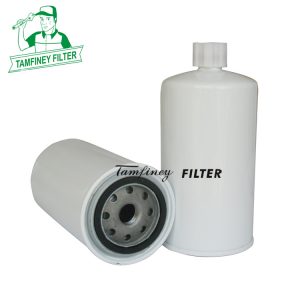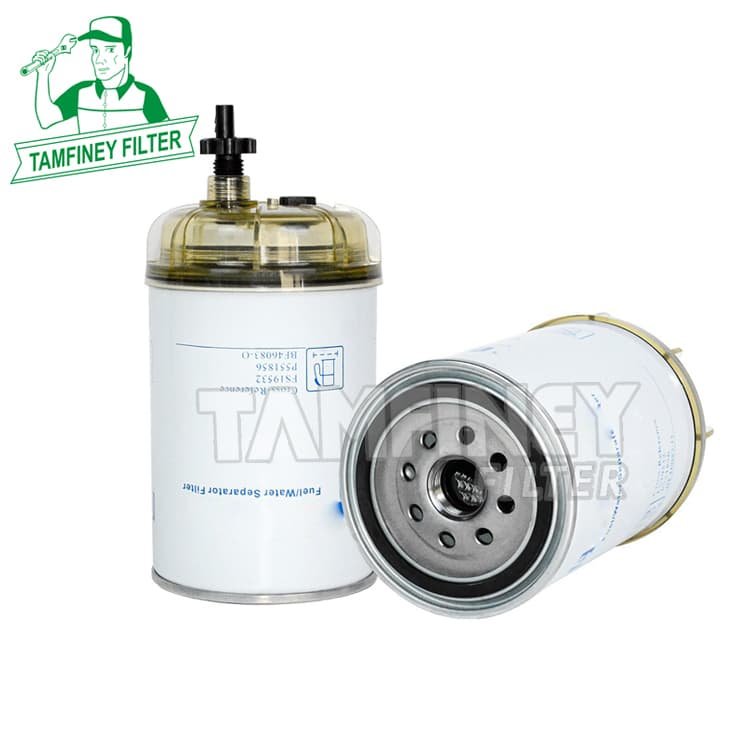


| Fuel Filter RE500186 R90T-D-MAX BF1390-O 4291642 500086381 Parameter: | |
| Part Number | RE500186 R90T-D-MAX BF1390-O 4291642 500086381 |
| Brand | Tamfiney |
| Weight | 845g |
| Height | 155mm |
| Outer Diameter | 108mm |
| Inner Diameter/ Thread Size | 1-14 3 3/4-10 BUTT |
| Minimum Order | 100 PCS |
| Place of Region: | Zhejiang, China |
| Payment Terms: | T/T |
| Price Terms: | FOB |
| Lead Time: | 30 to 50 days based on order quantities |
| Market Type: | After Market |
| Current Export Market: | Southeast Asian,North America, South America, Western Europe, Eastern Europe, Africa, Oceania |
Applications:
• INGERSOLL RAND G 440SD 122 DXSD 160 DX
INTER-DRAIN 2050 GP3035 T
JENZ AZ 660 DAZ 660 DBA 720BA 725 DHEM 561 DKHEM 700 DNZ 1600 DNZ 1600 DTREX 5000TREX 5000
JOHN DEERE 6125 A6125 H
KLEEMANN REINER MC 110 Zi EVOMC 120 MOBICATMF 14MOBICAT MC 125 ZMR 100 RMR 110 Z EVOMR 110 Z EVOMR 122 ZMR 122 ZMR 130 ZHMRB 122MRB 1302 V
Professional John Deere Fuel Filter Cross Reference RE500186 R90T-D-MAX BF1390-O 4291642 500086381
Q: How often should I change the fuel filter on my John Deere tractor?
John Deere tractor fuel filter replacement cycles vary by model and conditions.
General recommendation:
- Normal conditions: Replace every 250–500 hours.
- Low sulfur fuel (sulfur content <500ppm): Extend to 500 hours.
- High sulfur fuel (500–5000ppm): Shorten to 400 hours.
- Very high sulfur fuel (>5000ppm): Adjust to 250 hours.
Influencing factors:
- Fuel quality: Poor oil quality shortens replacement cycles.
- Work intensity: High load accelerates filter blockage.
- Environment: Dusty conditions require earlier replacement.
Operation suggestion:
- Follow John Deere manual steps: release fuel pressure, avoid open flames, check seals.
- Regularly inspect filters. Replace if power drops, starting is hard, or the filter element darkens.
Q: Do I need a special tool to change the fuel filter?
Replacing fuel filters usually does not require specialized tools, but having tools can make the work much easier and more convenient, and some vehicle models or complex situations may require additional equipment.
Basic tools: Conventional replacement generally only requires basic tools, including: screwdriver (used to remove protective plates or fasteners), filter wrench or socket (elastic bolts), pliers (operating oil pipe clamps), oil cup or towel (to receive residual fuel), and clean cloth (to clean oil stains).
Special tools: Some car models may require specialized tools, such as jacks (when the filter is located on the chassis and space is limited, the vehicle needs to be lifted), oil pipe removal tools (some car models require special tools to remove the oil pipe connection buckle), or sealing red glue (to enhance interface sealing, not necessary for all car models).
Safety and preparation: Before operation, be sure to release the fuel system pressure (such as unplugging the fuel pump fuse and starting the engine until it shuts down), and do it in a cold state to avoid fuel splashing or burns; If the filter position is concealed (such as inside the fuel tank), it may be necessary to remove the rear seats or fuel tank cover, but these are routine operations and not specialized tools.
Q: What happens if fuel lines are backwards?
Reversing the direction of the fuel pipeline can cause the vehicle's fuel supply system to malfunction, with specific consequences including: the engine being unable to start or immediately shut down because fuel cannot be delivered to the injectors; If forcibly started, it may damage the fuel pump or cause pipeline rupture; Long term incorrect installation can accelerate component wear and increase maintenance costs. Therefore, it is necessary to ensure that the fuel pipeline direction is correct during installation.