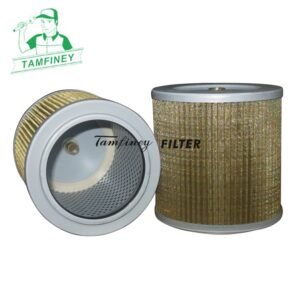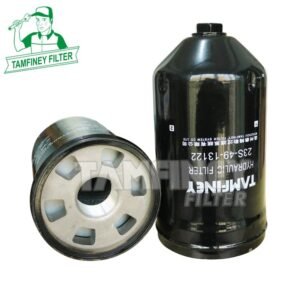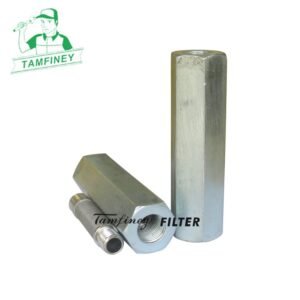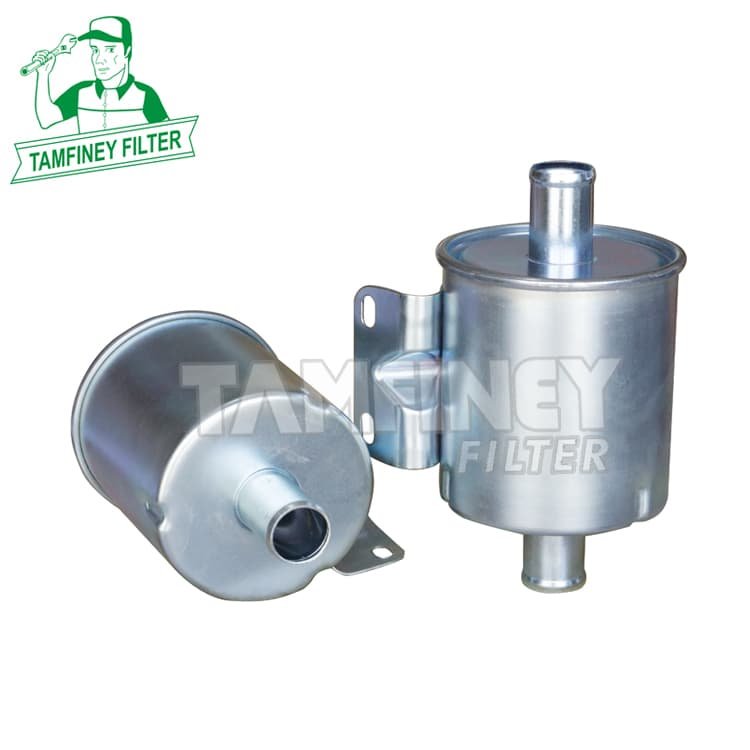


| Inline Hydraulic Filter 67502-U2230-71 67502U223071 67502-F2180-71 67502F218071 Parameter: | |
| Part Number | 67502-U2230-71 67502U223071 67502-F2180-71 67502F218071 |
| Brand | Tamfiney |
| Weight | 640g |
| Height | 200 mm |
| Outer Diameter | 120 mm |
| Inner Diameter/ Thread Size | 25/25 |
| Minimum Order | 100 PCS |
| Place of Region: | Zhejiang, China |
| Payment Terms: | T/T |
| Price Terms: | FOB |
| Lead Time: | 30 to 50 days based on order quantities |
| Market Type: | After Market |
| Current Export Market: | Southeast Asian,North America, South America, Western Europe, Eastern Europe, Africa, Oceania |
Applications:
TOYOTA 02-8 FDF 2502-8 FDF 3542-8 FDF 1552-8 FDF 2052-8 FDF 2552-8 FDF 3052-8 FDFJ 3572-8 FD 30TONERO 35 SAS
HYUNDAI 30D-9 SR
Professional Inline Hydraulic Filter 67502-U2230-71 67502U223071 67502-F2180-71 67502F218071
Q: How often should inline filters be changed?
Inline hydraulic filters have no fixed cycle, and the core basis is pressure difference alarm or oil cleanliness detection.
The judgment signal that must be replaced immediately
- Differential pressure indicator alarm: Online filters are usually equipped with a blockage transmitter, and if the differential pressure reaches the set value (such as 0.35MPa), it needs to be replaced.
- Oil cleanliness exceeding the standard: Regular sampling and testing of ISO 4406 or NAS grade. If it does not meet the standard and the filtration is ineffective, the filter element needs to be replaced and the source of contamination needs to be investigated.
- Abnormal performance: The system operates slowly, experiences pressure fluctuations, decreases in flow rate, or produces abnormal noises. After troubleshooting other issues, it is often due to clogged filter elements.
- Appearance inspection: Upon removing the filter element, severe deformation, fiber detachment, accumulation of metal shavings, or a normally open bypass valve were found.
Q: Can I use an oil filter as a hydraulic filter?
No, you can't. There are fundamental differences between the design standards, pressure resistance, filtration precision, and material compatibility of oil filters and hydraulic filters. Mixing them may lead to filter element rupture, system blockage, or damage to precision components.
Core Differences and Risks
- Pressure resistance levels vary: Hydraulic systems operate at extremely high pressures , requiring filters to possess exceptionally high impact and collapse resistance . In contrast, oil filters primarily handle pulsating pressures from engine lubrication systems, with pressure-resistant designs significantly lower than those for high-pressure hydraulic circuits. Forcing a replacement can easily lead to filter collapse or rupture.
- The mismatch between filtration accuracy and efficiency: Hydraulic components have extremely small clearances (micrometer-level), requiring high-precision filters (typically 3-10μm) with strict β values . In contrast, oil filters focus on bypass protection and high flow rates, making it impossible to meet the cleanliness requirements of hydraulic systems, which can lead to valve core jamming or accelerated wear.
- Material Compatibility Risk: Hydraulic oil and engine oil have different chemical compositions, requiring hydraulic filter seals and filter materials to pass the ISO 2943 compatibility test. Engine oil filter materials may not withstand specific hydraulic oils, leading to seal aging, filter material dissolution, or oil contamination.
- Flow and pressure drop characteristics do not match: Hydraulic systems impose strict limits on pressure loss. If the flow-pressure drop curve of the oil filter does not align, it can result in insufficient flow or system overheating.