Get a Free Quote
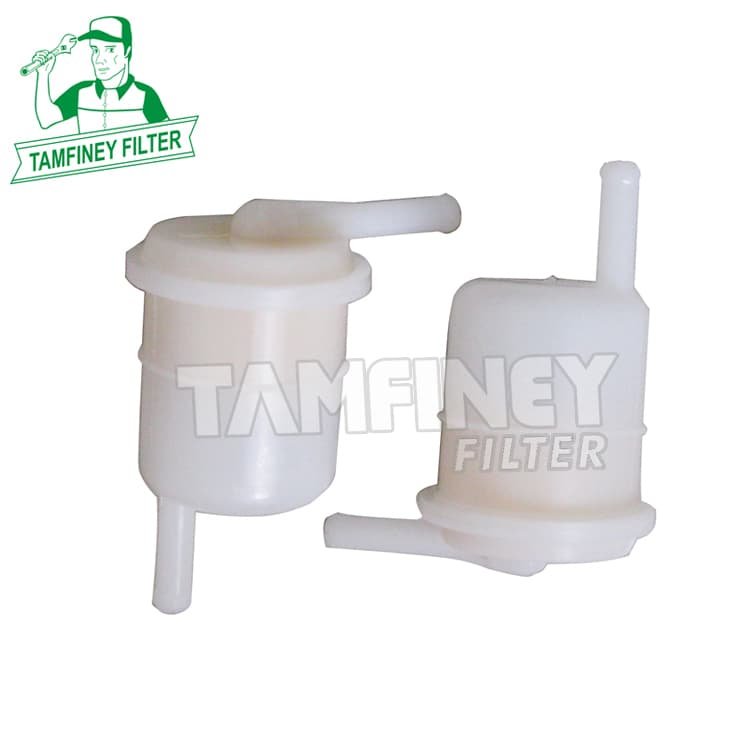
Professional Inline Gas Filter 16400-H8501 FF238 BF932 16400-E3025 16400-E3001
Your Best Inline Gas Filter 16400-H8501 FF238 BF932 16400-E3025 16400-E3001 Fuel filter manufacturer in China.
TCM 16400-E3000 Baldwin BF932 Bosch 986450001, 986-450-001, 986450009, 986-450-009, Daihatsu 20012407, 2001-2407 Fleetguard FF238, FF5679, Hitachi 4339926, Isuzu 8-94207-736-0, Mann WK42/12, WK42/9 Mopar F000G180, Nissan 16400-18010, 16400-E3000,16400-H8501,
16400-W1100, 16403-H8501 16400-E3025,16400-H8594 16400-E3001 16400-E3022, 16400-H8500 16400-W1105, 16400-W1110


| Fuel Filter 16400-H8501 FF238 BF932 16400-E3025 16400-E3001 Parameter: | |
| Part Number | 16400-H8501 FF238 BF932 16400-E3025 16400-E3001 |
| Brand | Tamfiney |
| Weight | 26 g |
| Height | 90 mm |
| Outer Diameter | 448 mm |
| Inner Diameter/ Thread Size |
32 mm |
| Minimum Order | 100 PCS |
| Place of Region: | Zhejiang, China |
| Payment Terms: | T/T |
| Price Terms: | FOB |
| Lead Time: | 30 to 50 days based on order quantities |
| Market Type: | After Market |
| Current Export Market: | Southeast Asian,North America, South America, Western Europe, Eastern Europe, Africa, Oceania |
Applications:
• ISUZU VU/LT/LW KB 20KB 25 1,6KB 40 2,0
• KOMATSU FG 10 L-10FG 10 L-11FG 14 L-10FG 14 L-11FG 15 L-10FG 15 L-11FG 15 L-11
• NISSAN 240 Z240 Z260 Z260 ZBLUEBIRD 1,6BLUEBIRD 1,6BLUEBIRD 1,8BLUEBIRD 1,8CHERRY 1,0CHERRY 1,0CHERRY 1,0CHERRY 1,0CHERRY 1,3CHERRY 1,3CHERRY 1,3CHERRY 1,3CHERRY 1,5CHERRY 1,5CHERRY 1,5CHERRY
• NISSAN 4X4 PATROL 2,8
• TCM FCG 15 N5FG 14FG 14 N3FG 14 N4FG 15 N2
Professional Inline Gas Filter 16400-H8501 FF238 BF932 16400-E3025 16400-E3001
Inline Gas Filter: Critical Safety for Your Engine
Every smooth-running engine needs uninterrupted fuel flow. Therefore, using a dependable Inline Gas Filter is key to avoiding breakdowns. Because contaminants often sneak into fuel lines, a quality filter protects sensitive components. Not only does it block harmful debris, but it also keeps engines running longer. Moreover, replacing the filter regularly secures fuel purity. Whenever engines receive clean gas, performance and safety levels immediately improve.
Multiple Cross References Boost Convenience
Choosing the correct filter saves time and effort. Thankfully, the Inline Gas Filter comes with several cross references such as 16400-H8501 and FF238. Additionally, alternatives like BF932 extend compatibility across various vehicles. Whenever original filters are unavailable, 16400-E3025 and 16400-E3001 guarantee seamless replacements. Thus, mechanics and car owners can count on hassle-free maintenance. Consequently, servicing becomes simpler and more efficient, even during busy schedules.
Advanced Filtration Technology Ensures Engine Longevity
Modern vehicles require filters with advanced technology. Not only does the Inline Gas Filter incorporate multi-layer filtration, but it also traps the tiniest particles. Furthermore, models like FF238 and BF932 are built to resist chemical corrosion and high pressure. Whenever engines operate under harsh conditions, these filters maintain steady performance. Besides protecting engine injectors, options like 16400-E3025 lengthen engine life. Meanwhile, cleaner fuel ensures less wear over time.
Easy Installation Streamlines Routine Upkeep
Routine filter maintenance should be a straightforward process. First, turn off the engine and locate the filter housing. Next, remove the old Inline Gas Filter and inspect the fittings. Afterwards, install 16400-H8501 or a compatible alternative like BF932 securely in place. Whenever installation follows manufacturer instructions, leakage and operational issues decrease. Moreover, TAMFINEY’s precise design allows a perfect fit every time. Consequently, vehicle downtime drops and reliability rises, benefiting users with continuous use.
TAMFINEY’s Commitment to Quality and Fast Delivery
Whenever customers seek reliable filtration, TAMFINEY delivers excellence in every product. Not only is the Inline Gas Filter available, but cross references like FF238 and 16400-E3025 are in stock. Furthermore, our technical team offers prompt support for any issues encountered. Each filter undergoes rigorous testing for strength and precision. Because customer satisfaction is central, TAMFINEY ensures on-time deliveries and expert after-sales help.
Filtration and Sustainability: A Smart Pairing
Today’s market calls for both efficiency and environmental responsibility. Because the Inline Gas Filter extends fuel line life, it also reduces resource waste. Moreover, TAMFINEY uses recyclable materials and eco-friendly manufacturing techniques. Whenever users select options like BF932 or 16400-E3001, they embrace sustainable practices without sacrificing quality. In addition, less frequent replacements mean fewer filters end up discarded. Consequently, users can contribute to a greener world with every TAMFINEY filter installation.
Protect Engines and Drive with Confidence
Every drive deserves the peace of mind that clean fuel brings. Whenever an Inline Gas Filter, such as 16400-H8501 or FF238, is installed, engines remain protected from damage. Besides guaranteeing compatibility, TAMFINEY offers fast service and technical expertise to every customer. Because engine health is at stake, reliable filtration should never be ignored. In conclusion, choose TAMFINEY and experience consistent safety, performance, and trusted support on every journey.
Q: Which way does an inline gas filter go?
In an inline gasoline filter, the flow of gasoline is usually from the inlet into the filter cup, then from the outside to the inside of the filter element. After filtering impurities through the filter element, clean fuel flows from the inside of the filter element to the outlet.
This design filters the fuel on the surface of the filter element, effectively intercepting particulate matter and impurities, ensuring the cleanliness of the gasoline delivered to the engine.
Q: Is an inline fuel filter necessary?
In line fuel filter (also known as external fuel filter) is a common component in the automotive fuel system. Its main function is to filter impurities in the fuel and protect precision components such as engine injectors.
Whether it needs to be installed or replaced depends on your vehicle type, usage environment, and manufacturer's recommendations.
Characteristics of inline fuel filters
Installation location: Usually installed outside the fuel tank, connected to the oil circuit through an inlet pipe for easy daily maintenance.
Advantages: Easy replacement, low cost, suitable for regular maintenance.
Disadvantage: Compared to built-in filters, its pass rate may be slightly lower, but the specific difference varies depending on the vehicle model.
Q: HOW DO YOU KNOW IF YOU'RE DRIVING WITH A CLOGGED FUEL FILTER?
When the fuel filter is clogged, the vehicle will exhibit a series of obvious symptoms that can help you determine if there is a problem. The following are common signs:
Weak acceleration or decreased power: Blockage can lead to insufficient fuel supply, and the engine cannot generate enough power, manifested as feeling sluggish during acceleration, especially when going uphill or overtaking.
Idle shaking or easy stalling: Unstable fuel supply can cause the engine to shake during idle, and in severe cases, it may suddenly stall, especially when shifting gears or parking.
Fuel consumption increase: The fuel system injects more fuel to maintain operation, but the combustion is insufficient, resulting in a significant increase in fuel consumption, which may increase by 10% -20%.
Difficulty starting: It is difficult to obtain sufficient fuel when starting the engine, and there may be multiple attempts to start, especially during cold start.
Exhaust odor or excessive emissions: Insufficient combustion can produce abnormal odors (such as gasoline odor) and may lead to unqualified exhaust testing.
Engine malfunction light on: When the onboard diagnostic system detects a fuel system issue, the malfunction light may turn on.
Stumbling (jerking) during driving: Poor fuel supply can lead to an imbalance in the mixture ratio, causing the vehicle to shake rapidly and slowly while driving
If these symptoms occur, it is recommended to check the fuel filter in a timely manner. Preventive measures include regularly replacing filter cartridges (usually every 10000-20000 kilometers or as recommended by the manufacturer) and using high-quality fuel to reduce impurity accumulation.
During inspection, professional pressure testing or disassembly can be used to observe the condition of the filter element, but caution should be exercised and it is best to have maintenance personnel handle it.