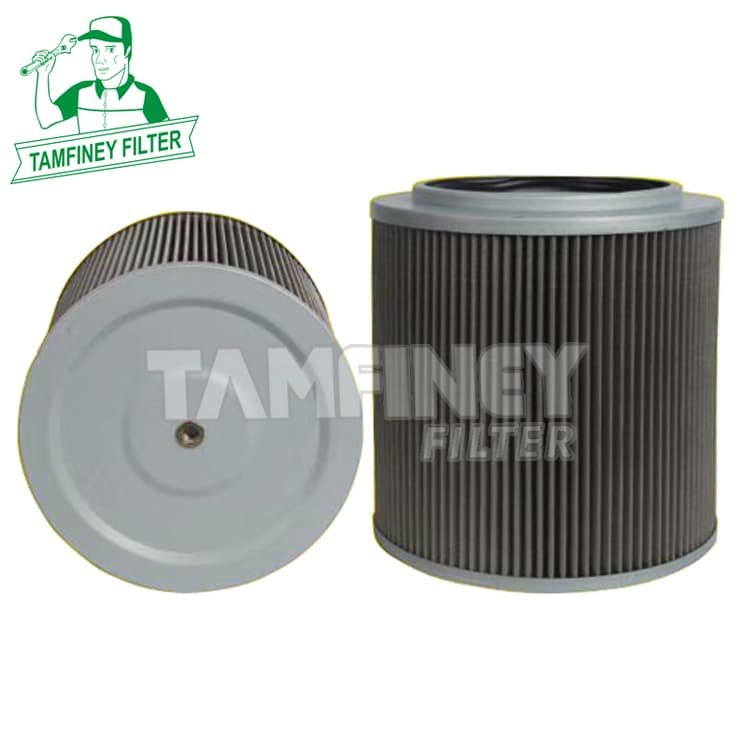


| Hydraulic Strainers LS50V00007F1 4358785 4605029 4688141 Parameter: | |
| Part Number | LS50V00007F1 4358785 4605029 4688141 |
| Brand | Tamfiney |
| Weight | 1362 g |
| Height | 195 mm |
| Outer Diameter | 200 mm |
| Inner Diameter/ Thread Size | 140*M10*1.5 mm |
| Minimum Order | 100 PCS |
| Place of Region: | Zhejiang, China |
| Payment Terms: | T/T |
| Price Terms: | FOB |
| Lead Time: | 30 to 50 days based on order quantities |
| Market Type: | After Market |
| Current Export Market: | Southeast Asian,North America, South America, Western Europe, Eastern Europe, Africa, Oceania |
Applications:
CATERPILLAR 374374 D374 F374 F L374 F L390 F390 F L395MH 3295
DOOSAN DAEWOO DX 800 LC-5B
KOBELCO SK 450-8SK 450-8SK 450-8 LC-8SK 480 LC-8SK 480 LC-8SK 480 LC-8SK 485-8SK 485-9SK 485 LC-9SK 500 LC-9
Professional Hydraulic Strainers LS50V00007F1 4358785 4605029 4688141
Q: What is a hydraulic strainer filter?
Hydraulic strainer filter is the coarse filter component installed in the oil pump suction pipeline. It is an essential component of the hydraulic system, and its function is to protect the oil pump from damage caused by large particles and impurities, filter out solid particles and gel like impurities in the hydraulic oil, prevent the oil pump from inhaling pollutants, and control the pollution level from the source.
Strainer Filter Widely adaptable to various hydraulic equipment such as excavators, loaders, concrete mixer trucks, steel mill hydraulic stations, railway maintenance machinery, etc., it is the first protective barrier to ensure the stable operation of oil pumps.
Key performance parameters
- Filtering accuracy: The mainstream accuracy is 80~150 microns, and the commonly used specification for construction machinery is 100 microns, belonging to the type of coarse filter protection pump.
- Working temperature: The normal working range is -30 ℃ to+110 ℃, and different materials can be adapted to different temperature scenarios.
- Pressure drop characteristics: Under rated oil supply pressure, the total pressure drop between the filter element and the filter housing is usually less than 0.2 MPa to avoid cavitation in the oil pump.
- Safety design: Most built-in bypass valves automatically open when the blockage pressure difference reaches 0.3~0.7MPa, preventing system oil supply interruption and shutdown.
Mainstream filter material types
Stainless steel wire mesh: With strong flow capacity and low resistance, it can be repeatedly cleaned and reused, making it a material used in construction machinery.
Copper wire mesh: Excellent corrosion resistance, commonly used in mobile hydraulic equipment such as excavators, with a filtration efficiency of up to 99%.
Q: How to clean a hydraulic suction strainer?
1. Pre-Cleaning Safety Prep
Park the machine on flat and solid ground, shut down power and cut all energy supplies. Wait 10 to 15 minutes to release full system pressure, wipe the area around the strainer totally clean. Place an oil pan under the filter to catch drips, grab soft brushes, clean diesel and dry compressed air. Skip steel wool, gasoline and high-pressure water guns.
2. Standard Disassembly Steps
Find the suction strainer near the hydraulic tank, drain tank oil below the built-in filter level. Loosen mounting bolts slowly with a proper wrench, move gently to avoid breaking ports or nearby pipes. Catch all flowing hydraulic oil in the prepared pan, set all removed parts on a clean dust-free cloth.
3. Washable Metal Filter Cleaning
Soak the filter in clean diesel for 10 to 15 minutes, scrub the surface softly with the soft bristle brush. Focus on clearing clogs in the tiny screen gaps, blow dry air from the inner side to the outer side. Check the filter until no leftover impurities stay, do not bend or scratch the thin metal mesh layers.
4. Inspection, Reset and Test Run
Use a magnifying glass to check the whole filter, throw away any damaged, deformed or torn filter parts. Line up the clean filter and fit it back to the port, tighten bolts moderately to protect threads and seals. Run the machine idle for 3 to 5 full minutes, check for leaks and smooth system operation fully.
5. Key Operation Notes
Check and clean the strainer every 15 to 20 days, adjust the cycle based on real working site conditions. Swap the filter if suction pressure drops below -0.2Mpa, replace it if the pump makes sharp hissing noises. Use ultrasonic cleaning for heavy industrial metal filters, rinse all leftover cleaner off and dry the part fully.