
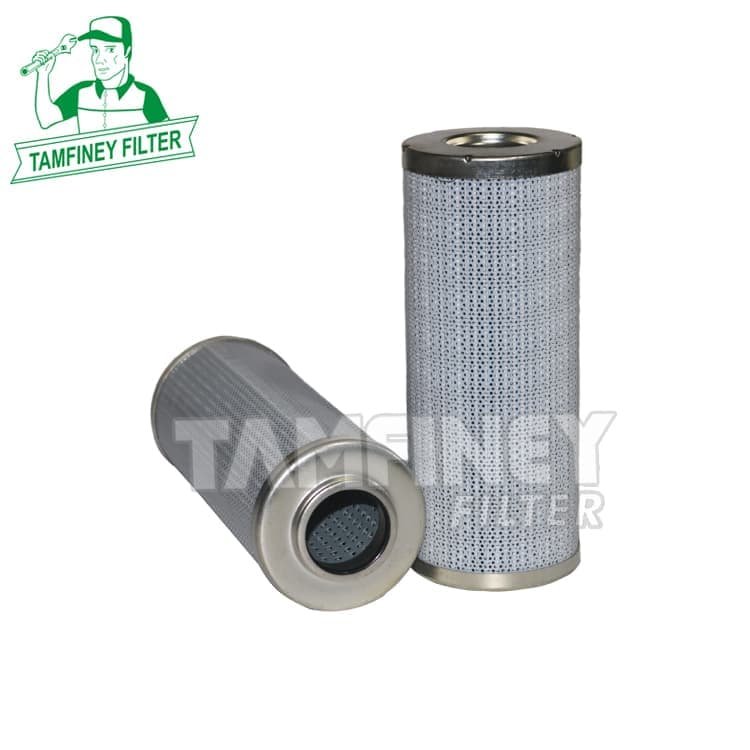


| Hydraulic Filter 400504-00295 6195687M91 P566672 PR3145Q Parameter: | |
| Part Number | 400504-00295 6195687M91 P566672 PR3145Q |
| Brand | Tamfiney |
| Weight | 312g |
| Height | 171/175 mm |
| Outer Diameter | 68 mm |
| Inner Diameter/ Thread Size | 34 mm |
| Minimum Order | 100 PCS |
| Place of Region: | Zhejiang, China |
| Payment Terms: | T/T |
| Price Terms: | FOB |
| Lead Time: | 30 to 50 days based on order quantities |
| Market Type: | After Market |
| Current Export Market: | Southeast Asian,North America, South America, Western Europe, Eastern Europe, Africa, Oceania |
Applications:
LIUGONG LG 958 L
MECALAC TLB 990TLB 990TLB 990
RISA CHALLENGERCHALLENGER 264CHALLENGER 7VARAP CHALLENGER RS 170
SANY SCC 4500 A
SWISS TRACKED FORWARDER FM 4060
TEREX TLB 840
Professional Hydraulic Replacement Filter 400504-00295 6195687M91 P566672 PR3145Q
Q: How do you choose the right hydraulic filter?
The core principle for selecting hydraulic filters is to match the filtration accuracy and flow capacity according to the installation position, ensure that the pressure resistance meets the peak pressure of the system, and verify the compatibility between the filter material and the oil.
Key selection steps
1. Determine the installation location and corresponding accuracy requirements
- Oil suction filter (pump inlet): Choose a coarse filter (100-180 μ m or mesh/line gap), with a flow capacity of ≥ 2 times the pump flow rate and a pressure drop of<0.02MPa to prevent cavitation.
- Pressure pipeline (pump outlet): Select fine filter (usually 10-15 μm, sensitive element front needs to be ≤ 5 μm), withstand pressure ≥ system maximum working pressure (including impact), equipped with bypass valve, pressure drop<0.35MPa.
- Return oil filter: Select high-precision (10-25 μm) with low pressure resistance (usually ≤ 2.5MPa), and calculate the return oil flow rate to avoid back pressure, with a pressure drop of<0.2~0.35MPa.
- Offline/cyclic filtration: independent circuit, optional highest precision (3-5 μm), used for deep purification.
2. Verify the core performance parameters
- Filtering accuracy: determined based on system cleanliness standards and component clearance, the higher the better, balancing resistance and lifespan.
- Flow capacity: The total pressure drop at rated flow meets the standard, avoiding damage caused by insufficient flow.
- Mechanical strength: The rupture pressure of the filter element needs to be higher than the peak pressure of the system, and it has passed ISO 2941 anti explosion verification; The fatigue life needs to meet the ISO 3724 cycle test.
- Pollutant carrying capacity: Determine the replacement cycle, and prioritize high pollutant carrying materials (such as fiberglass) for harsh working conditions.
3. Verify compatibility and structural characteristics
- Oil compatibility: Filter materials and sealing rings must be compatible with hydraulic oil types.
- Special function: Dual tube switching type for non-stop maintenance; Alarm should be equipped with a signaling device ; Choose stainless steel sintering or reinforced support structure for harsh environments.
Common Misconceptions Reminder
- Accuracy trap: The nominal accuracy is not equal to the true filtering ratio (β value), and in critical situations, actual measurement data with β ≥ 75 or β ≥ 200 should be identified.
- Blind high pressure: The return oil filter cannot be directly used in high-pressure pipelines, as mismatched pressure resistance levels can lead to bursting.
- Neglecting flow rate: Insufficient flow through the oil suction filter element can cause pump cavitation damage, and the selection must be based on the maximum suction flow rate.
Q: Can you change a hydraulic filter without changing the oil?
The hydraulic filter can be replaced separately without oil change, provided that the hydraulic oil meets the cleanliness standards and has not severely degraded; otherwise, merely replacing the filter element will not resolve the system contamination issue.
Core judgment criteria
- The oil condition is satisfactory: If the hydraulic oil color is normal, free of emulsification, acid value within limits, and particle contamination within permissible levels, only the filter element needs replacement.
- The primary cause of filter clogging is not oil degradation: If the filter clogging is due to metal debris from short-term high loads or external contaminants, while the oil's chemical properties remain stable, the filter can be replaced separately.
- Strictly prohibit "operating with contaminated oil": If the oil has oxidized, acidified, exceeded water content limits, or contains excessive gummy substances, the filter element cannot remove these contaminants. The oil must be replaced or the system cleaned; otherwise, the new filter element will quickly fail.
Key Operational Precautions
- Pressure Relief and Cleaning: Before replacement, ensure the system is depressurized and clean the filter housing and surrounding areas to prevent dust from falling into the oil tank.
- Inspect the old filter element for contaminants: Remove the old filter element and check for excessive metal filings or copper shavings. If present, investigate pump/valve wear faults and flush the system if necessary.
- Avoid bypass contamination: Some filter elements contain a bypass valve. If the old filter element is cracked and allows contaminants to enter the oil circuit, simply replacing it with a new one will be ineffective. A thorough flushing process is required.
- Venting and Impregnation: After installation, venting is required to prevent air resistance; pre-impregnation of the dry filter element is recommended to reduce initial impact.


