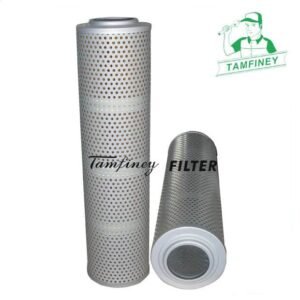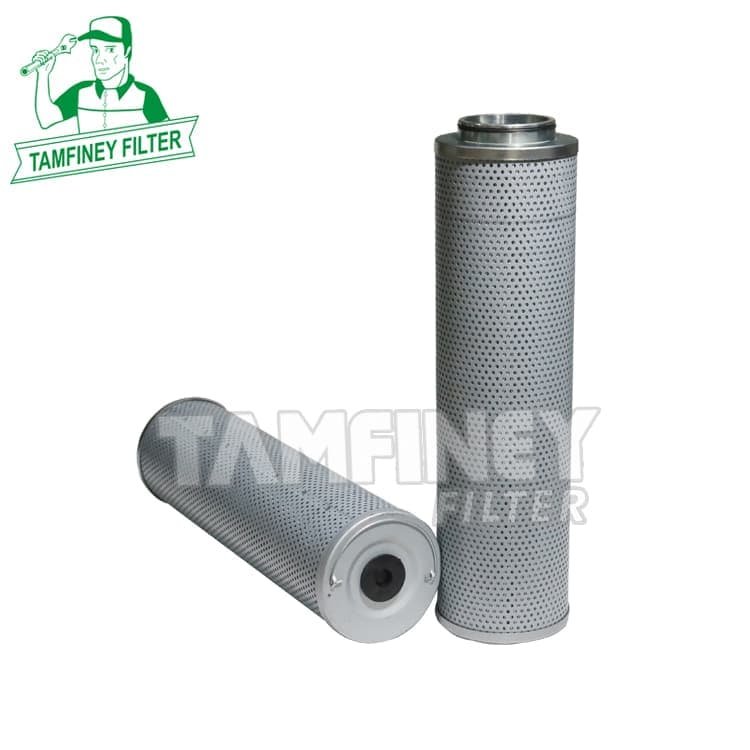


| Hydraulic Cartridge Filter 4120001743 Parameter: | |
| Part Number | 4120001743 |
| Brand | Tamfiney |
| Weight | 2300 g |
| Height | 428/444 mm |
| Outer Diameter | 120 mm |
| Inner Diameter | 80 mm |
| Material | Metal & Glass Fiber |
| Filter Media | High-efficiency pleated glassfiber with stainless steel wire cloth blend |
| Typical Working Pressure | Up to approx. 6–10 bar |
| Filtration | Approx. 5–10 micron |
| Temperature Rating | Up to approx. 100–120°C |
| Minimum Order | 30 PCS |
| Place of Region: | Zhejiang, China |
| Payment Terms: | T/T |
| Price Terms: | FOB |
| Lead Time: | 30 to 50 days based on order quantities |
| Market Type: | After Market |
| Current Export Market: | Southeast Asian,North America, South America, Western Europe, Eastern Europe, Africa, Oceania |
Applications:
- SDLG LGMG MT95H
Professional Hydraulic Cartridge Filter 4120001743
Q: What are two common types of hydraulic filters?
Pressure filters and return oil filters are common types of hydraulic filters, and they are the two most important ones. Divided by installation location, hydraulic filters usually include oil suction filters, which are divided into three categories in total; The pressure filter is installed at the pump outlet, and the return oil filter is installed on the system return oil pipeline.
🔧 The differe nce between the two
Pressure filter: installed on the pump outlet pipeline, with high precision, used to intercept small particles and protect precision components such as proportional valves and servo valves.
Return oil filter: installed on the system return oil pipeline, used to capture metal debris generated by system wear and prevent pollutants from flowing back into the oil tank.
Q: What are the early signs of a clogged hydraulic filter?
The early signs of hydraulic filter clogging primarily include pressure differential alarms, slower actuator responses, rising oil temperatures, and abnormal noises. Detecting these signs early makes them easier to address, while delaying action can lead to damage to pumps and valves.
- Pressure differential indicator alarm: The most direct signal. As the filter element gradually clogs, the pressure differential between the inlet and outlet ports continuously rises. When it reaches the set value, the visual indicator turns red or the electronic alarm is triggered.
- The actuator's motion becomes slower and weaker: when oil flow is obstructed, the flow rate decreases, resulting in delayed or sluggish responses, insufficient output, or even crawling or jamming in the hydraulic cylinder or motor.
- Abnormally high oil temperature: Increased flow resistance converts energy loss into heat, causing the oil temperature to rise significantly above normal levels. When it consistently exceeds 70–80°C, the oil viscosity decreases, lubrication deteriorates, and wear is further exacerbated.
- Increased pump noise and abnormal sounds: A clogged oil suction filter can lead to poor oil suction or even complete suction failure in the pump, causing it to emit howling or noticeable noise, and may result in air bubbles in the oil.
- Deterioration of oil condition: Darkening or blackening of oil color, presence of odor, emulsification, or visible impurities indicates that contamination has accumulated to a certain degree.
- Inconsistent actions under the same command: The actuator's movement starts to fluctuate in speed, with reduced repeatability and increased pressure fluctuations.