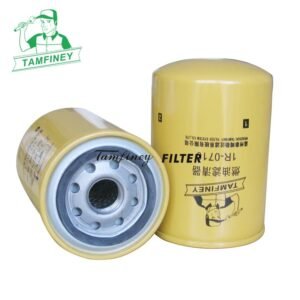

| Fuel Filter VG1560080012 VG1560080011 BF7644 Parameter: | |
| Part Number | VG1560080012 VG1560080011 BF7644 |
| Brand | Tamfiney |
| Weight | 819 g |
| Height | 212 mm |
| Outer Diameter | 94 mm |
| Inner Diameter/ Thread Size | M18 x 1.5 |
| Minimum Order | 100 PCS |
| Place of Region: | Zhejiang, China |
| Payment Terms: | T/T |
| Price Terms: | FOB |
| Lead Time: | 30 to 50 days based on order quantities |
| Market Type: | After Market |
| Current Export Market: | Southeast Asian,North America, South America, Western Europe, Eastern Europe, Africa, Oceania |
Applicaiton:
SDMO GS 400 KR 450 C 2R 450 KR 550 K/C 2V 410 KV 440 K
SIMED TAD 1240 GETAD 1241 GETAD 1631 GE
SINOTRUK HOVAHOWO 336HOWO 371SWZ 10
Professional Howo VG1560080012 Fuel Filter VG1560080011 BF7644
Q: What are the common symptoms of a clogged HOWO fuel filter?
For heavy-duty diesel HOWO trucks, clogged fuel filters show clear symptoms. First, you may struggle to start the engine. Cold starts get especially tricky, because poor fuel supply hurts injector atomization. You often need multiple tries to get the engine to fire up. Next, you will notice weak performance and slow acceleration. When you climb hills or carry heavy loads, power drops sharply. Pressing the gas pedal gives slow response and feels sluggish. Then, your idle speed stays unstable and stalls easily. Engine speed fluctuates and the whole truck shakes hard. It can stall suddenly when you stop at lights or shift to neutral.
Fuel consumption also goes up a noticeable amount. The ECU adds more fuel to make up for limited fuel supply. This creates too much mixture and leads to incomplete fuel burn. Your exhaust will release thick black smoke from the pipe. Unburned diesel leaves extra carbon particles, especially during hard acceleration. The filter fault light will also pop up on the dashboard. Many new HOWO models alert you to high pressure difference or extra moisture.
You may feel sudden jolts while driving on the road. Intermittent fuel cuts create pulsing fuel supply that causes jolts. This feeling feels similar to rough shifting in transmission. Keep in mind that most HOWO trucks run on diesel fuel. Their high-pressure common rail systems are very sensitive to clogs. Severe clogs can damage fuel injection pumps or nozzles over time. Gasoline-powered HOWO trucks are quite rare on the market. They share most symptoms with regular gasoline cars. They just do not produce black smoke or trigger water warning lights.
Q: How often should I change a HOWO fuel filter?
It is usually recommended to replace the fuel filter (including coarse and fine filters) of HOWO diesel vehicles every 5000-10000 kilometers. If the fuel quality is good and the road conditions are favorable, it can be extended to 15000-20000 kilometers, but generally not exceeding 20000 kilometers or 1 year; The specific information should be based on the vehicle maintenance manual.
• Normal working conditions (regular gas stations, good road conditions): Replace the fuel fine filter every 10000 kilometers, and the coarse filter can be combined with each maintenance check for drainage and replaced as appropriate (some models have similar coarse filter cycles or 5000 kilometers).
• Adverse operating conditions (poor fuel quality, high dust/heavy load/frequent short distance): Shorten to 5000-7000 kilometers for replacement to avoid fuel injection system blockage.
• Some HOWO light trucks/engineering vehicles: The 4S store maintenance manual often indicates a standard diesel filter replacement cycle of 5000 kilometers, which belongs to the "minor maintenance" project.
• Built in filter (rare): If it is an integrated filter in the fuel tank, it may reach 20000 to 30000 kilometers, but HOWO trucks often use external replaceable filter elements.
Q: Can a dirty filter cause engine damage?
Yes, failing to replace dirty filters (air, oil, or fuel filters) for extended periods can indeed lead to engine damage.
• Dirty or clogged air filter: It will fail to filter, allowing dust particles to enter the cylinder, accelerating wear on pistons, cylinder walls, and valves; insufficient air intake leads to incomplete combustion, reduced power, increased carbon deposits, and severe cases may cause "scuffing" or knocking, with long-term accumulation shortening the engine's lifespan.
• Dirty or clogged oil filter: If the by-pass valve fails or becomes severely blocked, the oil cannot circulate and filter effectively. Impurities such as metal debris directly lubricate friction surfaces, causing abnormal wear on components like bearing caps, camshafts, and connecting rods. In extreme cases, this may lead to "bearing seizure," "cylinder scoring," or even engine failure.
• Fuel filter clogging: Poor fuel supply leads to difficulty in starting, unstable idle, and power loss; impurities entering the fuel injectors or fuel pump cause wear or blockage, affecting atomization and combustion, which may damage cylinder components over time.
The "dirtiness" level of different filters and by-pass designs (such as the safety by-pass valve in oil filters) affects damage speed. However, continuing use beyond the maintenance cycle, especially in dusty or with poor-quality oil, significantly increases the risk of substantial mechanical damage to the engine. Regularly replacing the "three filters" as per the manual is the most cost-effective and preventive way to protect the engine.