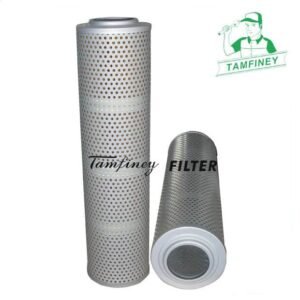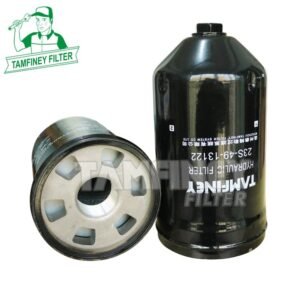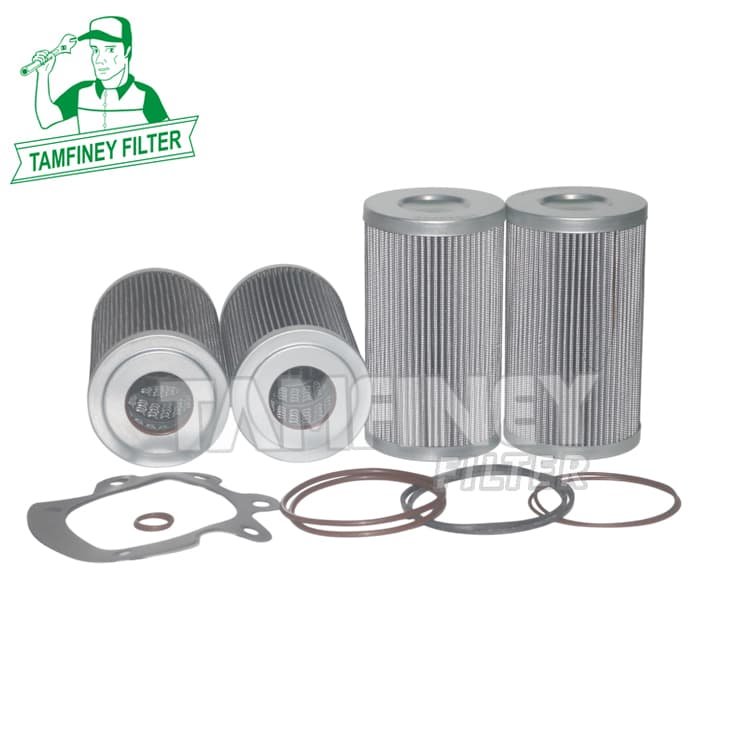


| Hydraulic Filter HF28943 HF28937 29506337 29509723 29526898 Parameter: | |
| Part Number | HF28943 HF28937 29506337 29509723 29526898 |
| Brand | Tamfiney |
| Weight | 780 g |
| Height | 143/146 mm |
| Outer Diameter | 82 mm |
| Inner Diameter | 39 mm |
| Material | Metal & Glass fiber |
| Filter Media | Glass fiber with Strainless steel blend |
| Typical Working Pressure | Up to approx. 6–10 bar |
| Filtration | Approx. 5–10 micron |
| Temperature Rating | Up to approx. 100–120°C |
| Minimum Order | 100 PCS |
| Place of Region: | Zhejiang, China |
| Payment Terms: | T/T |
| Price Terms: | FOB |
| Lead Time: | 30 to 50 days based on order quantities |
| Market Type: | After Market |
| Current Export Market: | Southeast Asian,North America, South America, Western Europe, Eastern Europe, Africa, Oceania |
Compatibility
- Allison 3000 Series (including HS, RDS, EVS, SP, TRV, MH, and MD3060 variants)
- Allison 4000 Series (including HS, RDS, EVS, SP, TRV, MH variants)
Premium HF28943 Hydraulic Filter Kit HF28937 29506337 29509723 29526898
Q: What is typically included in a hydraulic filter kit?
🧩 Core filtering components
- Main filter element: The core of the kit, including filter material and supporting frame. The filter material can be glass fiber, metal fiber, ceramic and other materials to meet different precision requirements.
- Multi filter combination: Some complete sets of kits may include multiple filter elements with different functions such as oil suction, oil return, high-pressure pipelines, etc., to meet the full circuit filtration requirements of the system.
⚠️ Safety protection components
- Bypass valve component: composed of valve seat, valve core, and pressure regulating spring. When the filter element is blocked to the set pressure difference, it automatically opens to avoid system oil interruption.
- Differential pressure transmitter: When there is the warning differential pressure, it sends a mechanical or electrical signal to prompt the replacement of the filter element to prevent it from being crushed.
- Sealing kit: A complete set of sealing rings made of nitrile rubber or fluororubber material, covering all sealing points such as the filter element and filter housing, end cap and housing, to prevent oil leakage.
🔧 Operation and maintenance auxiliary components
- Discharge device: The bottom discharge outlet is equipped with a manual/automatic discharge valve, which can regularly discharge impurities deposited in the filter housing.
- Disassembly and assembly tools: Equipped with specialized wrenches and disassembly fixtures, it is convenient to quickly disassemble the filter housing and replace the filter element.
- Status monitoring accessories: Some high-end kits come with pressure gauges and oil temperature sensors to monitor real-time filter inlet and outlet operating parameters.
Q: When should hydraulic filters be replaced?
The replacement timing of hydraulic filters should be through a comprehensive assessment of multiple dimensions, including differential pressure alarms, operational duration, and working condition status, without a fixed uniform cycle.
📅 Regular Replacement Cycles for Different Types of Filters
- Suction filter: Replace every 2,000 hours under normal operating conditions; for some low-frequency usage equipment, the interval can be extended to 1–2 years.
- Return filter: The first replacement is completed after the equipment's initial 250-hour break-in period, followed by routine replacements every 500 to 1000 hours under normal operating conditions.
- High-pressure pipeline precision: High precision requirements, typically replaced every 300~600 hours, with differential pressure alarm as the core judgment criterion.
- Pilot filter: Ensures the protection of precision components such as servo valves, typically replaced every 1000~1500 hours, while some equipment requires inspection and replacement every 500 hours.
⚠️ Conditions for mandatory immediate replacement
- When the pressure difference between the inlet and outlet of the filter reaches the equipment calibration threshold (typically 0.1~0.15MPa), the system pressure differential sensor triggers an alarm.
- The filter housing is bulging, the seals are aging and cracking, the filter material is damaged, and the end cover has fallen off, resulting in structural failure.
- The hydraulic oil inspection shows a NAS rating higher than the system requirement of NAS Class 8, with darkened, emulsified oil or a high concentration of metal debris.
- The system exhibits abnormal blockage-related issues such as sluggish operation, abnormal noises from the pump group, and unusually high oil temperature (>80℃).
Special Scenario Replacement and Adjustment Rules
- In high-pollution, high-temperature, and harsh working conditions such as mining and metallurgy, the replacement cycle must be shortened to 50% of the conventional value, with a minimum interval of 1 to 3 months.
When replacing core components, the filter element must be replaced simultaneously even if the service cycle has not been reached, to prevent secondary damage to the new components by residual debris. - For low-frequency idle equipment, even if the operating duration is insufficient, it is recommended to replace the filter element at least every 3 years to prevent filter material aging and corrosion.