Get a Free Quote
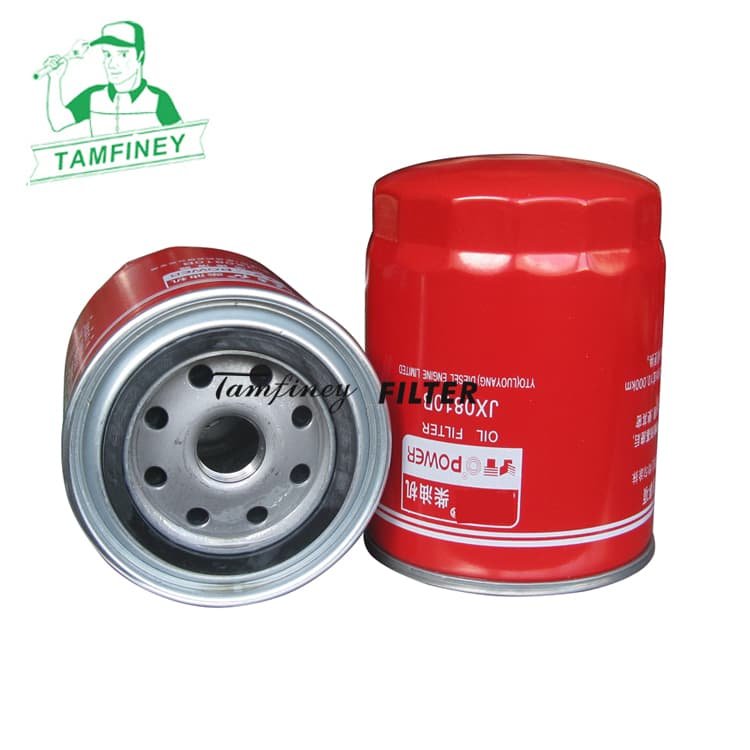
Professional Full Flow Oil Filter WB202 JX0810B B7469 1012010-X2 1000736513 CA000-1012011A
Your Best Full Flow Oil Filter WB202 JX0810B B7469 1012010-X2 1000736513 CA000-1012011A Oil filter manufacturer in China.
Bengbu JX0810b WB202 JX0810D YUCHAI CA000-1012011A CA000-1012011A-937 1012010-X2 293-1012000 Weichai 1000736513



| Oil Filter WB202 JX0810B B7469 1012010-X2 1000736513 CA000-1012011A Parameter: | |
| Part Number | WB202 JX0810B B7469 1012010-X2 1000736513 CA000-1012011A |
| Brand | Tamfiney |
| Weight | 592 g |
| Height | 135 mm |
| Outer Diameter | 93 mm |
| Inner Diameter/ Thread Size |
M20*1.5 |
| Minimum Order | 100 PCS |
| Place of Region: | Zhejiang, China |
| Payment Terms: | T/T |
| Price Terms: | FOB |
| Lead Time: | 30 to 50 days based on order quantities |
| Market Type: | After Market |
| Current Export Market: | Southeast Asian,North America, South America, Western Europe, Eastern Europe, Africa, Oceania |
Applications:
• GELEC LION 1000 YC
YUCHAI YC 2015YC 2105YC 2108YC 2128
Professional Full Flow Oil Filter WB202 JX0810B B7469 1012010-X2 1000736513 CA000-1012011A
Q: What is a full-flow type oil filter?
Full flow oil filter is an oil filtration system that works by allowing all engine oil to flow through the filter element during circulation, effectively removing impurities, metal particles, and pollutants, ensuring the cleanliness of the lubrication system and efficient operation of the engine. This design is usually in series between the oil pump and the main oil passage of the engine, capable of filtering 100% of the oil flow, in contrast to split flow filters (which only filter a portion of the oil).
Due to limited detailed information available at present, the following supplement is on common knowledge: Full flow filters are widely in car maintenance due to their high filtration efficiency, which can extend engine life. When selecting, attention should be paid to the compatibility, filtration accuracy, and replacement cycle of the filter element.
Q: What is the difference between a bypass and a full-flow filter?
Bypass filter and full flow filter are two different filtration technologies mainly used in engine lubrication systems and industrial water treatment systems. Their core differences lie in treatment methods, application scenarios, and performance characteristics.
In the engine lubrication system, a full flow filter processes all oil flow, removes pollutants through efficient filter materials (such as synthetic fibers), provides basic wear protection, has low initial pressure difference and high pollutant capacity, and usually integrates a bypass valve to deal with filter blockage or cold start situations. The bypass filter only extracts about 10% of the total oil flow for precision filtration, and the purified oil returns to the oil pan as an auxiliary system to improve oil cleanliness without affecting the main oil flow, but a separate renal circulation device needs to be designed.
In the field of industrial water treatment, bypass filtration technology is aimed at circulating cooling water systems. By extracting 1% -5% of the circulating water through a bypass for physical filtration (such as gravity, pressure, or centrifugation), suspended solids are removed, turbidity is reduced, and scaling and corrosion are suppressed. It is suitable for cooling tower systems in industries such as power and petrochemicals. In this scenario, a full flow filter usually refers to a filtering device that processes all water flows, but in the industrial field, bypass filtration is more commonly used as an optimization solution rather than directly compared to full flow.
The key differences include:
• Processing range: Full flow filtration processes all media (oil or water), while bypass filtration only processes a portion of the flow.
• Application scenario: Full flow is the mainstream protection method in the engine, and bypass is used for auxiliary fine filtration; In industrial water treatment, bypass is usually used for optimizing circulating water systems, while full flow is more fundamental.
• Performance impact: Full flow filtration provides direct protection but may affect flow due to filter clogging; Bypass filtration maintains the stability of the main system, but requires additional equipment.
• Efficiency and Cost: Bypass filtration has lower energy consumption and can extend system life, but requires higher investment; The full flow filtration structure is simple and has low maintenance costs.
Q: Is a high flow oil filter better?
Whether a high flow oil filter is better depends on your specific usage and requirements. Its primary role is to clean engine oil by removing impurities, gum, and moisture. This ensures the engine's lubricating components receive clean oil for protection.
The high flow design aims to enhance oil circulation by boosting flow rate. It may improve lubrication under heavy loads but isn't universally suitable.
Characteristics of high flow oil filters
Advantages: These filters reduce oil flow resistance significantly. They increase oil processed per unit time. This helps engines cool and lubricate faster during high-performance driving. They are ideal for modified or high-load vehicles.
Disadvantages: Excessive flow can shorten oil's stay in the filter. This may reduce filtration efficiency and leave small impurities behind. Additionally, replacement frequency might rise, increasing long-term maintenance costs.
Selection suggestions
Factory matching priority: For everyday driving, the original filter works reliably. There's no need to pursue high flow unnecessarily.
Performance requirement consideration: If your vehicle is modified or often under high load (like track driving), consider high flow models. Ensure product quality is reliable and maintenance is regular.
Brand and Adaptability: Choose filters from reputable brands compatible with your vehicle. This balances flow rate and filtration efficiency effectively.