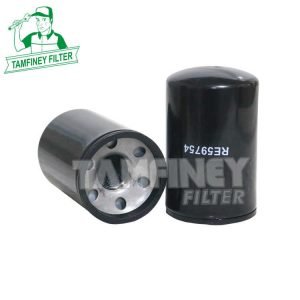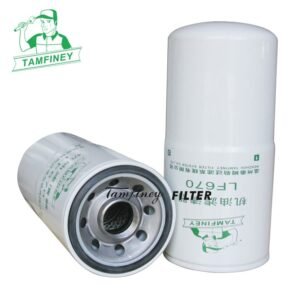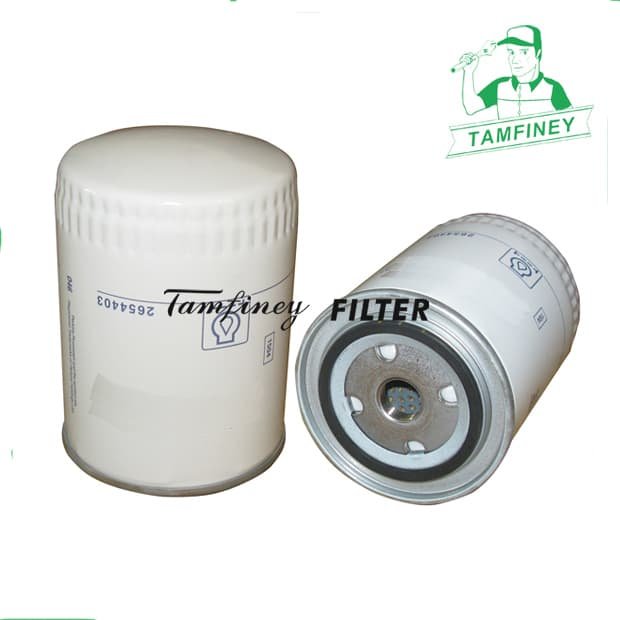


| Oil Filter P554403 C-5101 H17W06 02/100284 02100284 Parameter: | |
| Part Number | P554403 C-5101 H17W06 02/100284 02100284 |
| Brand | Tamfiney |
| Weight | 423 g |
| Height | 139 mm |
| Outer Diameter | 93 mm |
| Inner Diameter/ Thread Size | 3/4-16 |
| Minimum Order | 100 PCS |
| Place of Region: | Zhejiang, China |
| Payment Terms: | T/T |
| Price Terms: | FOB |
| Lead Time: | 30 to 50 days based on order quantities |
| Market Type: | After Market |
| Current Export Market: | North America, South America, Western Europe, Eastern Europe, Africa, Oceania |
What does P554403 fit?
FERRARI 208 GT 4208 GT 4208 GTB TURBO208 GTB328 GTS360 MODENA365 GT 2+2365 GT 2+2365 GT4365 GT4365 GT4 BB365 GT4 BB365 GTB4365 GTB4365 GTC365 GTC365 GTC4365 GTC4365
FIAT HITACHI FH 115 WFH 120 WFH 65 WFH 85 WFH 90 WFH 95FH 95 WFK 120 WW 80
HYSTER 460 BH 110 FH 275 HH 30 H / H 40 HH 4.00 XLH 400 XLH 4.00 XL 5DH 4.00 XL 6H 6.00 XLH 620 BH 7.00 XLH 80HL 4PC 60
INGERSOLL RAND G 44G 60HP 355P 400 WPP 600 WPVHP 400 WP
JCB CX 4 T3 D3 D3 D3 D3 D407408408 B408 ZX409409 B410411 B412412414 S415415426426 ZX430435436436 B436 ZX/B LE480 B4 CN4 CN4 CN4 CT4 CT4 CT4 CT4 CT4 CX 4 T4 COMPAC520-50
KOMATSU PC 240 NLC-3 KPPC 410-5PC 95PW 95SK 09 J
KOMPTECH MULTISTAR M3MUSTANGStonefex 3000
LANCIA STRATOS V6 2,5LSTRATOS V6 2,5L
LANDINI 100 ATLANTIS100 ATLAS100 GHIBLI T1100 MYTHOS GREEN100 REX T3105 TREKKER T2110 REX F110 REX TECHNO RESTYLING T3110 REX TOP RESTYLING T3115 MYTHOS T2115 MYTHOS TDI120 REX F120 REX GT125 LANDPOWER125
LINDE C 80/6H 140H 20 DH 25 DH 25 D-3H 30 DH 30 D-03H 35-04H 35 DH 35 D-03H 40-04H 40 DH 45H 45-04H 45 D-600H 45 D/DDH 45 TS 40S 50
LINDNER 16501750948 A958 AGEOTRAC 100GEOTRAC 50GEOTRAC 60GEOTRAC 64GEOTRAC 65GEOTRAC 65GEOTRAC 70GEOTRAC 73 AGEOTRAC 80UNITRAC 100UNITRAC 100 LUNITRAC 55UNITRAC 60UNITRAC 65UNITRAC 68UNITRAC 78
Precision Full Flow Filter P554403 C-5101 H17W06 02/100284 02100284
Q: What is a full-flow filter?
It is a bypass valve in the oil filter (or hydraulic filter), which is a critical safety component that provides emergency access in the "full flow" filtration mode.
Q: What are the benefits of flow filter?
Full-flow oil filters offer significant benefits for engine protection. They are in series between the oil pump and the main oil gallery. This setup ensures all oil entering the engine must pass through the filter first. As a result, harmful contaminants like metal particles, dust, and carbon deposits effectively trapped. These impurities could otherwise directly damage sensitive components such as the crankshaft, connecting rods, and camshaft.
The filters typically feature a pleated paper element with microscopic pores.
This design provides a large surface area for efficient filtration while maintaining adequate oil flow. They can remove particles larger than 0.05mm, ensuring the lubrication system remains clean. Clean oil helps the engine run more smoothly, improving power output and fuel efficiency.
This filter type is widely used in most passenger cars and urban SUVs. Its technology is well-established, making it easy to replace and reasonably priced. Modern vehicles usually only require a primary filter and one full-flow oil filter to meet daily driving needs.
For safety, these filters include a bypass valve and a check valve.
The bypass valve automatically opens if the filter becomes clogged, allowing oil to flow directly to the engine and preventing lubrication failure. The check valve prevents oil from flowing back into the oil pan after the engine stops, ensuring quick oil pressure buildup during cold starts.
Regular maintenance is straightforward.
The replacement interval depends on the oil type: mineral oil requires changing every 5,000 miles, semi-synthetic oil every 7,500 miles, and full-synthetic oil every 10,000 miles (always refer to the vehicle manual for specifics). Following these guidelines helps keep the lubrication system running efficiently for longer periods.
In summary, the full flow oil filter provides the most basic and important protection for the engine through a "full flow, high-efficiency" filtration method, and is the core component to ensure the long-term reliable operation of the engine.
Q: What is the purpose of a full flow filter bypass valve?
Its core purpose is to automatically open a bypass path when the filter is blocked or the oil viscosity is too high, which ensures that the engine or hydraulic system can continue to receive oil supply and avoid serious damage caused by lubrication interruption.
The specific functions can be summarized as follows:
- Prevent lubrication interruption:When the oil filter is severely clogged with dirt or impurities, or when the engine oil becomes too viscous during cold start and cannot pass through the filter smoothly, the bypass valve will automatically open when the pressure difference reaches the set value (usually 0.8-2.5 bar). At this point, unfiltered engine oil will bypass the filter element and flow directly into the main oil passage of the engine, ensuring that critical components such as the crankshaft and camshaft do not experience dry wear due to lack of oil.
- Protecting system safety:In hydraulic systems, bypass valves are also used to prevent filter or radiator blockages from causing a sudden increase in system pressure, avoiding pipeline ruptures or component damage. It serves as an "emergency channel" for the system, buying time for maintenance while ensuring the basic functions operate.
• Balancing the pros and cons of safety design:The design concept of bypass valves is to choose the lighter of the two harms. Although unfiltered engine oil can introduce impurities, its harm is far less than completely stopping fuel supply. Therefore, it is a passive safety mechanism that ensures the continuous operation of equipment under extreme working conditions.
It should be noted that the bypass valve and the check valve are two different components. The function of a check valve is to prevent the oil in the filter from flowing back after the engine is turned off, ensuring that the oil pressure can be quickly established during the next start-up.
The opening pressure of the bypass valve is strictly set by the host factory, and the setting values for different brands of vehicles (such as Japanese, American, European) may vary, and must comply with national standards, otherwise it may fail.