Get a Free Quote
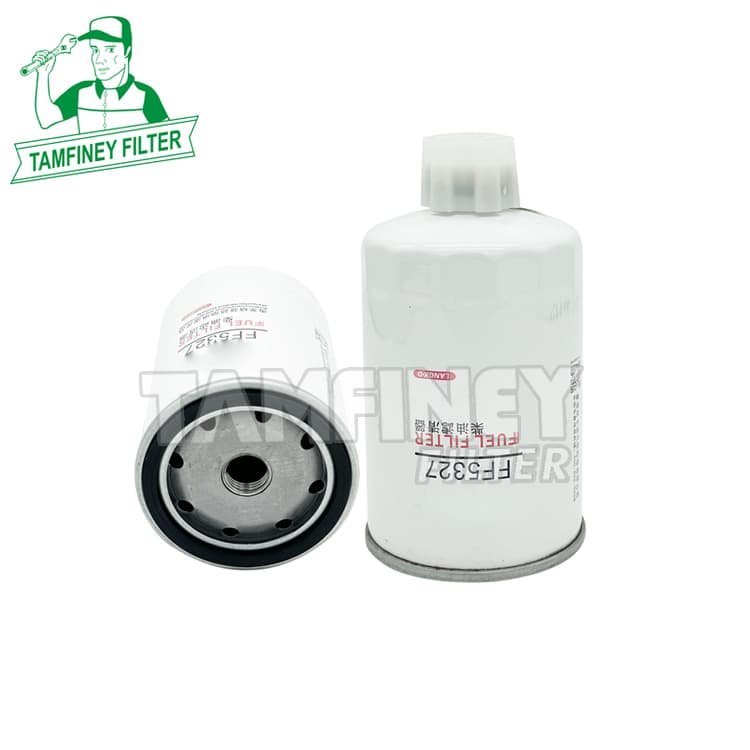
Fuel Water Separator P550248 BF1226 BF7921 BF9842 R010039
Your Best Fuel Water Separator P550248 BF1226 BF7921 BF9842 R010039 Fuel filter manufacturer in China
Donaldson P550248 R010039 Baldwin BF1226 BF7921 BF9842 AGCO-72515734 AWD-A4027606 CASE 71104220 ,84299977 ,86990957 ,114545A1 CATERPILLAR-3I1808 ; CAV-7176496 CUMMINS-1492827 ,3286503 3843760 ,3903202 ,3931062 ,3931064 ,AX1004559 FIAT-73175965 ,73175973 FURUKAWA-1240619H1 ,1290383H1 ; GRADALL-77383303 HENGST-H179WK ,H70WK03 INGERSOLL RAND-59477570


| Fuel Filter P550248 BF1226 BF7921 BF9842 R010039 Parameter: |
| Part Number | P550248 BF1226 BF7921 BF9842 R010039 |
| Brand | Tamfiney |
| Weight | 396 g |
| Height | 147 mm |
| Outer Diameter | 76 mm |
| Inner Diameter/ Thread Size |
M16 X 1.5-6H INT |
| Minimum Order | 100 PCS |
| Place of Region: | Zhejiang, China |
| Payment Terms: | T/T |
| Price Terms: | FOB |
| Lead Time: | 30 to 50 days based on order quantities |
| Market Type: | After Market |
| Current Export Market: | Southeast Asian,North America, South America, Western Europe, Eastern Europe, Africa, Oceania |
Applications:
JCB VMT 160-100VMT 160-1 VIBROMAXVMT 160-80VMT 160-80 TSCVMT 160-90VMT 160-90 TSCVMT 260VMT 260.100 VIBROMAX
KASSBOHRER PB 230 DRPB 240 DPB 260 DWPB 280 D
KOMATSU PC 150-6 LCPC 160-6 KPC 340-6PW 130-6 ES ACTIVEPW 130-7PW 150-6K ESPW 150 ESPW 170-6SA 6 D 114-1WA 150-5H PZWA 200-5HWA 250-5 HWA 250-5 PZWA 320-5H
MANITOU MB 21 JMB 21 JMB 26 JMB 26 JMB 30 JMB 30 J
O & K L 25-5RH 4-5 CITYLINERH 6-5RH 8-5RH PLUS
TORO GREENSMASTER 3100 DREELMASTER 6500 DREELMASTER 6700 DWORKMAN HDX 2WORKMAN HDX-DWORKMAN HDX-D 4WDWORKMAN HDX-D 4WDWORKMAN MDX-D
Professional Fuel Water Separator P550248 BF1226 BF7921 BF9842 R010039
Q: How often should you drain your fuel water separator?
Check every 2000 kilometers and manually drain if there is a lot of moisture.
When the following situations occur, they should be immediately emptied:
1. The dashboard oil-water separator indicator light or engine malfunction light is on;
2. The separation effect has significantly decreased;
3. The liquid level is too high.
4. Do it more frequently in winter (such as 1-2 times a day) to prevent icing from affecting normal operation.
• Overall replacement cycle:
Usually replaced around 10000 kilometers, but if the fuel quality is poor, it may need to be replaced at 8000 kilometers in advance; Under high-quality fuel, it can be extended up to 12000-15000 kilometers.
Q: How often should the water separator be changed on diesel?
There is no absolute standard for the replacement cycle of the water separator (usually referred to as the fuel water separator) in diesel engines, and it needs to comprehensively judge on factors such as driving mileage, fuel quality, usage environment, and vehicle frequency.
Suggested replacement cycle
• Normal situation: Replace every 8000 to 10000 kilometers, or every six months, whichever comes first
• High quality fuel+good road conditions: If using genuine high-quality diesel for a long time and driving in a dry and clean environment, it can appropriately extend to 12000 to 15000 kilometers, but generally not exceeding 20000 kilometers.
• Adverse usage conditions (such as construction sites, mining areas, sandstorms, humid areas, or frequent refueling of low-quality diesel): It is recommended to replace it every 5000-8000 kilometers.
• Synchronized replacement with oil filter: Many maintenance suggestions suggest that the fuel water separator should also be replaced every time the oil and filter are changed for maintenance and management purposes.
Other important maintenance suggestions
• Regular water discharge: You can check and discharge accumulated water every 2000 kilometers to prevent water accumulation from affecting separation efficiency.
• Observe abnormal symptoms: If there is engine shaking, decreased power, or difficulty starting, it may indicate that the fuel water separator is blocked or malfunctioning.
• Pay attention to the impact of oil products and the environment: In high humidity areas such as the southern coast, moisture is more likely to enter the fuel system, and the replacement cycle should be appropriately shortened.
⚠️ Special reminder: If the fuel water separator of some models (such as Jianghuai diesel vehicles) is not replaced for a long time, it may cause corrosion of the fuel injector, damage to the high-pressure fuel pump, and even serious faults such as cylinder pulling.
Q: Can water destroy a diesel injector?
Yes, water can severely damage diesel fuel injectors. The presence of moisture in diesel fuel is one of the primary causes of injector failures, potentially leading to clogging, corrosion, sticking, or even complete malfunction.
The specific hazards of moisture to fuel injectors include:
Rust and corrosion: Moisture in diesel can cause rust on the precision metal components (such as needle valves) inside the fuel injector, leading to surface wear or inadequate sealing. Prolonged corrosion may result in the needle valve "freezing," preventing proper opening or closing.
Carbon buildup and blockage: Moisture can reduce diesel combustion efficiency, leading to incomplete combustion and excessive carbon deposits. These deposits adhere to the nozzle head, gradually clogging the spray holes and impairing atomization.
Lubrication performance degradation: Diesel inherently possesses certain lubricating properties that protect the fuel injection system. However, the presence of water disrupts this lubrication, accelerating wear on internal components of the fuel injector.
Risk of low-temperature freezing: In cold environments, moisture may freeze in the oil circuit, directly clogging the filter or fuel injector, preventing the engine from starting.
If water is found in the diesel fuel, it is recommended to immediately stop using it, empty the fuel tank, and clean the entire fuel system. Replace the fuel injectors and filters if necessary.