Get a Free Quote

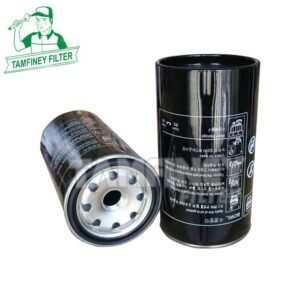
FS1015 Filtro 6003193610 600-319-3610 SFC-1905-10 SFC-19100
Your Best FS1015 Filtro 6003193610 600-319-3610 SFC-1905-10 SFC-19100 Fuel Filter manufacturer in China.
Fleetguard FS1015 KOMATSU 600-311-3620 600-319-3620 600-319-3610 600-311-3610 6003113620 6003193620 6003193610 6003113610 SAKURA SFC-1905-10 SFC-19100 MAN 86.77940-0377 DEMAG 98868900 98870200 98873200 98873900 694137 69230400 BOSCH 986450726 986BF0462 SANY A222100000399 JOHN DEERE AT279826 FORD F1HT9155BA


| Fuel Filter FS1015 6003193610 600-319-3610 SFC-1905-10 SFC-19100 Parameter: | |
| Part Number | FS1015 6003193610 600-319-3610 SFC-1905-10 SFC-19100 |
| Brand | Tamfiney |
| Weight | 569g |
| Height | 156 mm |
| Outer Diameter | 93 mm |
| Inner Diameter/ Thread Size |
1"-14 |
| Minimum Order | 100 PCS |
| Place of Region: | Zhejiang, China |
| Payment Terms: | T/T |
| Price Terms: | FOB |
| Lead Time: | 30 to 50 days based on order quantities |
| Market Type: | After Market |
| Current Export Market: | Southeast Asian,North America, South America, Western Europe, Eastern Europe, Africa, Oceania |
Applications:
XCG 88-8
XCMG XE 150XE 55 EXE 55 UXE 80
XGMA 806
YUCHAI YC 135-8YC 210 LC-8YC 240 LC-8YC 30-2YC 360-8YC 85-5
Professional FS1015 Filtro 6003193610 600-319-3610 SFC-1905-10 SFC-19100
Q: Fuel water separator how it works?
The core working principle of a fuel water separator (also known as an oil-water separator) is to use the density difference between oil and water to achieve oil-water separation through physical methods. A fuel water separator for vehicles is a type of fuel filter specifically designed for diesel systems. Typical process:
1. After entering, the fuel passes through the filter layer to remove impurities;
2. Decompose the emulsion through the demulsification layer;
3. The coalescence of water droplets in the coalescence filter element increases;
4. Large water droplets sink into the collection tank and are discharged through the drainage valve;
5. Purify the fuel entering the engine.
The separation efficiency of high-end models is ≥ 95%, meeting the emission standards of China III and above.
Q: How to change a diesel fuel water separator filter?
Replacing the diesel fuel water separator filter is an important part of diesel vehicle maintenance, which can effectively prevent moisture and impurities from entering the engine and extend its service life. The following are the standard replacement steps and key precautions:
1. Preparation
Stop the car and turn off the engine to ensure it is cold.
Prepare tools: new filter element, oil resistant gloves, wrench (commonly used 16 # ring wrench or special filter element wrench), funnel, cleaning cloth.
If the vehicle has an inlet ball valve, it needs to be closed first; If not, quick operation is required to reduce fuel leakage.
2. Drain the fuel from the old filter element
Open the upper cover of the filter (some models are made of aluminum alloy material, which needs to be gently pried open from the notch with a flat screwdriver).
Unscrew the drain plug and drain the dirty oil into the container to avoid contaminating the ground.
3. Disassemble the old filter element
Loosen the fastening nut on the upper end of the filter element, wear oil resistant gloves, and remove the old filter element vertically upwards.
Attention: The removal direction of the filter element is to turn left (counterclockwise).
4. Install a new filter element
Place a sealing ring at the bottom of the new filter element (some original filter elements already come with it), and apply a small amount of diesel on the rubber ring to lubricate and enhance the seal.
Align the new filter element with the base, install it vertically, tighten it by hand, and then use a tool to tighten it clockwise (to the right) to the specified torque (usually without excessive force, you can hear a "click" sound or feel a significant increase in resistance).
Tighten the drain plug, cover the upper end cap and ensure good sealing.
5. Exhaust operation
Loosen the air release bolt near the filter base or hand oil pump.
Repeatedly press the hand oil pump until there is continuous diesel overflow and no bubbles at the release bolt, and then tighten the bolt.
This step is crucial to avoid difficulties in starting or poor fuel supply.
6. Start check
Start the engine, idle for 1-2 minutes, and check for leaks around the filter.
If there are no abnormalities, the replacement can be completed.
Q: How long does it take to change a fuel filter?
Replacing a fuel filter typically takes 20 to 30 minutes, with the exact duration varying depending on the filter type, vehicle model, and maintenance environment.
The type of filter affects
External filter: Typically located in the chassis or engine compartment, it is relatively easy to replace. A skilled technician can complete the replacement in 10 minutes using professional tools.
2. Built-in filter: Located inside the fuel tank, requires removing the fuel tank or rear seat, with a complex operation process. Typically takes 30 minutes to 1 hour, with variations depending on the vehicle model's structure.